



Pet care is naturally recurring. Dogs need grooming again. Daycare clients come back on a weekly rhythm. Boarding clients return for trips, holidays, and seasonal travel. Pet parents buy add-ons, replenishment products, hygiene services, and routine care because the need does not disappear after one visit.
The problem is that many pet care franchises still operate like every visit is a one-off transaction. A client books, pays, leaves, and then the brand has to earn the next visit from scratch.
Membership-driven pet care changes that model. Instead of relying only on individual bookings, discounts, or seasonal campaigns, franchises can turn routine care into structured recurring revenue. The strongest pet care memberships connect booking, billing, POS, pet profiles, perks, loyalty, referrals, marketing, reporting, and cross-location controls into one operating system.
That distinction matters. A membership program is not just a monthly charge. It is an operational model for helping clients stay engaged, helping pets receive routine services, and helping franchise leaders understand revenue, usage, retention, and demand across locations.
Why recurring revenue matters for pet care franchises
Pet services are a meaningful part of a large and growing industry. APPA reports total U.S. pet industry expenditures of $158 billion for 2025 actual sales and projects $165 billion for 2026, while its “Other Services” category, which includes boarding, grooming, insurance, training, pet sitting, pet walking, and services outside veterinary care, reached $14.3 billion in 2025 actual sales and is projected at $14.9 billion for 2026 (APPA Industry Trends & Stats).
The category is also becoming more service-driven. Morgan Stanley estimates that services accounted for more than 40% of pet industry spending in 2025 and says that share is likely to continue increasing as pet owners keep spending on services, even as overall pet industry growth slows from pandemic-era highs (Morgan Stanley).
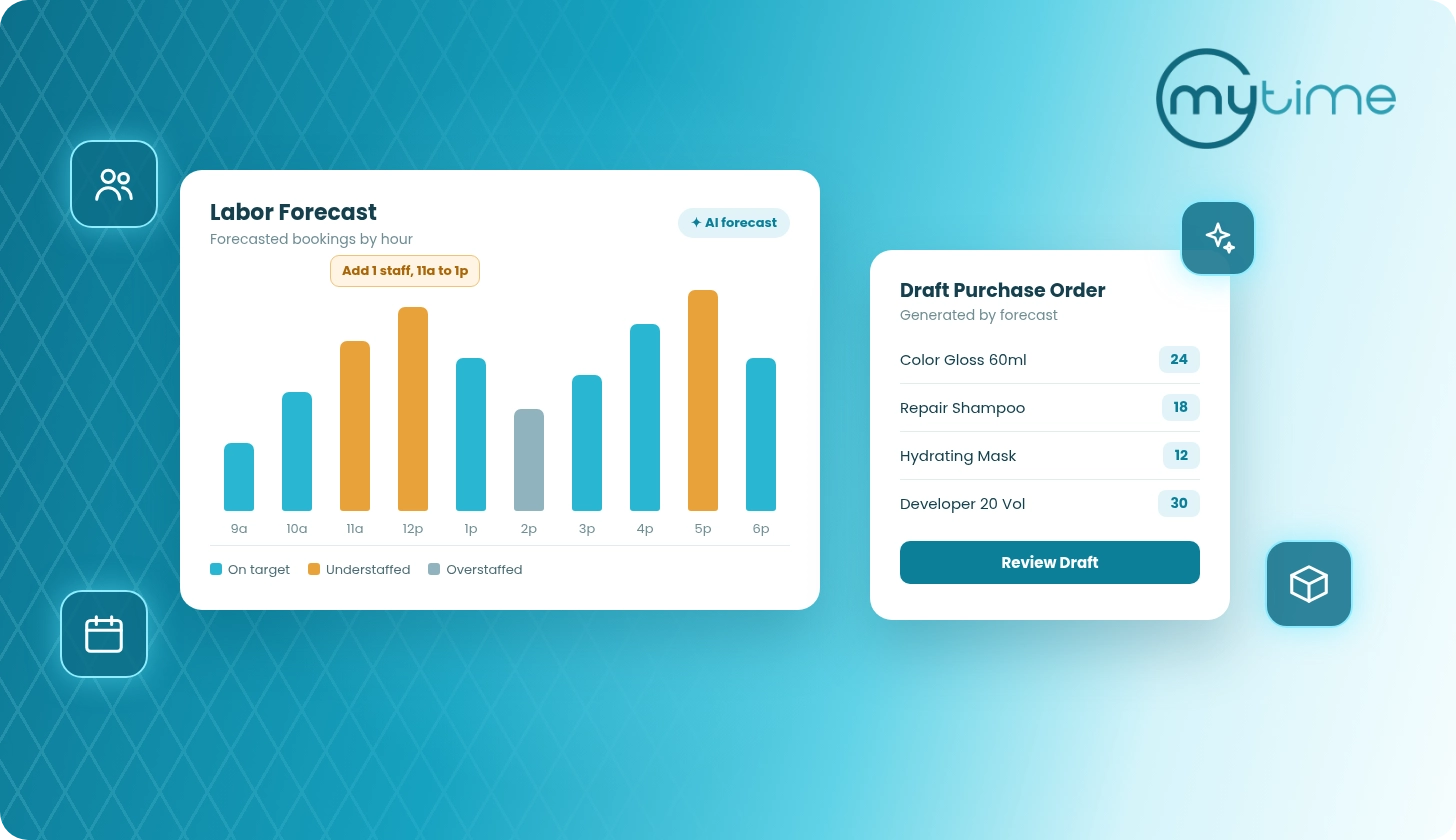
For franchise leaders, that creates both opportunity and pressure. More service demand can support growth, but only if the brand can forecast capacity, staff appropriately, manage location-level execution, and keep clients returning. BLS projects employment for animal care and service workers to grow 11% from 2024 to 2034 and projects about 81,700 openings per year on average over the decade, which reinforces how important workforce planning and demand visibility can become in animal care operations (BLS).
Memberships can help pet care franchises make that demand more predictable. They create a recurring baseline around services clients already need, which can make it easier to forecast visits, plan staffing, understand location performance, and build a more durable client relationship.
Why memberships fit routine pet care better than one-off discounts
Discounts can drive short-term activity, but they do not always create a repeat behavior. If a client only comes in because of a promotion, the next visit may depend on the next promotion too.
Memberships work differently when they are built around real care routines. A grooming essentials membership can support recurring hygiene. A daycare membership can support weekly visit patterns. A boarding membership can package perks or add-ons for frequent travelers. A multi-pet household membership can make ongoing care easier for families with more than one dog.
MyTime’s franchise revenue article frames memberships as part of a broader predictable revenue strategy, with memberships establishing a recurring revenue baseline, loyalty programs increasing lifetime value and visit frequency, and referral programs helping brands acquire higher-quality customers at lower cost (MyTime predictable revenue article).
That is especially relevant in pet care because the need is ongoing. The goal is not to discount the same visit forever. The goal is to make routine care easier to buy, easier to use, easier to track, and easier to repeat.
For a deeper look at how memberships, loyalty, and referrals work together across franchise brands, see MyTime’s guide to building predictable revenue with memberships, loyalty, and referrals.
What membership-driven pet care looks like in practice
Membership-driven pet care can take different forms depending on the brand’s services, margins, capacity, and client behavior. A grooming-focused franchise may build around recurring bathing, nails, teeth, coat, or hygiene services. A daycare brand may structure memberships around visit frequency. A boarding brand may use memberships to package preferred perks, retail benefits, or add-on services.
Common membership models include:
- Monthly grooming essentials: Recurring care built around routine grooming or hygiene needs.
- Daycare frequency plans: Monthly access or credits for clients who visit regularly.
- Boarding perk memberships: Member benefits tied to frequent stays, add-ons, or preferred services.
- Multi-service care memberships: Bundles that combine grooming, daycare, retail, and add-ons.
- Multi-pet household memberships: Plans designed for households with more than one pet, with benefits tracked clearly by pet or profile.
The right model depends on more than pricing. Franchise leaders need to understand service cadence, utilization, margins, staff capacity, visit behavior, add-on potential, and location mix. A plan that looks attractive on paper can create operational strain if benefits are hard to redeem, staff cannot see membership status, or corporate cannot measure usage by location.
MyTime says memberships can include custom perks, discounts, or credits, and that clients can purchase memberships for themselves, family members, or pets through the booking widget (MyTime memberships article). MyTime also says membership perks can apply instantly at checkout, with details saved to client profiles so staff can understand what the client has purchased and how benefits should apply (MyTime memberships article).
That is the difference between a membership idea and a membership operating model. The program needs to be easy for clients to buy, easy for staff to use, and easy for franchise leaders to measure.
Why pet-level membership design matters
Pet care has a membership challenge that many other service categories do not: the buyer and the service recipient are not always the same unit.
A household may have two dogs with completely different grooming schedules, sizes, service needs, behavior notes, vaccination records, and benefit usage. If membership benefits only attach to the owner account without enough pet-level clarity, staff may need to manually determine which pet is covered, which benefits remain, and whether the right service is being redeemed.
That is why pet-level membership design matters. The system should make it clear which pet has which plan, which benefits apply, and how usage should be tracked.
The Scenthound case study is a strong example. The case study says Scenthound required monthly and annual membership options and needed memberships at the pet level rather than the owner level, meaning two dogs in the same household required two memberships (Scenthound case study PDF).
Pet-level design helps reduce confusion for staff, improve benefit tracking, and support more accurate reporting. It also fits the way pet care is actually delivered: the profile, service history, grooming preferences, records, report cards, and membership usage all need to connect back to the pet.
The operational requirements behind a profitable membership program
A membership program can look simple to a client: choose a plan, pay monthly, use benefits. Behind the scenes, a franchise needs much more infrastructure.
At minimum, membership-driven pet care should support:
- Online membership purchase
- Recurring membership charges
- Stored payment workflows where configured
- POS membership purchase
- Automatic benefit application
- Membership credits and balances
- Pet and client profile visibility
- Cross-location usage
- Corporate standards with local flexibility
- Usage, revenue, and retention reporting
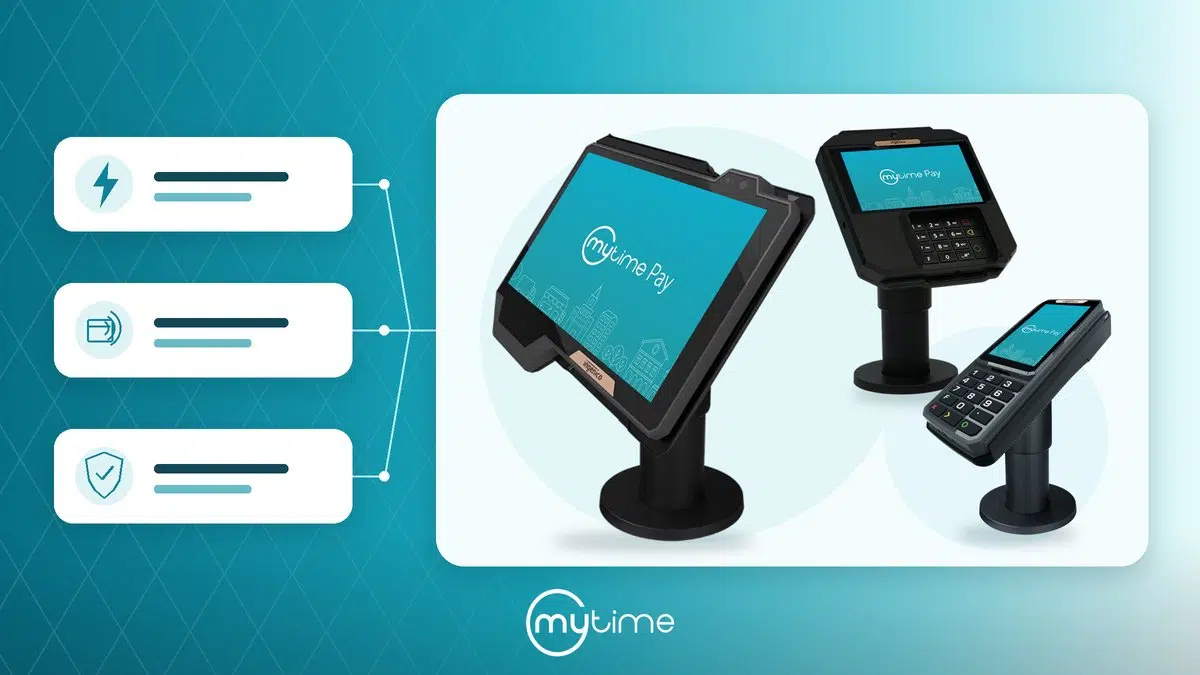
MyTime Help Center says clients can purchase memberships through the booking widget when the widget is configured to include memberships, and that the purchase flow can display a Memberships tab, membership credits, a Buy button, checkout, and card entry (MyTime Help: purchasing client memberships online). MyTime Help Center also says the membership checkout can display the membership name, billing frequency, start date, end date, and price for review before purchase (MyTime Help: purchasing client memberships online).
Billing clarity matters because recurring revenue depends on a smooth payment workflow. MyTime Help Center says that, under the specified stored-card setting, the payment information explanation includes language that the card can be used to automatically process recurring membership charges (MyTime Help: purchasing client memberships online).
Redemption matters just as much as purchase. MyTime Help Center says that when packages and memberships are sold through POS, associated benefits are instantly applied to services, classes, and products on the same ticket as the package or membership purchase (MyTime Help: purchase and apply benefits on the same ticket). MyTime Help Center also says applicable items can show “In Membership” labels, membership discounts can apply automatically, and membership value credits can apply on the payment screen (MyTime Help: purchase and apply benefits on the same ticket).
For staff, that reduces guesswork at checkout. For operators, it reduces the risk that membership value is applied inconsistently across locations.
How memberships connect to loyalty, referrals, packages, and marketing
Memberships should not sit alone. The strongest recurring revenue programs connect memberships to loyalty, referrals, packages, gift cards, campaigns, and reporting.
Memberships create the recurring foundation. Loyalty encourages ongoing engagement and repeat purchasing. Referrals help turn satisfied clients into acquisition channels. Packages and gift cards create adjacent ways to prepay, retain, and gift services.
MyTime’s memberships, packages, and gift cards feature page says businesses can create and customize membership plans, including pricing, benefits, and duration, and manage memberships directly from client profiles (MyTime memberships, packages, and gift cards). MyTime’s ultimate guide says memberships can include value or item-based credits, members-only services, members-only products, special discounts, and reporting into credit usage and membership-driven revenue (MyTime memberships, loyalty, and referrals guide).
This is where membership-driven pet care becomes broader than billing. If a pet care franchise can connect membership status to marketing segments, loyalty perks, referral offers, service reminders, and cross-location redemption, the membership becomes part of the client journey instead of a standalone plan.
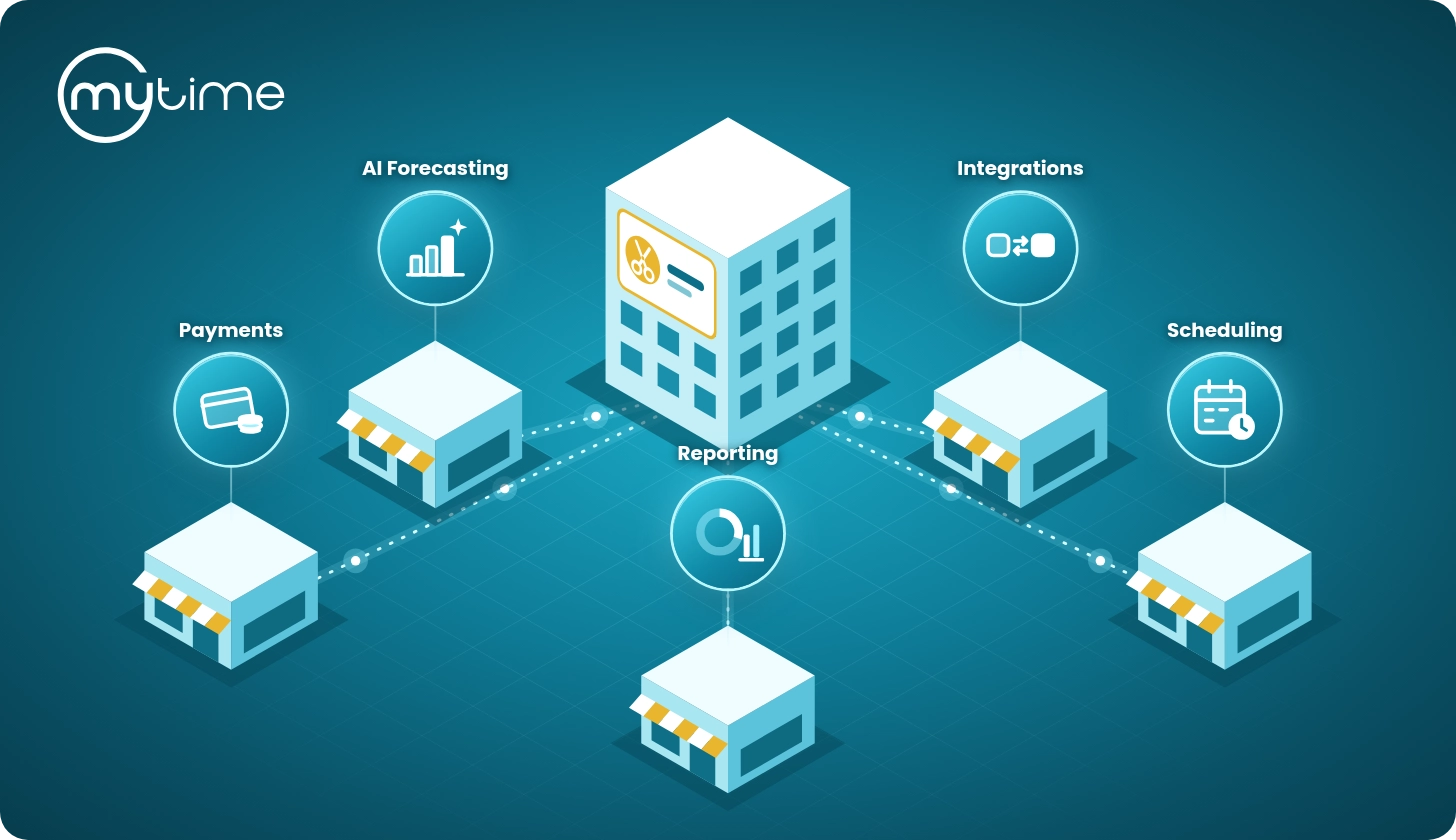
MyTime’s pet franchise software article says pet care franchise software should connect grooming, boarding, daycare, retail, memberships, staff workflows, client communication, pet records, payments, reporting, and franchise controls across every location (MyTime pet franchise software article). The same article says MyTime connects scheduling to POS, payments, inventory, packages, memberships, loyalty, referrals, and marketing automation, which is the kind of connected infrastructure a membership-led pet care model needs (MyTime pet franchise software article).
What franchise leaders should measure
Recurring revenue is only useful if operators can understand what is happening beneath the top-line number. A growing pet care franchise should be able to see which memberships are selling, where they are being used, which locations are underperforming, and whether benefits are supporting the intended behavior.
Important membership metrics include:
- Membership adoption by location
- Active members by plan
- New membership sales
- Membership-driven revenue
- Membership usage by benefit
- Unused benefits and overused benefits
- Retention and churn
- Visit frequency among members and non-members
- Average ticket among members and non-members
- Add-on attach rate
- Referral activity among members
- Cross-location redemption
- Capacity impact and staff utilization
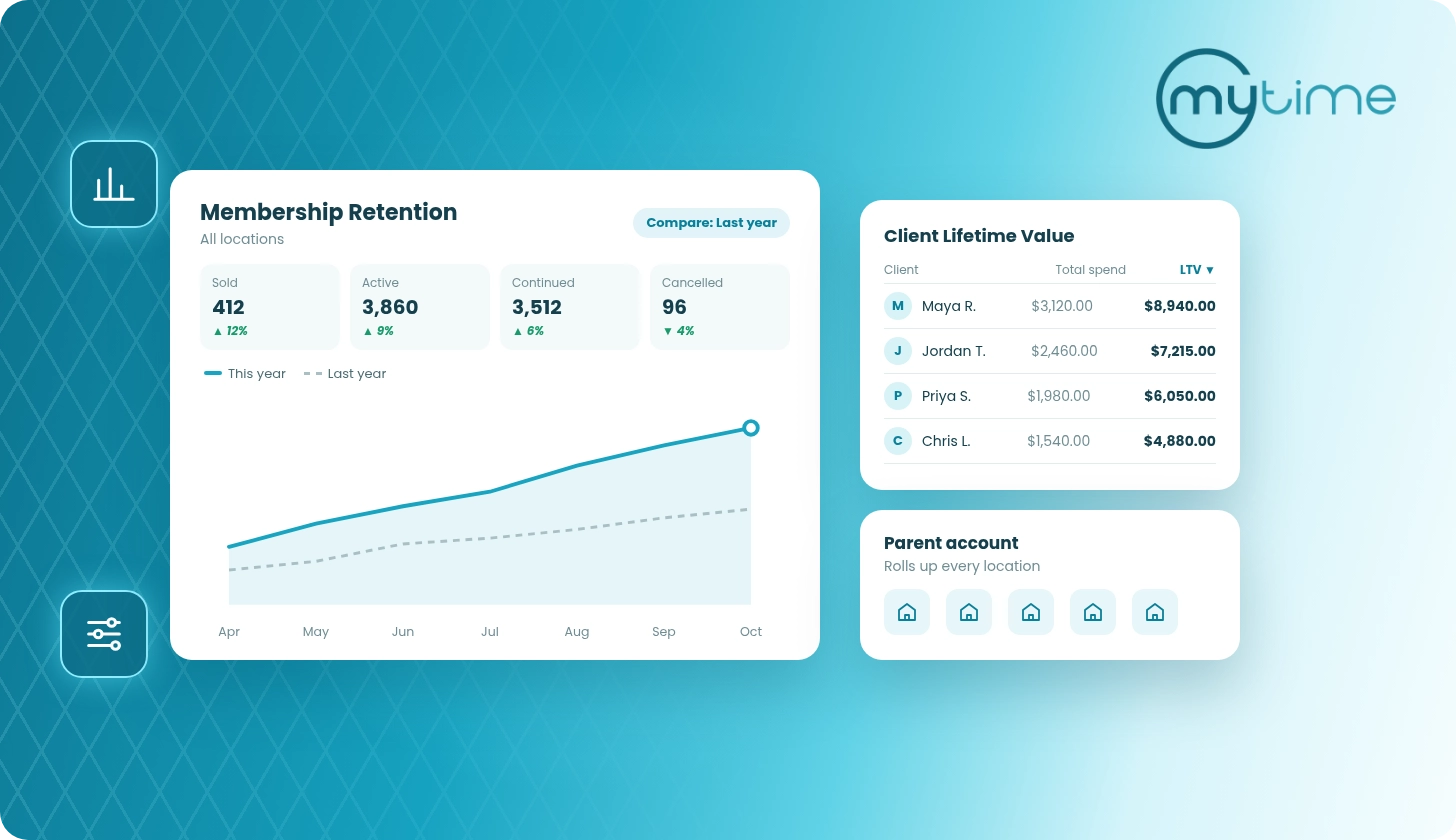
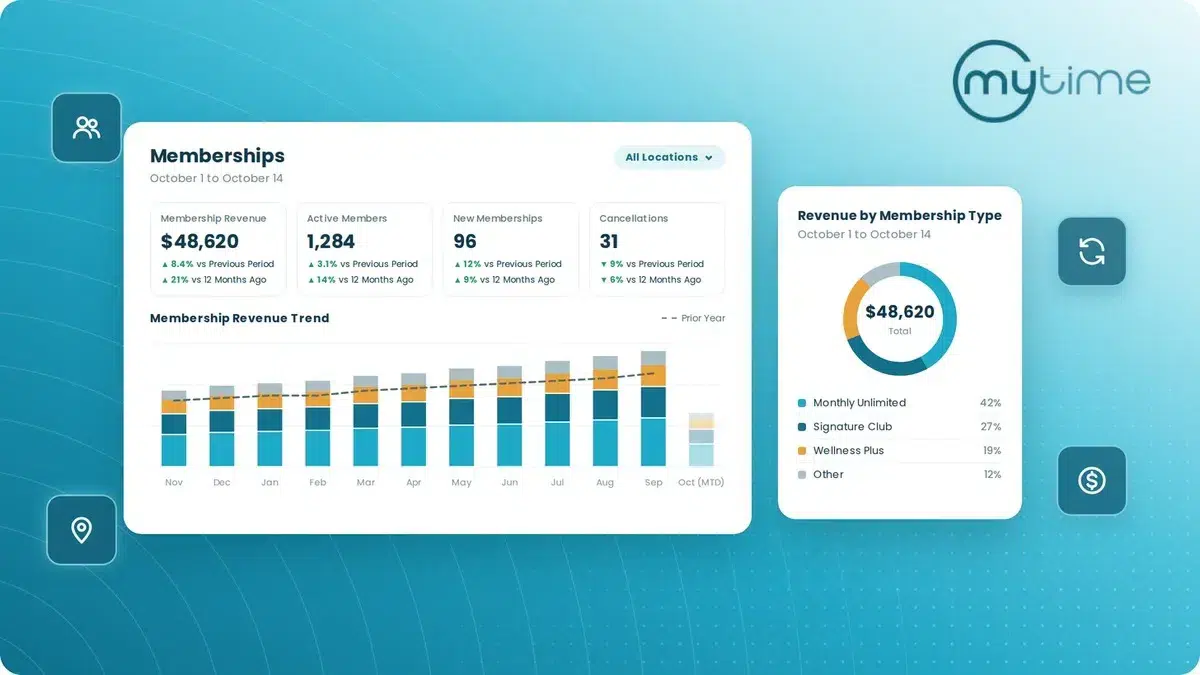
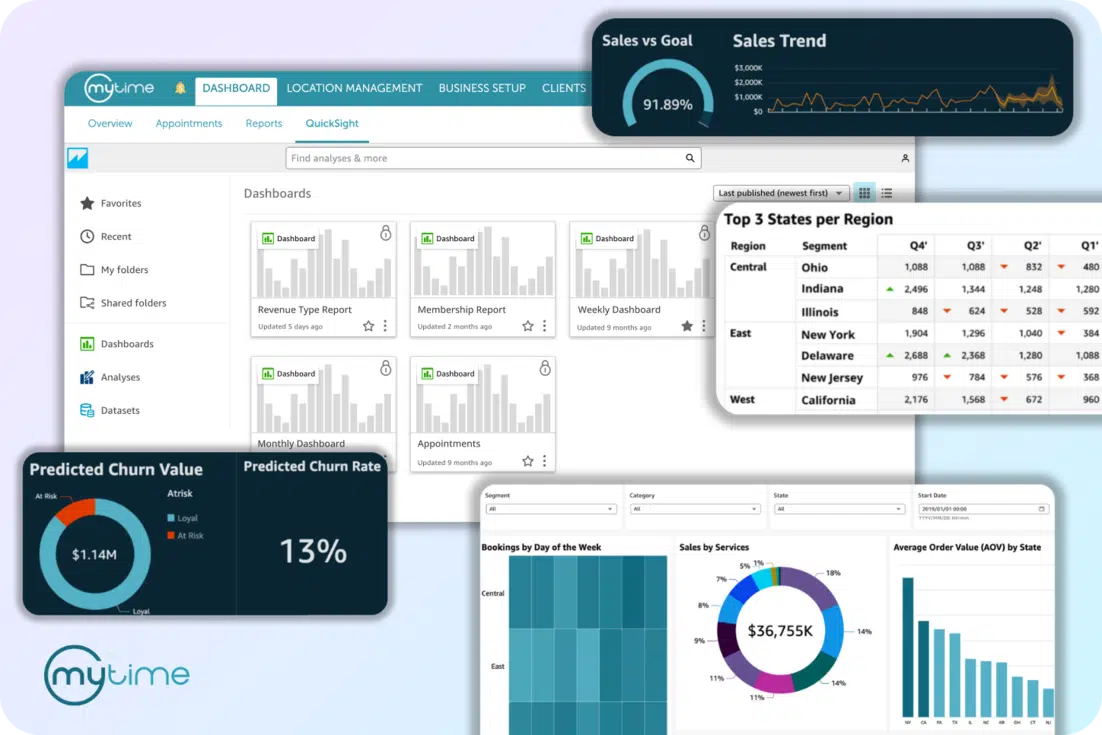
MyTime says memberships can work across every franchise location and that franchise leaders can track adoption, retention, and membership-driven revenue in the MyTime dashboard (MyTime memberships article). MyTime Help Center also says membership value and item credit balances adjust after a ticket closes, and that these balances can be seen on the client profile and in Membership Item Credit and Membership Value Credit reports (MyTime Help: purchase and apply benefits on the same ticket).
The goal is to avoid managing memberships by anecdote. Franchise teams should be able to see which plans are driving repeat visits, which benefits clients actually use, which locations need coaching, and where the program may need adjustment.
Scenthound case study: building a membership-driven pet care franchise with MyTime
Scenthound is a useful example because its business model was designed around recurring pet care from the start. The MyTime case study is titled “How MyTime Enabled Scenthound to Create the First Membership-Driven Pet Care Franchise” and describes Scenthound as the first membership-based dog grooming franchise in the United States (Scenthound case study PDF).
The Scenthound model focuses on routine grooming basics: skin, coat, ears, nails, and teeth. That made memberships central to the operating model, not just an add-on promotion. The case study says memberships are the lynchpin of Scenthound’s business model and that Scenthound needed monthly and annual membership options at the pet level, not only the owner level (Scenthound case study PDF).
Scenthound also needed franchise-level control with local flexibility. The case study says the company needed the ability to replicate settings, services, and products across locations while allowing local products, local specials, or location-level pricing where appropriate (Scenthound case study PDF).
MyTime supported that model with a global client database, cross-location access to customer history, appointments, purchases, and prior report cards, plus memberships, packages, and gift cards that could be used anywhere (Scenthound case study PDF). The case study also lists built-in capabilities including appointment scheduling and online booking, POS, inventory management, growth marketing, customizable client and pet records with intake forms, reputation management, memberships, and reporting (Scenthound case study PDF).
Scenthound’s Chief Operating Officer, Mike Schoen, summed up the need for usable franchise technology this way: “With our rapid expansion plans, it’s essential that the software is easy to use. MyTime delivered – and has continued to deliver – on our needs” (Scenthound case study PDF).
The lesson for pet care franchises is not that every brand should copy the same membership structure. The lesson is that membership-driven growth requires software that can support the model operationally: pet-level benefits, recurring billing, cross-location records, POS redemption, reporting, and franchise controls.
How MyTime helps pet care franchises manage memberships at scale
MyTime helps pet care franchises manage memberships as part of the broader operating system, not as a disconnected billing tool. That matters because pet care memberships touch the full journey: booking, profiles, checkout, payments, benefits, reminders, marketing, loyalty, reporting, and location management.
MyTime supports online membership purchase through the booking widget, including membership display, credit visibility, checkout, and payment entry when memberships are configured for online purchase (MyTime Help: purchasing client memberships online). MyTime also supports POS workflows where membership benefits can apply to applicable services, classes, and products on the same ticket, with labels, discounts, value credits, and balance adjustments reflected after checkout (MyTime Help: purchase and apply benefits on the same ticket).
For franchisors, MyTime’s pet franchise software article says the platform supports pet profiles, vaccination tracking, POS, inventory, memberships, loyalty, marketing automation, branded guest apps, cross-location reporting, royalties, templates, and centralized management with local flexibility (MyTime pet franchise software article). The same article says MyTime can auto-reconcile memberships, gift cards, and loyalty balances across locations and can launch global campaigns with local controls (MyTime pet franchise software article).
That combination is what makes MyTime especially relevant for membership-driven pet care. The membership can be sold online or through POS. Benefits can be applied at checkout. Client and pet context can stay connected. Corporate can manage standards. Locations can execute locally. Leadership can measure what is working.
If your pet care franchise is ready to build recurring revenue with memberships, packages, loyalty, referrals, and cross-location visibility, book a MyTime demo.
Membership readiness checklist for pet care franchises
Use this checklist before launching or rebuilding a pet care membership program:
- Do we know which services naturally repeat?
- Have we modeled margin for each included benefit?
- Can benefits be tied to the correct pet, not just the household?
- Can clients buy memberships online?
- Can staff sell memberships through POS?
- Do membership perks apply automatically at checkout?
- Can staff see membership details from the client profile?
- Can membership credits and balances be tracked?
- Can memberships work across locations?
- Can corporate standardize rules while locations retain approved flexibility?
- Can we track adoption, usage, retention, and revenue by location?
- Can memberships connect to loyalty, referrals, packages, gift cards, and marketing campaigns?
- Can leadership identify underused, overused, or high-performing plans?
The more of these questions a franchise can answer inside one platform, the easier it becomes to operate memberships consistently. The fewer it can answer, the more likely the brand is to rely on manual tracking, disconnected systems, and location-by-location workarounds.
FAQ
What is membership-driven pet care?
Membership-driven pet care is a recurring revenue model where clients pay for ongoing pet care benefits such as grooming basics, daycare access, boarding perks, add-ons, retail benefits, or multi-service credits. The best models connect membership purchase, billing, redemption, pet profiles, POS, and reporting so the program is easy to operate across locations.
Why do memberships work for pet care franchises?
Memberships work for pet care franchises because many pet services are naturally recurring. Grooming, daycare, boarding, hygiene routines, add-ons, and retail replenishment create repeat demand that can be structured into predictable programs.
Should pet care memberships be tied to the owner or the pet?
Many pet care brands should consider pet-level membership logic because each pet may have different service needs, sizes, schedules, records, and benefit usage. Scenthound’s MyTime case study specifically required memberships at the pet level rather than the owner level (Scenthound case study PDF).
What should pet care franchises track in a membership program?
Pet care franchises should track adoption, active members, usage, membership-driven revenue, retention, churn, visit frequency, average ticket, add-on attach rate, referral activity, cross-location redemption, and capacity impact. MyTime says franchise leaders can track adoption, retention, and membership-driven revenue in the MyTime dashboard (MyTime memberships article).
How does MyTime support pet care memberships?
MyTime supports pet care memberships through online purchase, recurring membership charges, POS purchase and redemption, automatic benefit application, client and pet profile visibility, membership credit and balance reporting, cross-location capabilities, loyalty, referrals, marketing, and franchise controls. MyTime’s pet franchise software article says MyTime supports memberships, loyalty, marketing automation, branded guest apps, cross-location reporting, templates, and centralized management with local flexibility for pet care franchises (MyTime pet franchise software article).