



For service-based franchise brands in beauty, wellness, pet care, and related verticals, the client relationship does not begin and end at the appointment. The reminders, follow-ups, and re-engagement messages sent between visits are what make clients feel like the brand is paying attention, and that feeling is what drives repeat bookings and reduces churn. This article covers how MyTime approaches automated client communication at scale: which messages to prioritize, how to configure them across every location, and what a complete communication strategy actually looks like for a growing franchise brand.
Why Do Service Businesses Lose Clients Between Appointments?
The most common reason a client stops returning is not a bad experience. It is an absence of contact. A client who books an appointment, has a great experience, and then hears nothing from the brand until they decide to book again is a retention risk, not because anything went wrong, but because the brand did nothing to earn the next visit. Across a franchise brand with multiple locations, this problem compounds quickly. Without a reliable system for follow-up, re-engagement, and timely reminders, retention becomes dependent on individual client initiative rather than anything the brand is doing to sustain it.
How Do Franchise Brands Manage Automated Messaging Across Every Location?
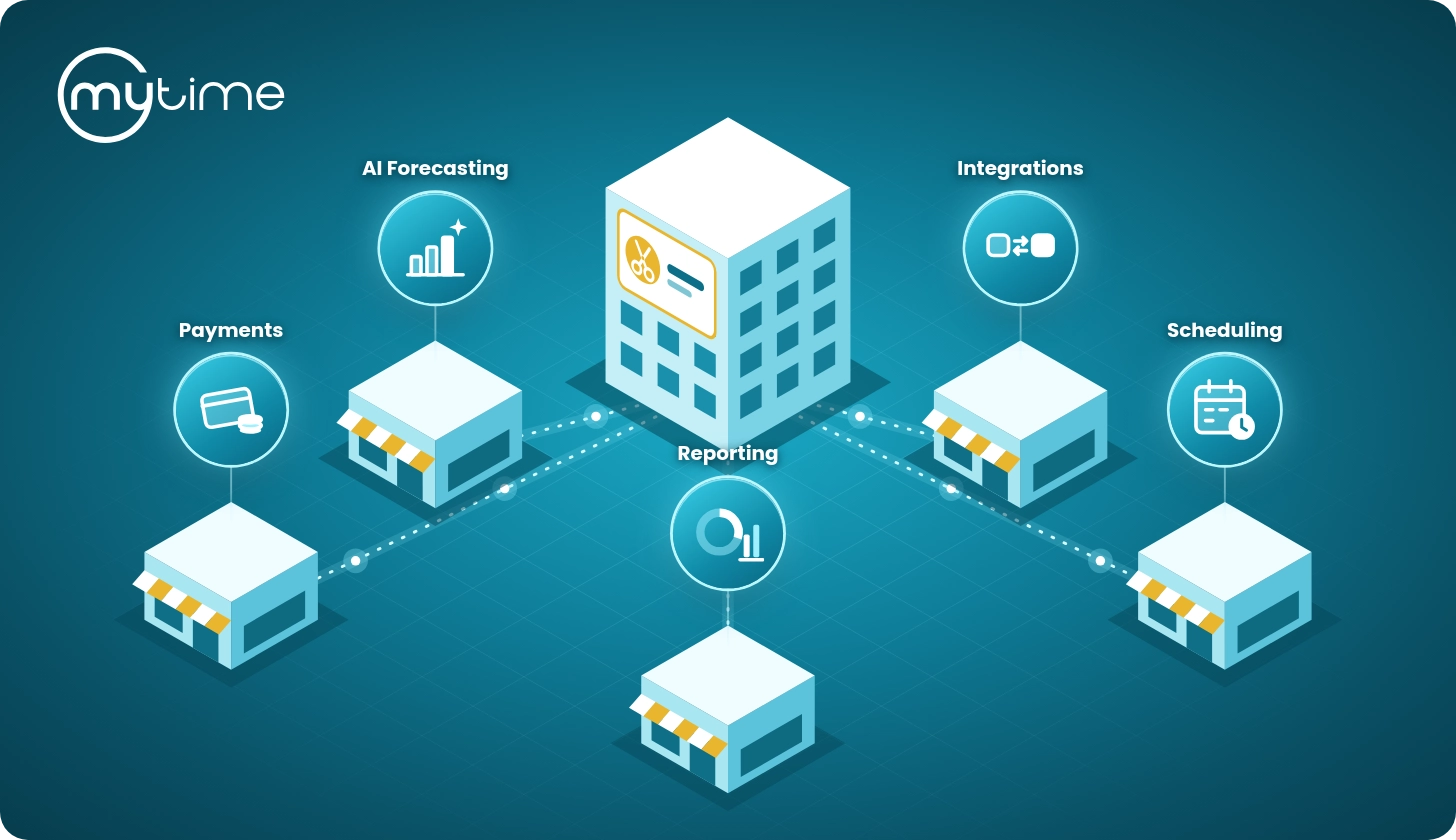
For franchise operators managing dozens or hundreds of locations, consistent client communication is a governance challenge as much as a marketing one. A growing brand needs every location sending the right messages in the right voice, while still giving operators the flexibility to adapt to their local market. At scale, that balance requires a centralized approach to how messages are configured and delivered.
Standardizing Templates and Brand Voice Across Locations
When each location manages its own client messaging independently, the brand loses control of one of its most frequent client touchpoints. The tone, timing, and content of messages vary based on what individual operators chose to set up, with no reliable way for the central team to know what clients across the brand are actually receiving. MyTime allows brand-level teams to configure message templates at the parent level and push them to every location automatically, including email themes, brand colors, and service-specific instructions. Whether templates are locked across all locations or open to local adjustment is configurable, so franchisees can tailor messaging to their market without drifting from brand standards.
Making Sure Every Message Actually Reaches the Client
Across a franchise brand with thousands of client profiles, gaps are inevitable. Some clients have an email address but no mobile number. Others have not downloaded the branded guest app. Without a fallback delivery method, those gaps mean missed messages with no visibility into why. MyTime lets operators configure a primary channel and a backup for each message type across email, SMS, and push notification, so if the primary channel is unavailable the system automatically attempts the next option rather than dropping the message entirely.
What Automated Message Flows Should Every Franchise Have Running?
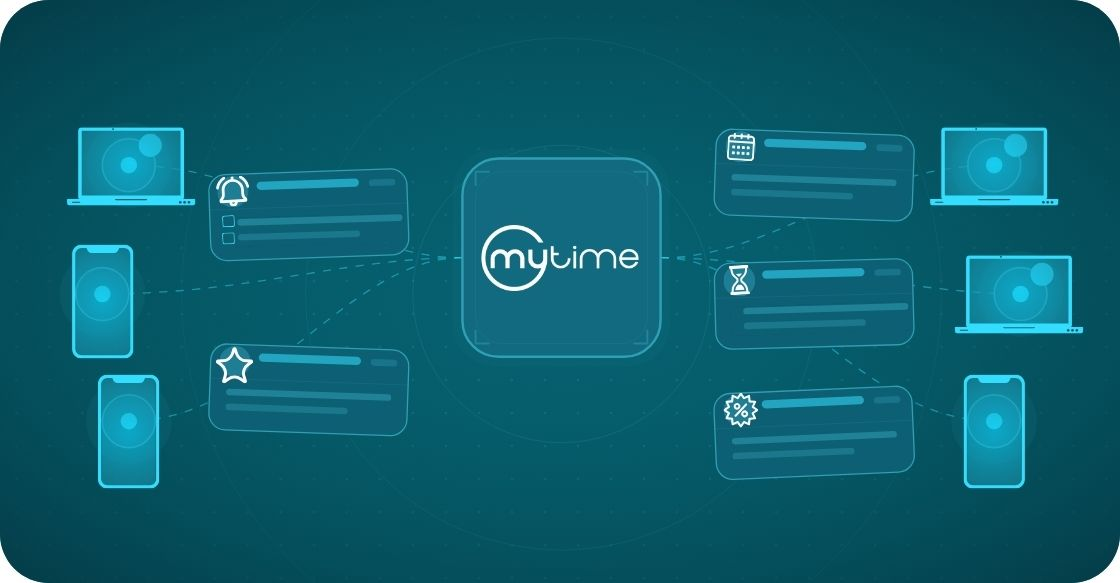
Automated message flows—like booking confirmations, reminders, and review requests—keep every client interaction consistent across locations
Effective automated communication covers the full client journey, from a first booking confirmation to the moment a lapsed client needs a reason to come back. The messages below address the highest-impact moments in that journey and what makes each one worth configuring with intention.
Appointment Reminders with Service-Specific Instructions and Intake Forms
Appointment reminders that prepare clients before they arrive, with service-specific instructions and any intake forms they need to complete, reduce late arrivals, speed up the start of service, and free staff from handling paperwork at the door. Most reminder systems stop at confirming the date and time. When clients show up without knowing what to expect or with forms still blank, services run long and intake takes up chair time that should be spent on the visit itself.
MyTime lets operators attach custom instructions and intake forms directly to pre-appointment messages for each service or add-on the client has booked, whether that is pre-service prep, what to wear, or anything else the client needs before they arrive. Operators can also stack multiple reminders with independent timing, for example one several days out, one the day before, and one a few hours ahead, so the cadence matches the service rather than defaulting to a single generic touchpoint.
Recovering Revenue from Schedule Gaps and Cancellations
Automated flash sale and waitlist messages recover underutilized capacity without requiring staff to monitor the schedule or initiate anything manually. Most service brands handle slow periods reactively, relying on staff to notice the gap and reach out, by which point the window to fill it has often already closed.
When a location’s utilization drops below a threshold the operator defines, MyTime automatically sends a promotional message to eligible clients with a discount on selected services. When a fully booked appointment or class has a cancellation, waitlisted clients are notified immediately with a direct link to complete the booking. Both scenarios are handled without anyone on staff initiating anything, which matters most for franchise brands where a central team cannot actively monitor fill rates across dozens of locations at once.
Generating Reviews Without Staff Follow-Up
Automating review requests removes the inconsistency that comes from relying on staff to ask, and it builds review volume from clients most likely to leave a positive response rather than leaving it to chance. Most multi-location brands depend on individual staff members to request reviews, which produces results that vary by location and by shift. According to Harvard Business Review, up to 98% of consumers say online reviews influence their purchasing decisions, making review volume a direct driver of new client acquisition, not just a reputation metric.
MyTime allows operators to target review requests only to clients who rated their experience four or five stars for class sessions. For Hydrate IV Bar, a wellness franchise with 21 locations, automated review requests through MyTime generated $877,000 in attributed revenue by consistently bringing high-intent clients back through the door.
Rebooking Reminders Timed to the Service
Rebooking reminders configured per service arrive when the client is actually due, which is what separates a message that prompts a booking from one that gets ignored. Most systems send rebooking reminders on a fixed schedule that treats every service the same, regardless of when a client is actually ready to return. A client due for a monthly blowout and a client due for a quarterly color treatment need to hear from the brand at very different intervals. Hydrate IV generated $867,000 in attributed revenue through MyTime’s automated rebooking reminders, driven by messages that reached clients when a return visit was genuinely timely rather than arbitrarily scheduled.
Reducing Membership and Package Expiration Churn
Expiration reminders sent well in advance give clients the context to act before their membership or package lapses, recovering revenue that would otherwise be lost without any service failure to explain it. The most preventable form of membership churn happens when clients simply did not know the deadline was approaching.
For memberships with auto-renewal, a consent notification before the charge processes gives clients the transparency that builds long-term trust. Brands that handle this proactively avoid the disputes and chargebacks that follow unexpected billing and retain members who would have stayed anyway if they had been notified in time.
Winning Back Lapsed Clients Before They Move On
A re-engagement message sent at the right moment recovers client relationships before those clients have mentally moved on to a competitor. Most lapsed clients did not make a conscious decision to leave. They got distracted, the brand slipped from view, and nothing brought it back. The longer that gap goes unaddressed, the easier it is for a competitor to fill it. For franchise brands where lapsing patterns tend to be consistent across locations, automating this outreach means acting on at-risk relationships systematically rather than leaving recovery to individual operator judgment at each site.
How Does Two-Way Messaging Fit Into an Automated Communication Strategy?
Two-way messaging ensures that when a client responds to an automated message, that conversation reaches a staff member with the context to continue it. Research shows that 1 in 3 messages sent to businesses go unanswered because the channel cannot support a reply, which means the outreach that prompted the response ends up generating frustration instead of a booking.
When a client replies to any automated message in MyTime, the exchange surfaces in the Communicator alongside their full profile and booking history, so staff can continue the conversation without starting from scratch. For multi-location franchise brands, replies route to the correct location automatically. The outreach scales through automation. The relationship continues through the people behind it.
What Separates Franchise Brands That Retain Clients From Those That Don’t?
The messages covered in this article represent some of the highest-leverage touchpoints a franchise brand has with its clients. Configuring them centrally, with the right timing and fallback delivery in place, means every location is running a consistent communication strategy without ongoing intervention. That consistency is what clients experience as a brand that pays attention, and it is what separates franchises that retain clients from those that are constantly replacing them.
Book a demo to see how MyTime manages the full client communication journey across your franchise network.
Frequently Asked Questions
What automated messages does MyTime support?
MyTime includes dozens of configurable automated message templates covering booking confirmations, appointment and class reminders, post-visit messages, review requests, rebooking reminders, waitlist and flash sale notifications, membership renewal consent, package and membership expiration reminders, and lapsed client re-engagement, among others.
Can franchise brands manage automated messages centrally?
Yes. MyTime allows brand-level teams to configure message templates at the parent level that apply automatically to all locations. Whether individual locations can make local adjustments or templates are locked across the brand is fully configurable.
What happens if a client does not have a phone number or email on file?
MyTime supports fallback delivery across email, SMS, and push notification. If the primary channel is unavailable, the system automatically attempts the next configured option so messages reach clients even when their profile is incomplete.
How does the flash sale trigger work?
The flash sale message fires automatically when a location’s schedule utilization drops below a threshold the operator sets. The discount amount, eligible services, and lookahead window are all configurable. No manual input is required.
Can appointment reminders include service-specific instructions?
Yes. Pre-appointment messages can include custom instructions and intake forms for each service or add-on the client has booked. For franchise brands, anything configured at the parent level applies to all locations automatically.