



Clients expect their gift cards, packages, and memberships to work wherever they book. They do not think in terms of franchise ownership, source locations, or destination locations.
Franchise brands do have to think that way. A client may buy a gift card at one location and redeem it at another. Another client may purchase a package at one spa, then use part of it across town. A member may use credits at a location they did not originally join.
Those experiences feel seamless to the client, but they create real finance and operations questions. The selling location may collect the original payment, while another location delivers the service, product, or class.
That is why cross-location redemptions need more than basic balance tracking. Franchise brands need a system that connects client profiles, stored value, source locations, destination locations, reconciliation rules, reports, and corporate controls.
What cross-location redemption means for franchise brands
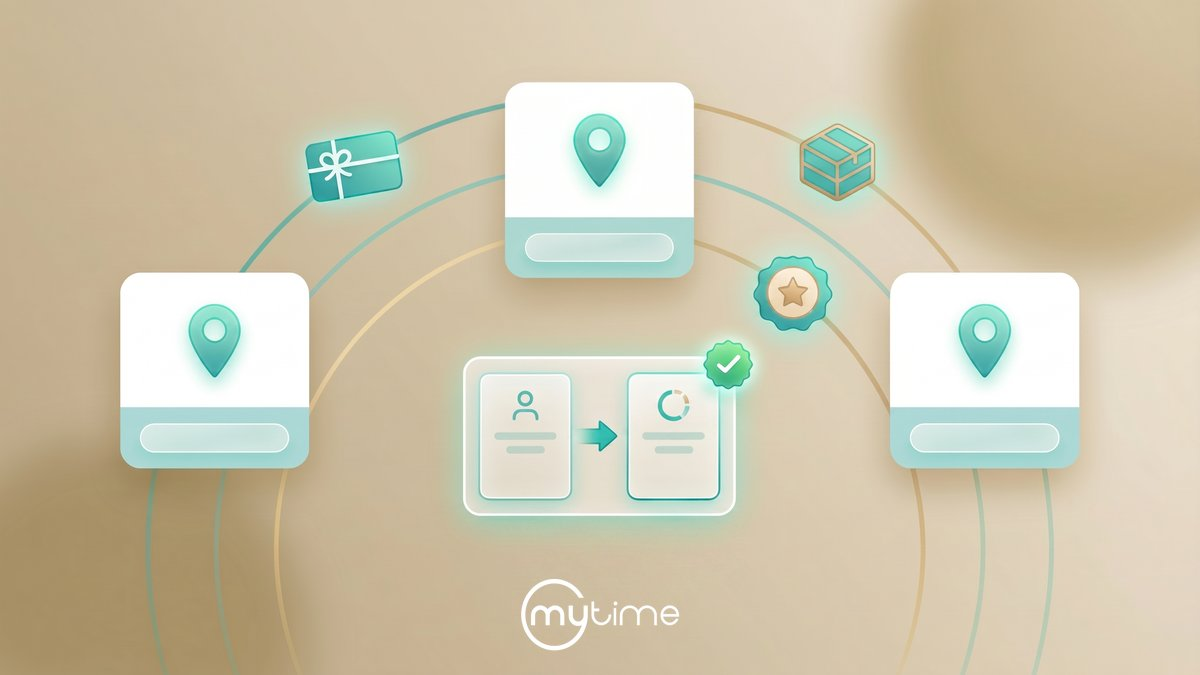
Cross-location redemption happens when a client purchases prepaid value at one franchise location and uses that value at another. That value may come from a gift card, package, membership, item credit, or value credit.
In this workflow, the source location is where the client bought the value. The destination location is where the client used it.
That distinction matters because money and service delivery can happen in different places. The source location may receive the original payment. The destination location may provide the appointment, product, or class.
At small scale, teams may handle these cases manually. At franchise scale, manual tracking creates too many handoffs. The International Franchise Association projects U.S. franchise establishments will grow from 832,521 to 845,000 units in 2026, which adds more than 12,000 franchised businesses (International Franchise Association).
That growth makes consistent redemption workflows more important. Franchise leaders need a process that works across locations, operators, regions, and ownership structures.
Why redemptions get complicated across locations
Cross-location redemptions create two promises at once. The brand promises clients a flexible experience. The finance team needs clean records that show where value was sold, where value was used, and how value should move between locations.
Gift cards, packages, and memberships each add their own complexity. A gift card may hold a cash value. Packages may include specific services or items. Memberships may include value credits, item credits, discounts, or recurring benefits.
Those differences matter because each redemption can affect reporting. A package item may not behave like a gift card balance. A membership item credit may need different logic than a membership value credit.
Gift cards also carry compliance and accounting considerations. The Consumer Financial Protection Bureau’s Regulation E gift card rule covers gift certificates, store gift cards, and general-use prepaid cards when they meet the rule’s definitions and do not fall under an exclusion (Consumer Financial Protection Bureau).
The CFPB also defines an affiliated group of merchants as merchants related by common ownership or corporate control that share the same name, mark, or logo, and that definition can include franchisees subject to common corporate policies or practices (Consumer Financial Protection Bureau). That makes clear tracking especially important for franchise systems that sell stored value across branded locations.
The FTC says money on a gift card cannot expire for at least five years from the purchase date or the last date additional money was loaded onto the card (Federal Trade Commission). The FTC also says inactivity fees can be charged only after a gift card has not been used for at least one year, and then only once per month (Federal Trade Commission).
These rules do not mean operators should manage gift cards from spreadsheets. They mean brands should work with legal and accounting advisors while using systems that track balances, activity, and redemptions clearly.
Why gift card accounting depends on redemption tracking
Gift cards are not just a marketing tool. They can create future performance obligations and accounting work.
Deloitte’s ASC 606 guidance says an entity should recognize a contract liability when it receives customer prepayment for goods or services that will transfer in the future, then recognize revenue when it satisfies the performance obligation (Deloitte DART). Deloitte also notes that gift certificates usually represent a nonrefundable prepayment, with revenue recognized when the customer redeems the certificate and the retailer provides the goods or services (Deloitte DART).
The Journal of Accountancy says a gift card sale creates cash and a liability for unearned revenue because companies cannot recognize revenue at the initial sale of the card (Journal of Accountancy). It also explains that accountants need detailed information to estimate unredeemed gift card value, and aggregate POS recording can make aging and usage analysis difficult (Journal of Accountancy).
For franchise brands, that means redemption tracking needs detail. Teams need to know when value was sold, where it was sold, where it was redeemed, and how the system treated the redemption.
What a strong redemption management workflow needs
Cross-location redemptions work best when the brand treats them as a shared client, finance, and operations workflow. A strong system should support both the client-facing experience and the back-office reconciliation process.
Look for these capabilities:
- Shared or global client profiles.
- Balance visibility across locations.
- Clear source and destination location tracking.
- Parent-level reconciliation rules.
- Adjustment rates by redemption type.
- Ticket-close reconciliation record creation.
- Reporting for finance and operations teams.
- Corporate permissions and access controls.
- Gift card activity reporting.
- Support for packages, memberships, gift cards, products, services, and classes.
Corporate Finance Institute defines reconciliation as matching internal transaction records against external records to see whether records differ and to correct discrepancies (Corporate Finance Institute). In a franchise redemption workflow, that means finance teams need records that connect prepaid value, ticket activity, location data, and reporting.
Deloitte says manual reconciliation often forces teams to download, pivot, map, and match data before they can investigate or analyze issues (Deloitte). Deloitte also says automation can minimize manual effort, accelerate reporting, provide analytics, track reconciliation status, and alert teams to differences that need investigation (Deloitte).
That is the operational goal. The brand should not make finance rebuild the redemption story every month from disconnected spreadsheets.
How MyTime supports gift card reconciliation
MyTime supports gift card reconciliation for franchise and multi-location workflows. MyTime says gift card reconciliation occurs when a gift card was purchased at one franchise or location but used at another (MyTime Help Center).
MyTime also gives brands clear logic for different location structures. Reconciliation between two locations belonging to different franchises requires Global DB activation, while reconciliation between two locations within the same franchise does not require Global DB activation (MyTime Help Center).
The gift card reconciliation calculation uses the amount of gift card value used at the destination location multiplied by the adjustment rate set on the parent account (MyTime Help Center). MyTime’s example shows the system debiting the source location account and crediting the destination location account after a cross-location redemption (MyTime Help Center).
That structure helps brands reduce ambiguity. Teams can see which location sold the value, which location redeemed it, and how the system calculated the adjustment.
MyTime also surfaces gift card reconciliation information in the Reconciliation Detailed Report, accessed through Dashboard > Reports > Reconciliation Detailed Report (MyTime Help Center). MyTime’s memberships, packages, and gift cards feature page also says MyTime lets businesses sell, reload, and track gift cards across in-store, online, and guest app channels (MyTime Memberships, Packages, and Gift Cards).
How MyTime supports package reconciliation
Package reconciliation works differently because the package may include specific services or items. MyTime says package reconciliation occurs when a package was purchased at one franchise but used at another (MyTime Help Center).
MyTime makes package reconciliation available for accounts on the Global Database (MyTime Help Center). It defines the source location as the location where the package was purchased and the destination location as the location where the package was redeemed or used (MyTime Help Center).
The package reconciliation calculation uses the source location’s package item price multiplied by the adjustment rate set at the parent level (MyTime Help Center). MyTime also creates reconciliation records each time a ticket closes if reconciliation is active at that time (MyTime Help Center).
That matters for operators because the ticket close becomes an important trigger. Finance does not have to wait for a manual end-of-month process to know that a cross-location package redemption happened.
Package reconciliation details also appear in the Reconciliation Detailed Report at Dashboard > Reports > Reconciliation Detailed Report (MyTime Help Center). MyTime’s feature page says teams can track gift cards and packages to monitor usage and manage redemptions effectively (MyTime Memberships, Packages, and Gift Cards).
How MyTime supports membership reconciliation
Memberships can create the most complex redemption workflows because they may involve recurring value, item credits, benefits, and location-specific pricing. MyTime says membership reconciliation happens when a membership is purchased at one franchise but used at another (MyTime Help Center).
MyTime makes membership reconciliation available for accounts on the global database (MyTime Help Center). It defines the source location as the location where the membership was purchased and the destination location as the location where the membership was redeemed or used (MyTime Help Center).
For membership value credits, MyTime bases reconciliation on membership value credits spent at the destination location multiplied by the adjustment rate (MyTime Help Center). MyTime defines the adjustment rate as the percentage of the service, product, or class value that should transfer to the destination location from the original membership-purchase location (MyTime Help Center).
Membership item credits can use different pricing logic. MyTime says item-credit reconciliation can use the retail price at the source location, the retail price at the destination location, or a fixed price set in the membership template (MyTime Help Center).
That flexibility helps franchise brands align the system with their operating model. It also gives finance and operations teams a clearer way to handle memberships across locations.
MyTime generates reconciliation records every time a ticket closes if reconciliation is active at that time, and membership reconciliation information appears in the Reconciliation Detailed Report (MyTime Help Center). MyTime’s feature page also says memberships can be managed directly from client profiles and can support franchise and multichain requirements (MyTime Memberships, Packages, and Gift Cards).
Why global client profiles connect the redemption experience
Cross-location redemptions do not work well if client data lives in disconnected location records. The client needs one experience. Staff need one view. Corporate teams need one reliable picture of the customer base.
MyTime’s franchise page says client records can be segregated by franchisee or accessed by any location in the franchise system, and clients can move between franchisees while maintaining a single client record and package, membership, or gift card balance (MyTime Franchise Solution).
MyTime’s Global Client Profiles article builds on that idea. It says Global Client Profiles create one record per client, synced across all locations (MyTime Global Client Profiles).
That shared profile connects the client-facing experience to the redemption workflow. If a client books at a new location, staff can still see the context they need.
MyTime says Global Client Profiles bring visits, purchases, memberships, and messages into one place (MyTime Global Client Profiles). MyTime also says alerts, tags, and service notes surface instantly for staff (MyTime Global Client Profiles).
For franchises, this helps stored value feel connected to the full client relationship. A membership is not just a finance record. It is part of the client’s history, preferences, purchases, visits, and service experience.
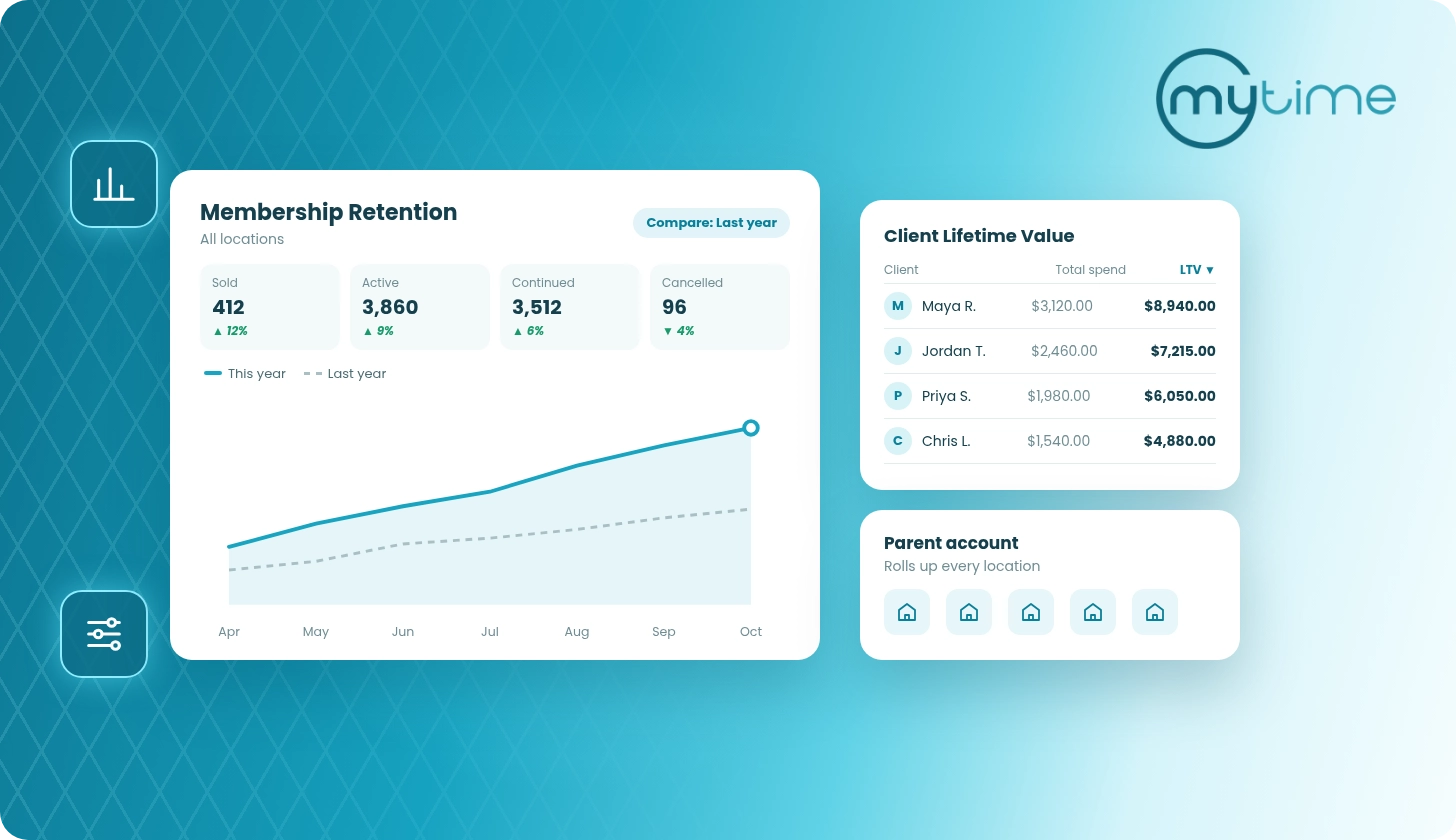
MyTime says client records follow the customer no matter where they book, and franchise leaders can see a complete picture of their customer base (MyTime Global Client Profiles). That visibility matters when brands want clients to move between locations without creating confusion for staff, operators, or finance.
Reporting and controls for corporate teams
Cross-location redemptions also need governance. Corporate teams must support a flexible client experience without losing control over financial workflows.
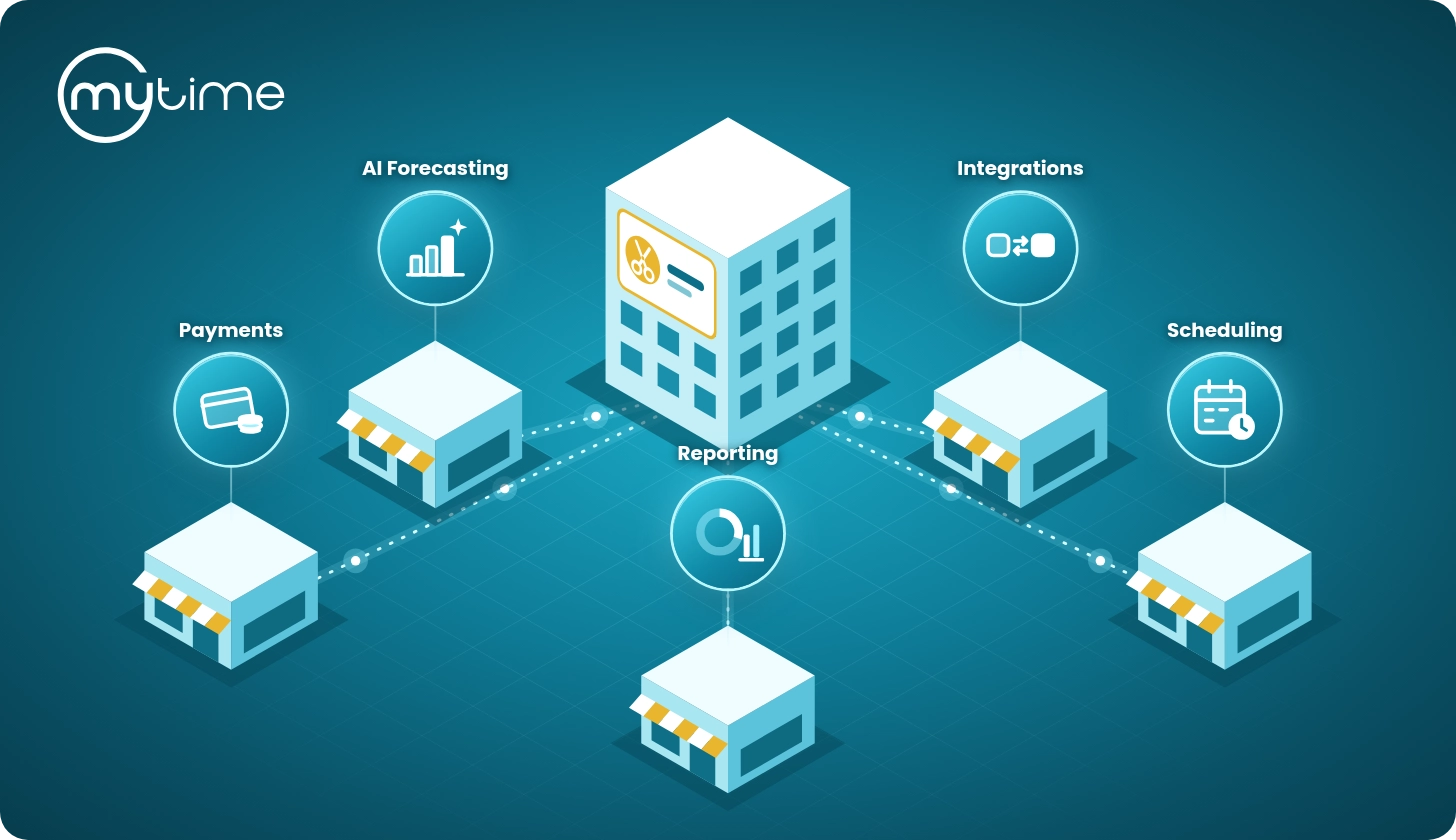
MyTime’s homepage says MyTime can automatically reconcile cross-location redemptions for memberships, packages, and gift cards, calculate franchisee royalties with precision, and support transparent brand-wide financials (MyTime). It also says chains and franchises can manage all locations from one platform with configurable permissions and corporate-level access controls (MyTime).
Those controls matter because not every role should manage every setting. Corporate teams may need to define reconciliation rules, adjustment rates, permissions, and reporting standards. Local teams may need access to client details, redemptions, and day-to-day operations.
MyTime’s memberships, packages, and gift cards feature page says MyTime provides comprehensive gift card tracking through the Gift Card Activity Report (MyTime Memberships, Packages, and Gift Cards). The same page says teams can track gift cards and packages to monitor usage and manage redemptions effectively (MyTime Memberships, Packages, and Gift Cards).
That reporting layer helps finance and operations teams move from manual investigation to structured review. They can see activity, spot questions, and manage exceptions with better context.
Checklist: questions to ask before scaling cross-location redemption
Before a franchise brand scales gift cards, packages, or memberships across locations, leaders should ask how the system will handle client experience and reconciliation together.
Use these questions as a starting point:
- Can clients use stored value across approved locations?
- Does the system identify source and destination locations?
- Does the system support gift cards, packages, membership value credits, and membership item credits?
- Can corporate configure adjustment rates centrally?
- Does the system create reconciliation records when tickets close?
- Can finance view detailed reconciliation reporting?
- Does the platform support corporate permissions and franchisee controls?
- Do client records and balances follow clients across locations?
- Will staff see the client history they need to personalize service?
- Can franchise leaders see a complete picture of the customer base?
The best redemption workflow should help the client, the operator, and the finance team at the same time.
Bringing cross-location redemptions into one franchise operating system
Gift cards, packages, and memberships can strengthen loyalty when clients can use them across a franchise network. But that convenience only works when the brand can manage the financial workflow behind it.
Franchise teams need shared client profiles, accurate balances, clear source and destination location logic, parent-level adjustment rates, ticket-close reconciliation records, and detailed reporting. They also need corporate controls that protect consistency as the network grows.
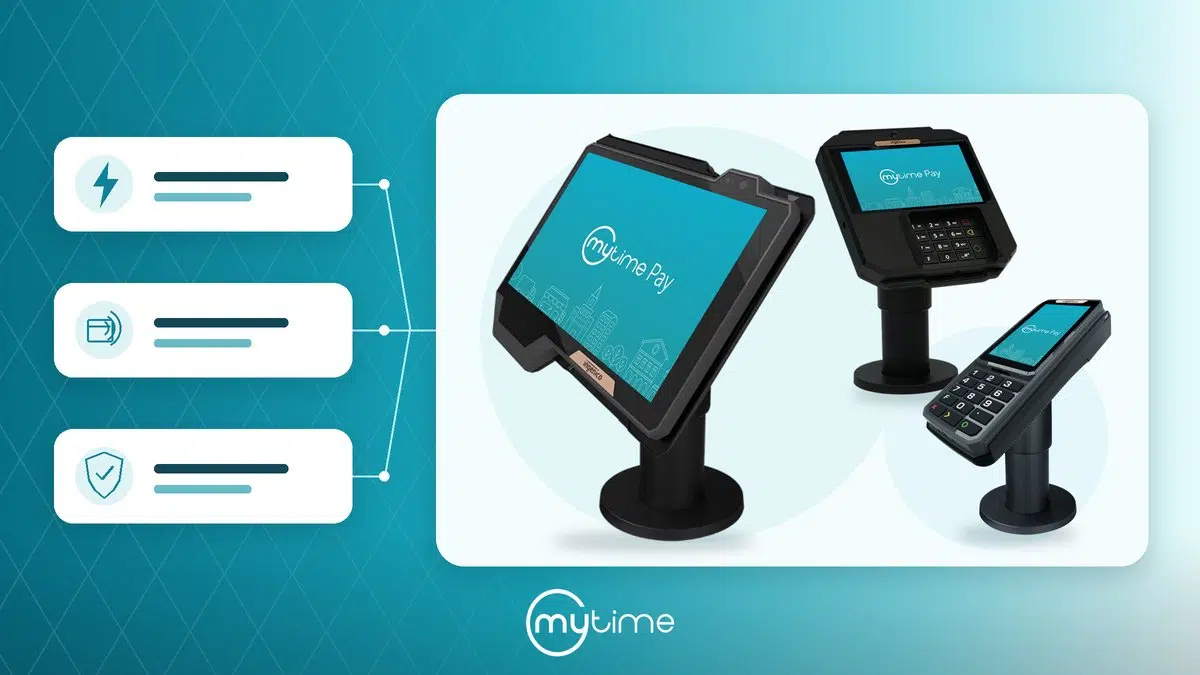
MyTime helps service-based franchise brands connect those pieces in one platform. The system supports gift card, package, and membership redemption workflows, global client profiles, reconciliation reporting, corporate controls, and brand-wide visibility across locations.
Want to see how MyTime helps franchise brands manage gift cards, packages, memberships, and cross-location redemptions? Book a demo.
FAQs
What are cross-location redemptions?
Cross-location redemptions happen when a client purchases stored value at one franchise location and uses it at another. This can include gift cards, packages, membership value credits, or membership item credits.
Why do gift cards, packages, and memberships create reconciliation work for franchises?
They create reconciliation work because the location that sells the value may differ from the location that delivers the service, product, or class. Finance teams need clear source location, destination location, adjustment rate, and reporting logic.
How should franchise brands manage gift card redemption across locations?
Franchise brands should use a system that tracks gift card balances, purchase location, redemption location, adjustment rates, and activity reports. In gift card workflows, MyTime supports reconciliation when a gift card is purchased at one franchise or location and used at another (MyTime Help Center).
How does MyTime support package reconciliation across franchise locations?
For packages, MyTime supports reconciliation for accounts on the Global Database when a package is purchased at one franchise and used at another (MyTime Help Center). The package calculation uses the source location’s package item price multiplied by the adjustment rate set at the parent level (MyTime Help Center).
How does MyTime support membership redemption across franchise locations?
Membership reconciliation in MyTime applies when a membership is purchased at one franchise and used at another, for accounts on the global database (MyTime Help Center). The platform can reconcile membership value credits based on destination-location spend and can reconcile item credits using source-location retail price, destination-location retail price, or a fixed price set in the membership template (MyTime Help Center).