



Your guests don’t buy a single appointment. They buy a ritual they come back to: the massage, the add-on facial, the sauna session after, and the membership that brings them back next month. Running that ritual well at one spa is hard work. Running it the same way at 50, 100 or 200 locations is a different job entirely.
This guide to multi-location spa management is for franchisors, presidents, operations leaders and marketing teams at spa, massage and wellness brands. You’ll see the five shifts reshaping your category, what each one asks of your operations, a checklist for evaluating your platform, where AI is genuinely useful today and the KPIs to track across your network.
What does a multi-location spa or massage brand need from its platform in 2027?
You need one system that runs scheduling, POS and payments, memberships, marketing, inventory, reporting and royalty collection across every location, with AI built into the routine work. Your menu is expanding, memberships carry your revenue, therapist hours are scarce, growth targets keep climbing and guests expect answers at any hour. Each of those shifts touches several parts of your operation at once. When those parts run on separate tools, every new service and every new location adds work for your team.
Key takeaways
- Demand is strong. U.S. spas earned a record $23.5 billion in 2025 across 191 million visits (Spa Business, ISPA 2026 U.S. Spa Industry Study).
- Capacity is the constraint. 61% of spas are actively trying to fill unstaffed service provider positions (ISPA Pulse).
- Growth comes from more value per guest. Revenue per visit is rising faster than visits, so your service mix, add-ons and memberships matter more every year.
- Disconnected systems are the common problem. Every shift in this guide gets harder when booking, payments, memberships, marketing and royalties live in different tools.
- AI helps most inside your system. AI that books from your live schedule and follows your rules saves time. AI bolted on from the outside adds another tool to manage.
Spa and massage in 2027: the numbers behind your next year
Before you plan 2027, ground your decisions in what the industry data shows.
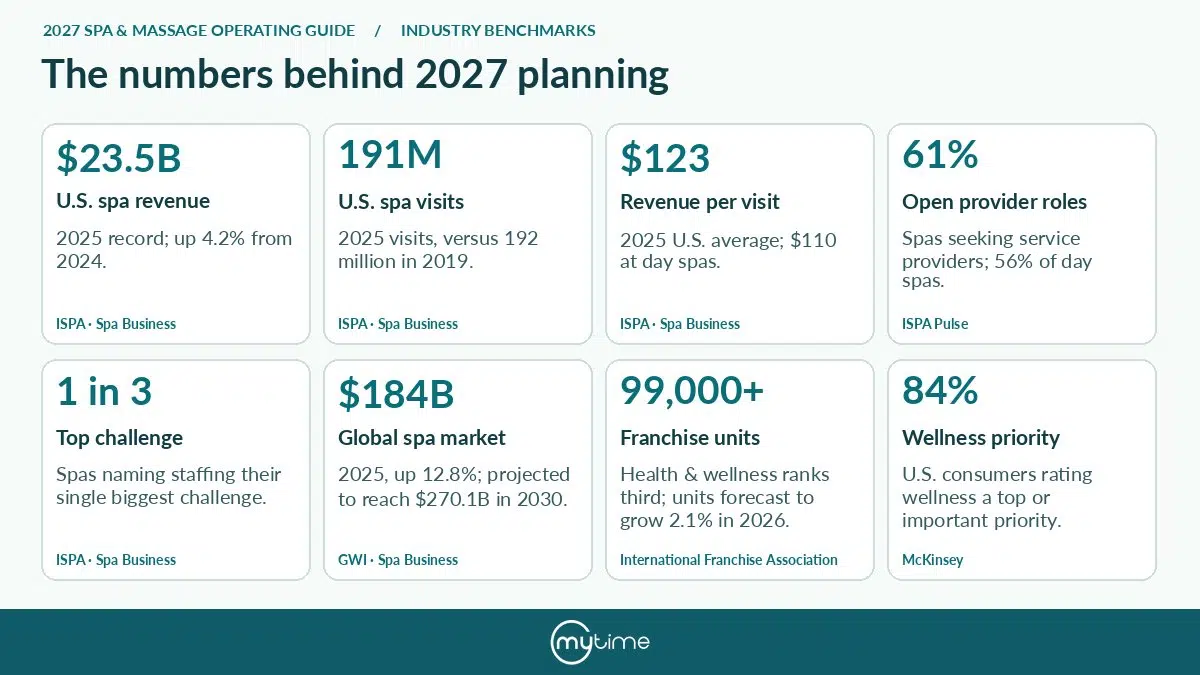
The takeaway for your brand: visits are flat to slightly up, while revenue per visit keeps climbing. ISPA’s own analysis says operators are creating value through service mix, pricing, enhancements and guest experience, not traffic alone (ISPA Pulse). Your 2027 growth depends on how well you run every visit, at every location.
Shift 1: Your menu is expanding past massage
Wellness guests want more than a 60-minute massage. Day spas have moved well beyond the basics: 62% offer LED light therapy, 29% offer head spa treatments and 13% offer percussive massage (Spa Business, ISPA). The International Franchise Association points to hybrid models that bring services like IV drips and saunas under one roof, along with packages and higher-margin add-on services (IFA).
What a bigger menu asks of your operations
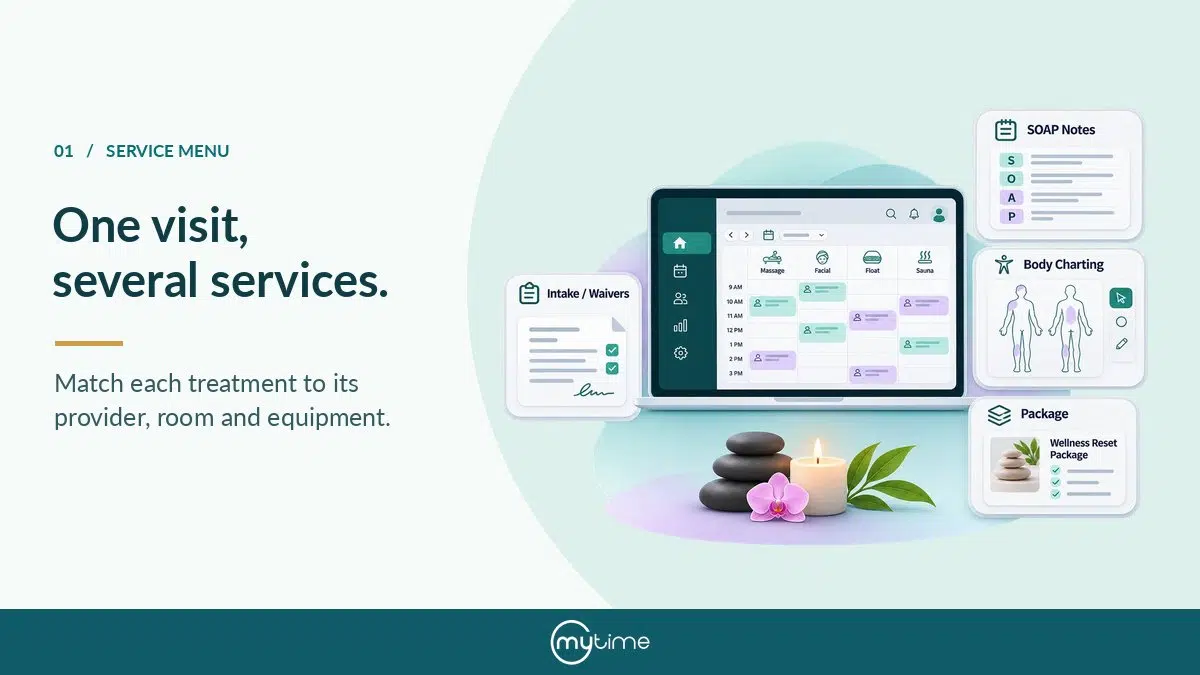
Every new service brings its own requirements. A sauna or float session books a room, not just a therapist. A facial paired with a massage needs two providers and one smooth visit. New treatments need their own intake forms, waivers, service notes, pricing and staff qualifications. If your booking system can’t see your rooms and equipment, your front desk manages that by hand.
What to look for in spa scheduling software
- Resource scheduling: Book rooms and equipment together with the provider, so you never double-book a sauna or a treatment room.
- Multi-service and couples bookings: Combine services and providers in one visit on one ticket.
- Intake by service: Attach the right intake forms and waivers to each treatment automatically.
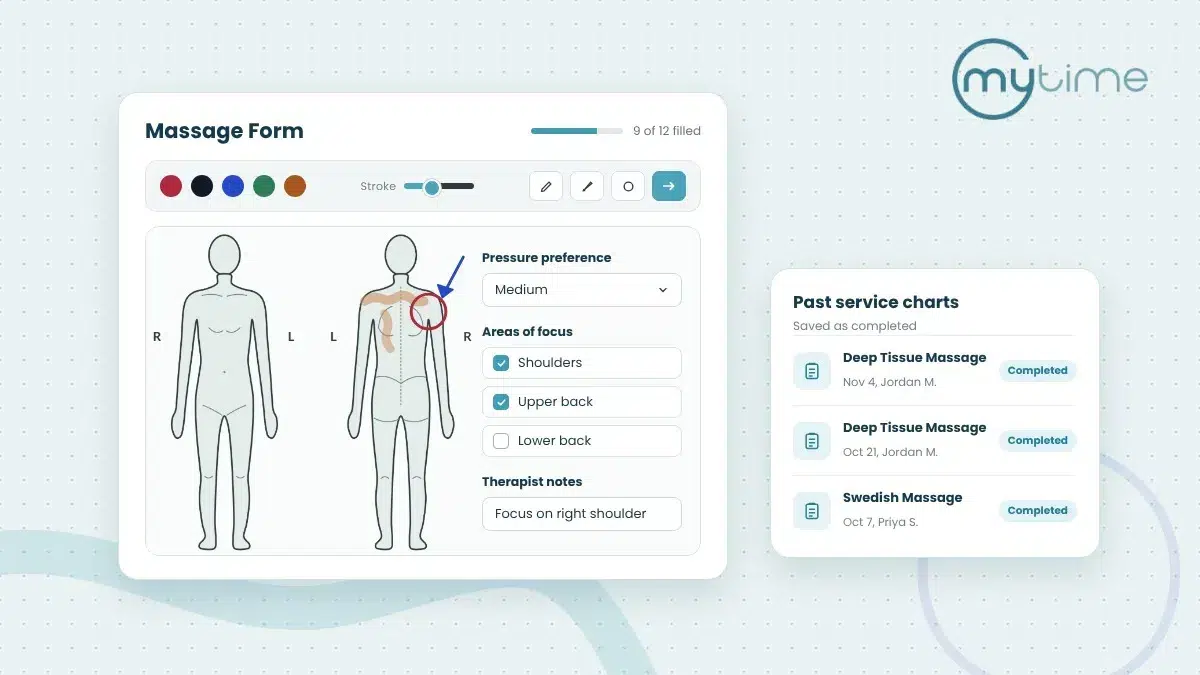
- Service documentation: Keep service notes and face and body charts on the guest record, so the next provider picks up where the last one left off.
- Packages across services: Bundle massage, facials and recovery services into packages your guests can buy and redeem anywhere.
- One central menu: Build services once for the whole network, then set pricing by location or market.
Shift 2: Memberships carry your business model
For many massage brands, membership is the business. The IFA notes that wellness franchises use membership models to generate predictable recurring revenue, which also attracts potential franchisees (IFA). Membership growth depends on your front desk. Every guest who books a massage is a chance to offer an add-on, a new service or a membership. The IFA also points to packages and higher-margin add-on services as a way wellness franchises diversify revenue (IFA).
What memberships ask of your operations
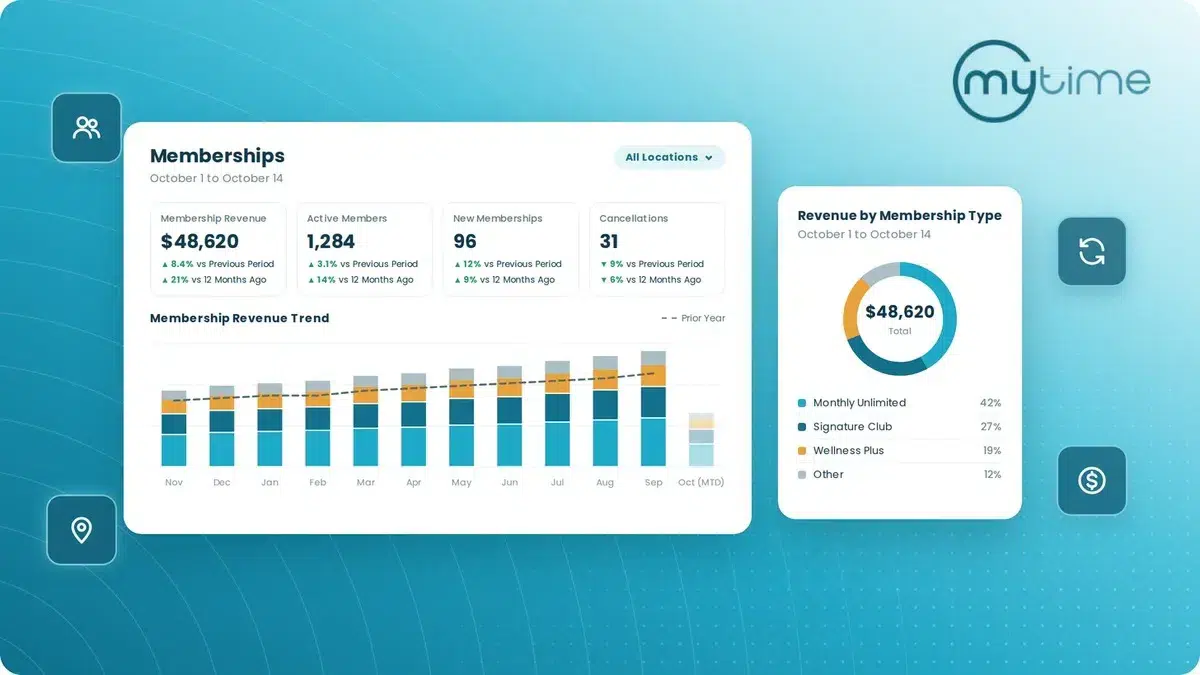
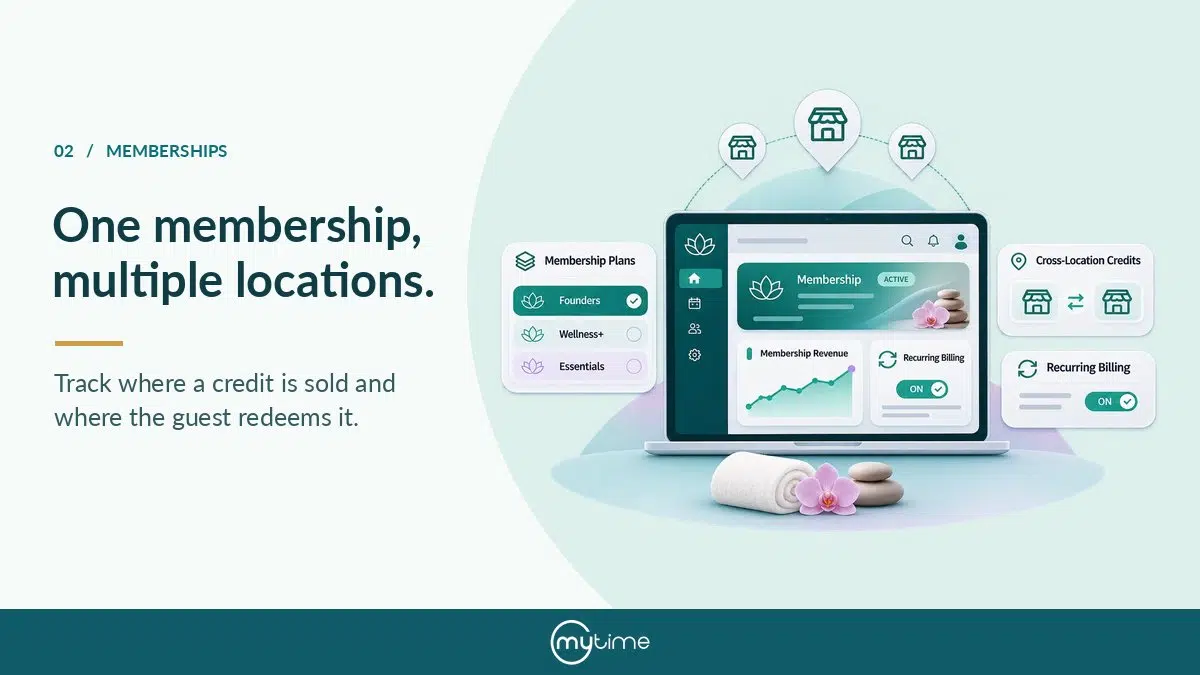
A membership touches booking, checkout, billing, marketing and royalties at once. Members visit more than one location, so their credits need to work everywhere. The location that sold the membership and the location that served the guest need to settle correctly. Failed dues payments, unused credits and quiet cancellations all erode recurring revenue, and they’re hard to see when your data lives in different systems.
What to look for in membership software
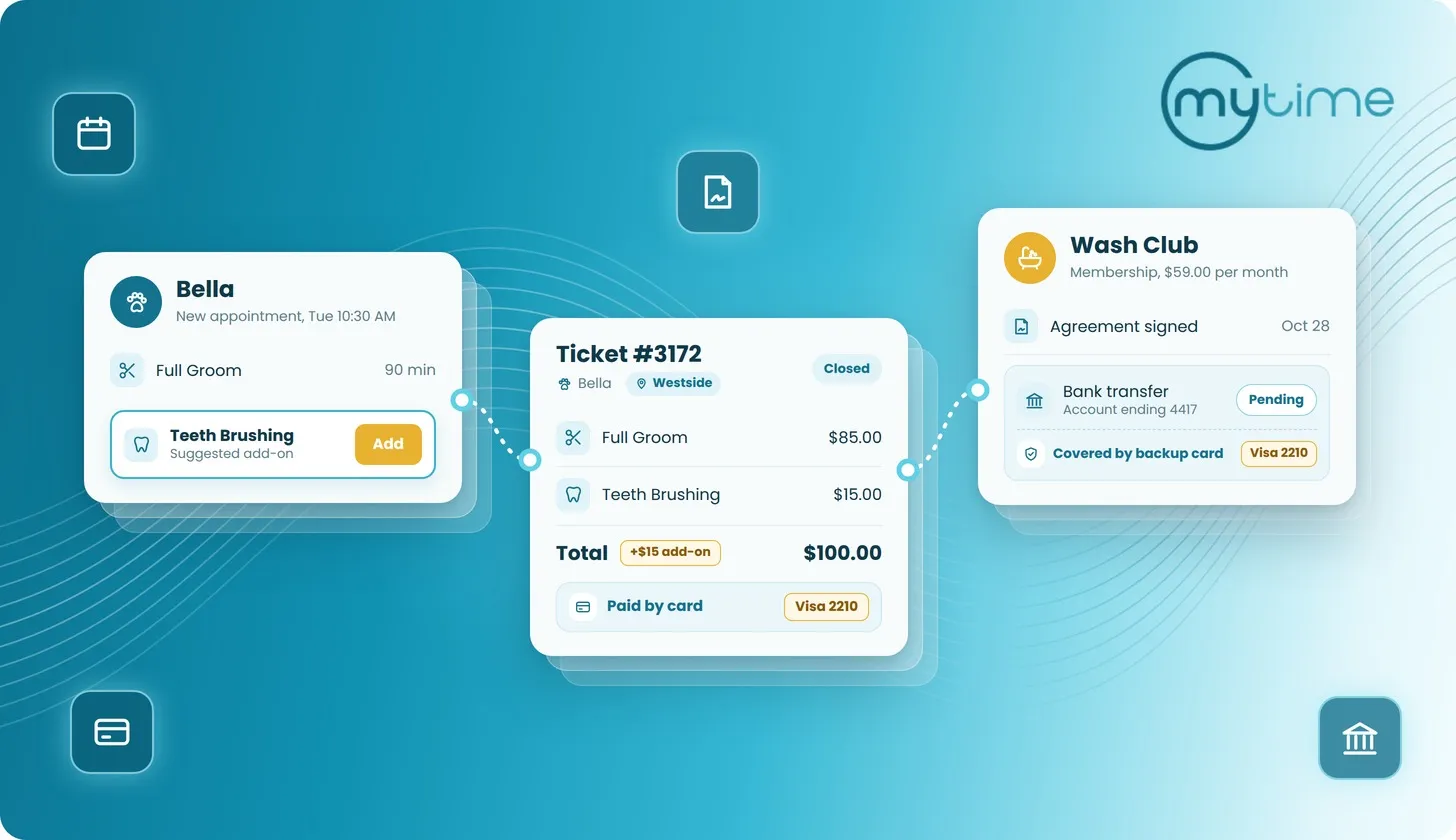
- Recurring billing by card or bank account: Bill dues by bank account at fees typically lower than cards, and give members more ways to pay.
- Automatic benefits: Apply member pricing and credits automatically at booking and checkout, so your team never calculates them by hand.
- Credits that protect your schedule: Let membership credits cover late-cancel and no-show fees according to your policy.
- Cross-location membership: Honor memberships at every participating location, with automatic redemption tracking and reconciliation between locations.
- Payment recovery: Prompt members to update a failed card before the membership lapses.
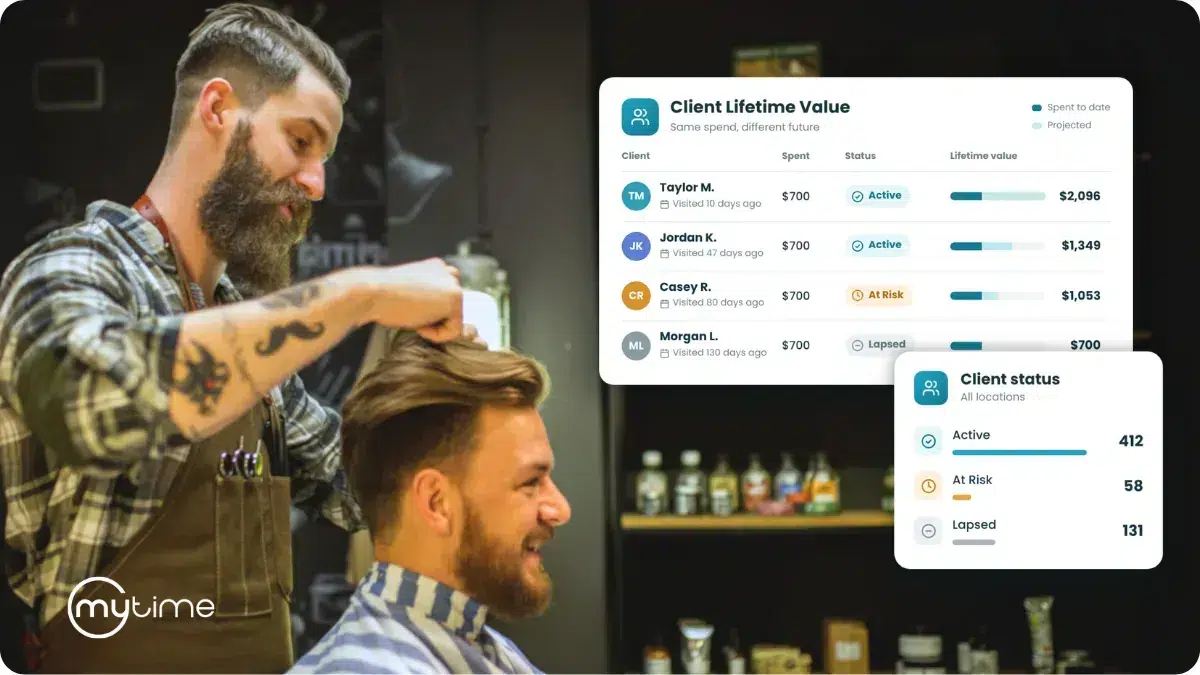
- Membership reporting: See active members, revenue and performance by plan, location and period.
Shift 3: Therapist hours are your scarcest resource
You can’t add therapist hours the way you add marketing spend. Massage is physically demanding work, and the average massage therapist worked 23.9 hours per week in 2025 (AMTA). At the same time, 61% of spas are still trying to fill open provider roles (ISPA Pulse). Every hour your therapists are available has to be booked.
What an empty hour really costs
Use the industry average to size the problem. If one location leaves five therapist hours unbooked each week, and each hour equals an average $110 day spa visit, that location loses $550 a week, or about $28,600 a year. Across 100 locations, that’s roughly $2.9 million in revenue your brand never sees. This is an illustrative calculation based on ISPA’s average day spa revenue per visit (Spa Business, ISPA). Run it with your own numbers.
What to look for in your capacity tools
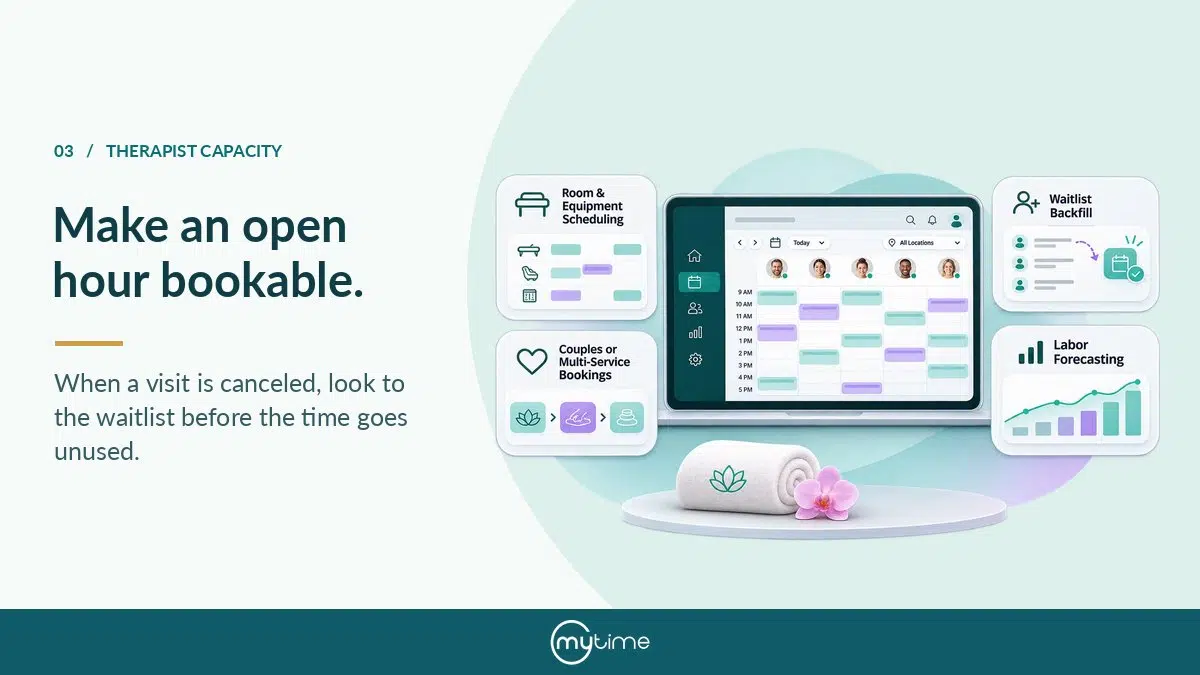
- Waitlist backfill: Fill cancellations from your waitlist automatically, before the hour goes empty.
- Labor forecasting: Predict your busy periods so the right team is on the schedule.
- Reminders and confirmations: Send automated reminders that reduce no-shows and late cancellations.
- Rebooking at checkout: Book the next visit before the guest leaves.
- A front desk that isn’t stuck on the phone: Let AI handle routine calls and chats so your team can check guests in, rebook and sell.
- Staff mobile app: Give therapists their schedules, client notes and changes in their pocket.
Shift 4: Your growth targets keep climbing
Wellness franchising is attracting investment. The IFA ranks health and wellness as the second most attractive investment opportunity in franchising, with more than 20% of new concepts launched in 2025 (IFA). Across all industries, the IFA projects more than 12,000 new franchised businesses in 2026 (IFA). For your brand, every new location needs to open fast and run your standards from day one.
What growth asks of your operations
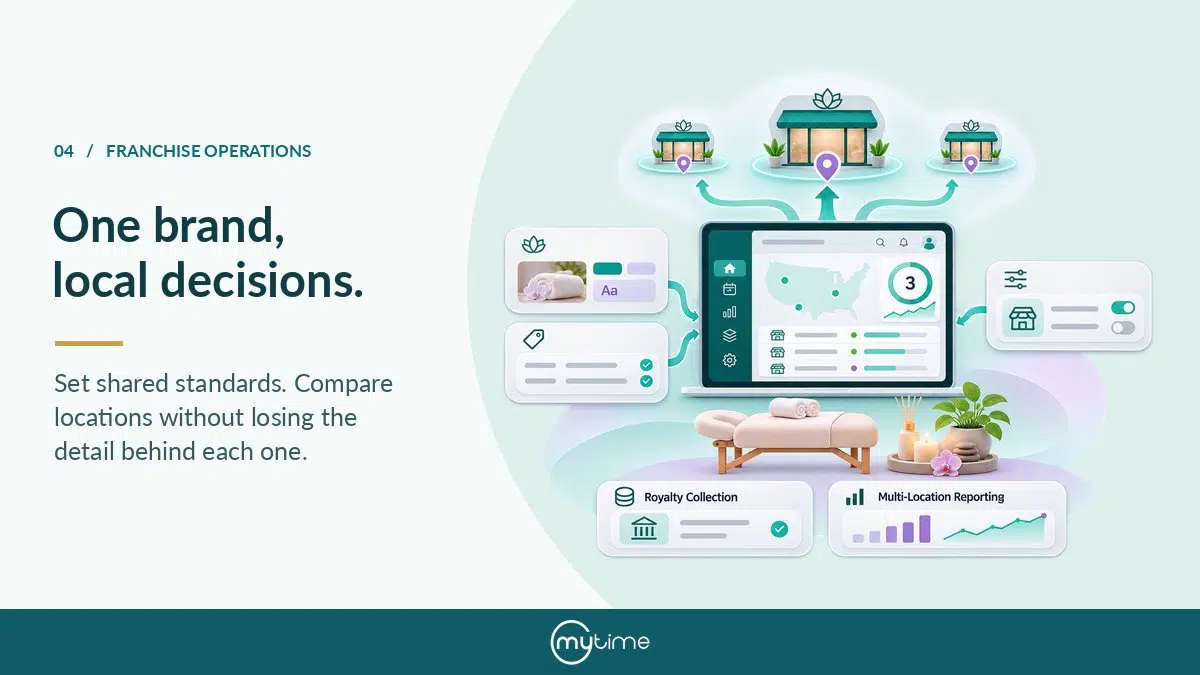
As your network grows, you need to open new locations with the same menu, pricing, standards and guest experience. Franchisees need room to run their spas, within limits you set. Royalties need to be calculated and collected accurately. And you need to see each location clearly. System-wide averages can hide big differences between franchisees, so you need to compare cohorts, such as your top 25% of locations against the middle and bottom.
What to look for in franchise management software
- Central menu, offers and pricing: Build services, packages and promotions once, then standardize prices or vary them by location, staff or market tier.
- Permissions you control: Decide what franchisees manage locally, and give corporate and regional teams access limited to the locations they oversee.
- One guest record across the network: Recognize every guest at every location, with shared history and balances.
- Royalty calculation and collection: Calculate royalties and fund fees automatically and collect them from franchisee bank accounts on your schedule.
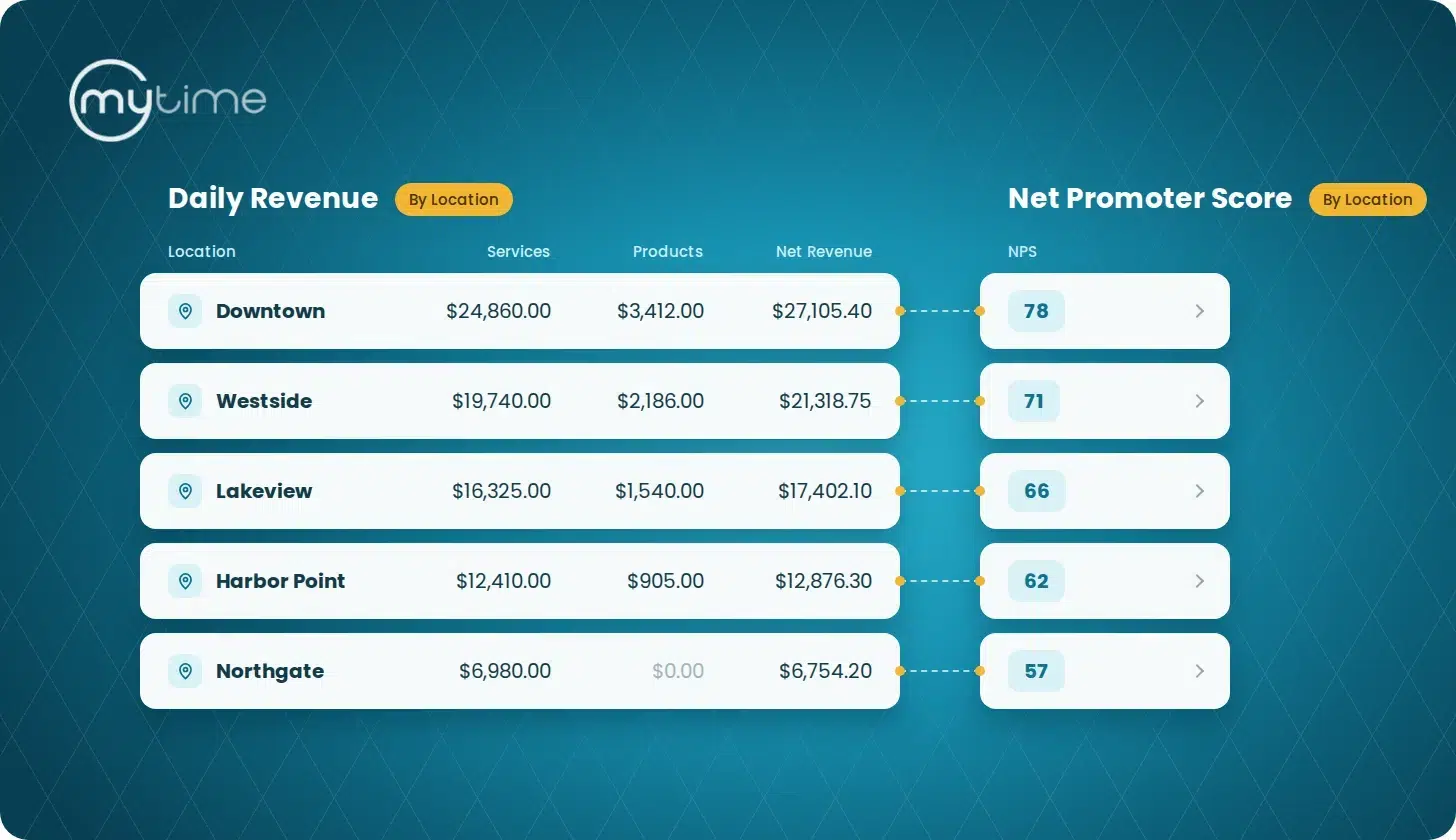
- Network reporting: Compare locations, regions and cohorts in real time, without exporting spreadsheets.
- National campaigns with local control: Send brand campaigns from corporate while locations stay on brand.
- Your brand everywhere: White-label your guest app, booking pages and franchisee tools in your brand identity.
Shift 5: AI is expected at your front desk
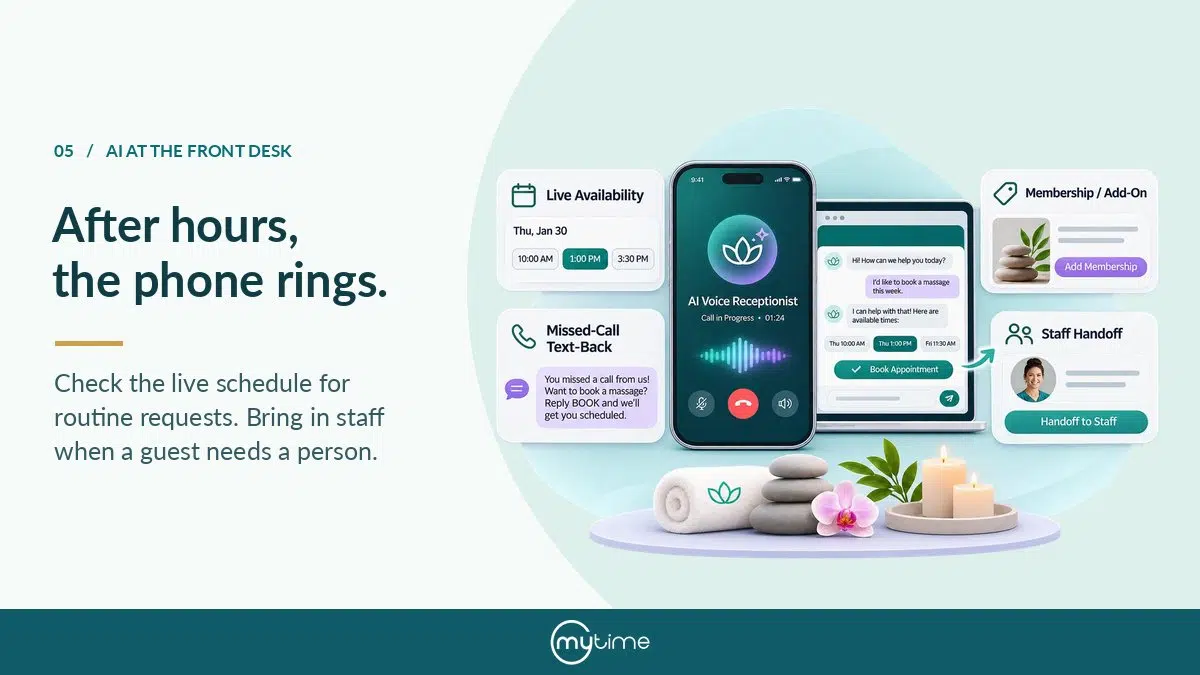
Your guests want answers and bookings at any hour, including evenings and weekends when your spa is busy or closed. Your front desk is already checking guests in, processing payments and selling memberships. Phones ring during all of it.
AI can help, but only when it works inside the system that runs your schedule. An AI tool that can’t see live availability, your booking rules or your guest records just creates another inbox for your team. A principle featured in Spa Business for spa directors bringing AI into their operations is a good one to follow: always keep a “human in the loop” (Spa Business).
What to look for in AI for your front desk
- Bookings from your live schedule: AI should book, reschedule and cancel from real availability, using your services, providers, rooms and rules.
- Coverage on your terms: Choose when AI answers: every call, after hours or when your team can’t pick up.
- Relevant upsells at booking: AI should offer the right add-on, upgrade or membership while the guest books.
- Missed-call recovery: Text back callers your team couldn’t reach.
- Handoff with context: Transfer to your team when a guest needs a person, without making the guest repeat themselves.
- One platform: Keep every conversation, booking and payment on the same guest record.
The common thread: disconnected systems
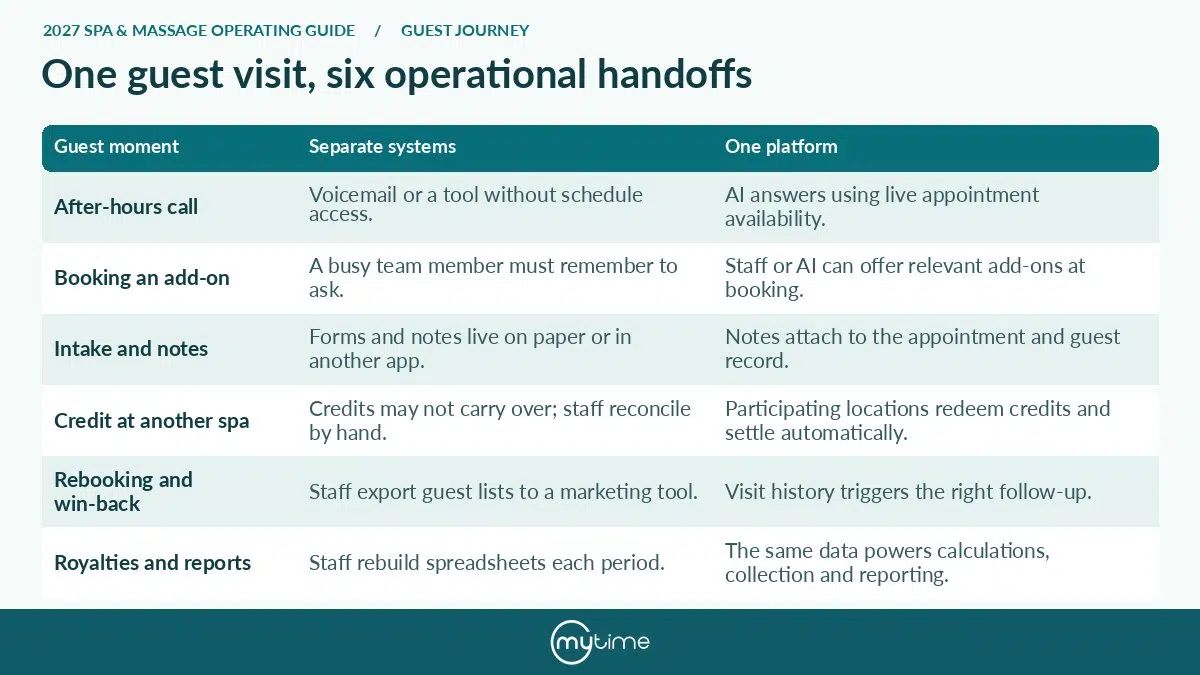
Follow one guest through a typical visit. She finds you on Google, calls at 8 p.m., books a massage with an add-on, completes intake, checks in, pays, uses a membership credit at a second location and gets a reminder to rebook. In many networks, that one ritual moves through a booking tool, a phone system, a POS, a membership biller, a marketing platform, an intake app, a reporting tool and a royalty spreadsheet.
Every handoff between those tools is a place where data gets re-entered, numbers stop matching and revenue slips. And every new location multiplies the problem.
Your platform evaluation checklist
Use this checklist when you review your current platform or evaluate a new one. If you answer “no” to several questions in a section, that’s where your operation is working harder than it needs to.
Guest journey and booking
- [ ] Can guests book from Google, social, your website, your app and by phone, all into one live schedule?
- [ ] Can you book rooms, equipment and multiple providers in one visit?
- [ ] Do intake forms and waivers attach automatically to the right services?
- [ ] Does every location see the same guest record and history?
Memberships and payments
- [ ] Can you bill memberships by card and bank account?
- [ ] Do member benefits and credits apply automatically at booking and checkout?
- [ ] Can members use their benefits at every participating location, with automatic reconciliation?
- [ ] Can your POS take every payment type your guests use?
- [ ] Can you see membership revenue and performance by plan and location?
Therapist and resource capacity
- [ ] Does your waitlist fill cancellations automatically?
- [ ] Can you forecast busy periods and staff to demand?
- [ ] Can your team rebook guests at checkout in a few taps?
- [ ] Do automated reminders reduce your no-shows?
Franchise control and finance
- [ ] Can you build your menu once and set pricing by location or market tier?
- [ ] Can you control what franchisees change locally?
- [ ] Are royalties calculated and collected automatically?
- [ ] Can corporate and regional teams see only the locations they oversee?
Marketing and retention
- [ ] Can you run national campaigns while keeping local messages on brand?
- [ ] Do rebooking, win-back and birthday messages send automatically from visit history?
- [ ] Can you request reviews and manage listings for every location?
AI and the front desk
- [ ] Does your AI book from your live schedule and follow your booking rules?
- [ ] Does it offer relevant upsells and hand off to your team with context?
- [ ] Does it run on the same platform as your booking, POS and guest records?
Reporting
- [ ] Can you compare locations, regions and cohorts in real time?
- [ ] Can you get answers to reporting questions without building a report?
Where AI is genuinely useful today
AI earns its place when it takes routine work off your team and keeps them in control of the decisions that matter. Here’s where AI adds real value in a multi-location spa or massage business, and where your team stays in charge.
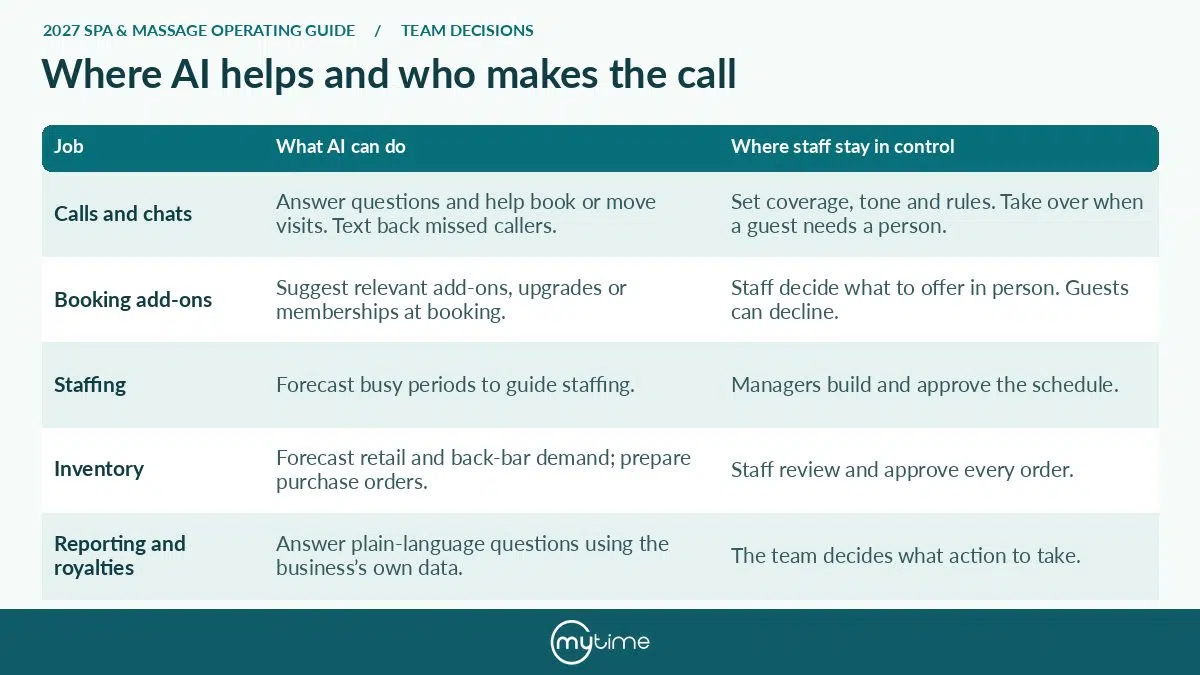
Keep a person involved in guest complaints, policy exceptions, sensitive intake questions and any decision that affects a guest’s money or experience in a way your rules don’t cover.
The KPIs to track across your network
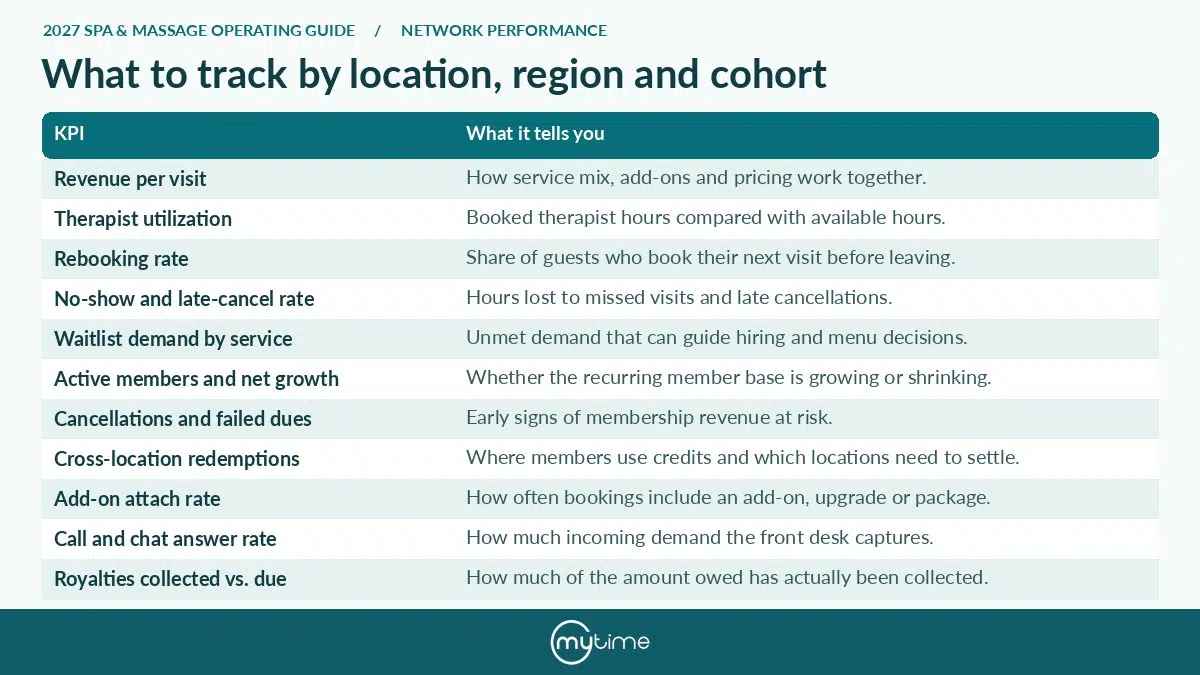
The right KPIs show you where each location is gaining or losing revenue. Track them by location, region and cohort, not only as system-wide averages.
Why MyTime is the platform built for this
MyTime is the one platform built to run every part of a multi-location spa, massage and wellness brand. Instead of stitching together a booking tool, a phone service, a membership biller, a marketing platform and a royalty spreadsheet, you run it all on MyTime, with AI built in.
Here’s how MyTime meets each shift in this guide:
- A bigger menu: Book providers, rooms and equipment together, combine services and couples bookings in one visit, attach intake forms and waivers, and keep service notes and face and body charts on the guest record with Visual Charting. See MyTime for wellness and spa brands.
- Memberships: Bill memberships, packages and gift cards by card or bank account, apply benefits automatically, let credits cover no-shows and late cancellations, and honor memberships across participating locations with automatic reconciliation.
- Therapist hours: Fill cancellations with waitlist backfill, forecast your busy periods with AI-powered labor forecasting and give your team the staff app and scheduling tools they need.
- Growth: Build your menu and offers once, set pricing by location or market tier, control franchisee permissions, white-label your guest app and calculate and collect royalties automatically with MyTime’s franchise management tools. Compare every location with 70+ reports.
- AI at the front desk: MyAI Voice Receptionist & Chat answers calls and chats, books from live availability, offers relevant upsells, texts back missed callers and hands off to your team with context. When your team books, MyAI suggests relevant upsells they can offer on the spot.
- Marketing and retention: Send targeted email, SMS and guest-app campaigns from corporate, automate rebooking and win-back messages, and manage reviews and listings for every location with the Marketing Hub.
- Payments and reporting: Take every payment on one POS across your network, and ask MyAI reporting questions in plain language from your own data.
Every one of these runs on the same guest record, the same schedule and the same checkout, at every location. That’s what makes the whole ritual work.
Frequently asked questions
What software do spa and massage franchises use to run multiple locations?
Spa and massage franchises use franchise management software that combines scheduling, POS, memberships, marketing, reporting and royalty collection. The strongest option runs all of these on one platform, so every location shares one guest record and corporate sees the whole network. MyTime is built for multi-location and franchise service brands, with AI built into the front desk, staffing and reporting.
How do you manage memberships across multiple spa locations?
You manage memberships across locations with a platform that honors member benefits at every participating location and reconciles redemptions automatically. Look for recurring billing by card and bank account, automatic credits at booking and checkout, payment recovery for failed dues and membership reporting by plan and location.
How can a massage franchise reduce empty therapist hours?
You reduce empty therapist hours by filling cancellations from a waitlist automatically, sending reminders that cut no-shows, rebooking guests at checkout and forecasting demand so you staff to your busy periods. An AI front desk also helps by answering and booking calls your team can’t pick up.
What should a spa franchisor look for in franchise management software?
Look for a central menu with location-level pricing, permissions you control, one guest record across locations, cross-location membership redemption, automatic royalty calculation and collection, network reporting and national marketing with local control. Use the checklist in this guide to compare platforms.
Can AI book appointments for a spa or massage business?
Yes. AI receptionists and chat can answer questions and book, reschedule or cancel appointments when they’re connected to your live schedule and booking rules. With MyAI Voice Receptionist & Chat, you choose when AI answers, it offers relevant upsells and it hands off to your team when a guest needs a person.
How do spa franchises collect royalties?
Many spa franchises calculate royalties from sales reports and collect them manually each period. With MyTime, you configure royalties and fund fees as a percentage of sales, a set amount per item or a flat fee, and MyTime calculates the amounts due and collects them from franchisee bank accounts daily, weekly or monthly.
What KPIs should a spa or massage franchise track?
Track revenue per visit, therapist utilization, rebooking rate, no-show and late-cancel rate, active members and net member growth, membership cancellations and failed dues, cross-location redemptions, add-on attach rate, call and chat answer rate and royalties collected compared with royalties due. Compare them by location, region and cohort.
See your whole network on one platform
Your guests experience one brand. Your team should run it on one system. See how MyTime runs scheduling, POS, memberships, marketing, inventory, reporting and royalty collection for spa, massage and wellness brands, with AI built in.
Book a MyTime demo or see how MyTime works for spa and massage franchises.