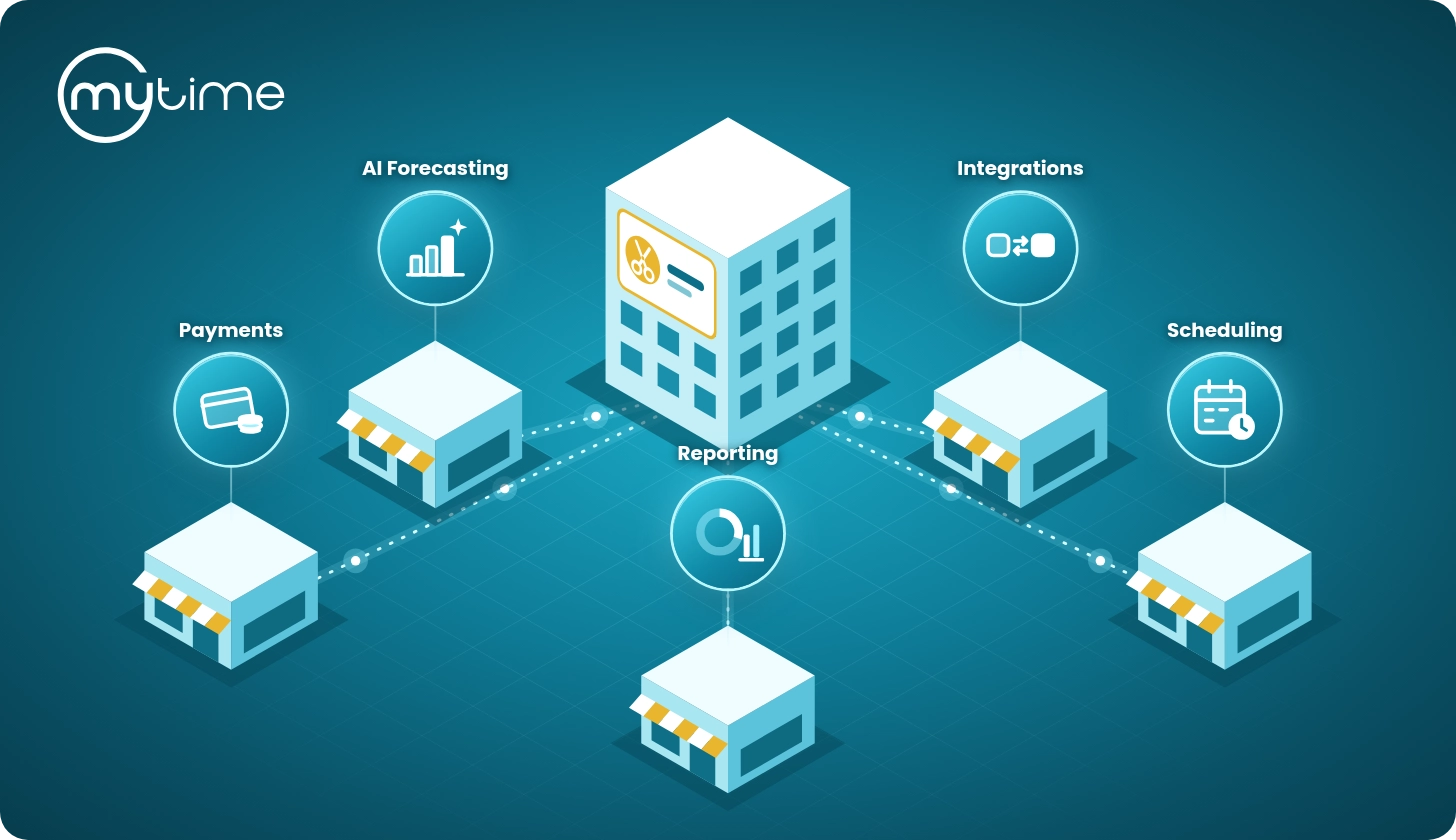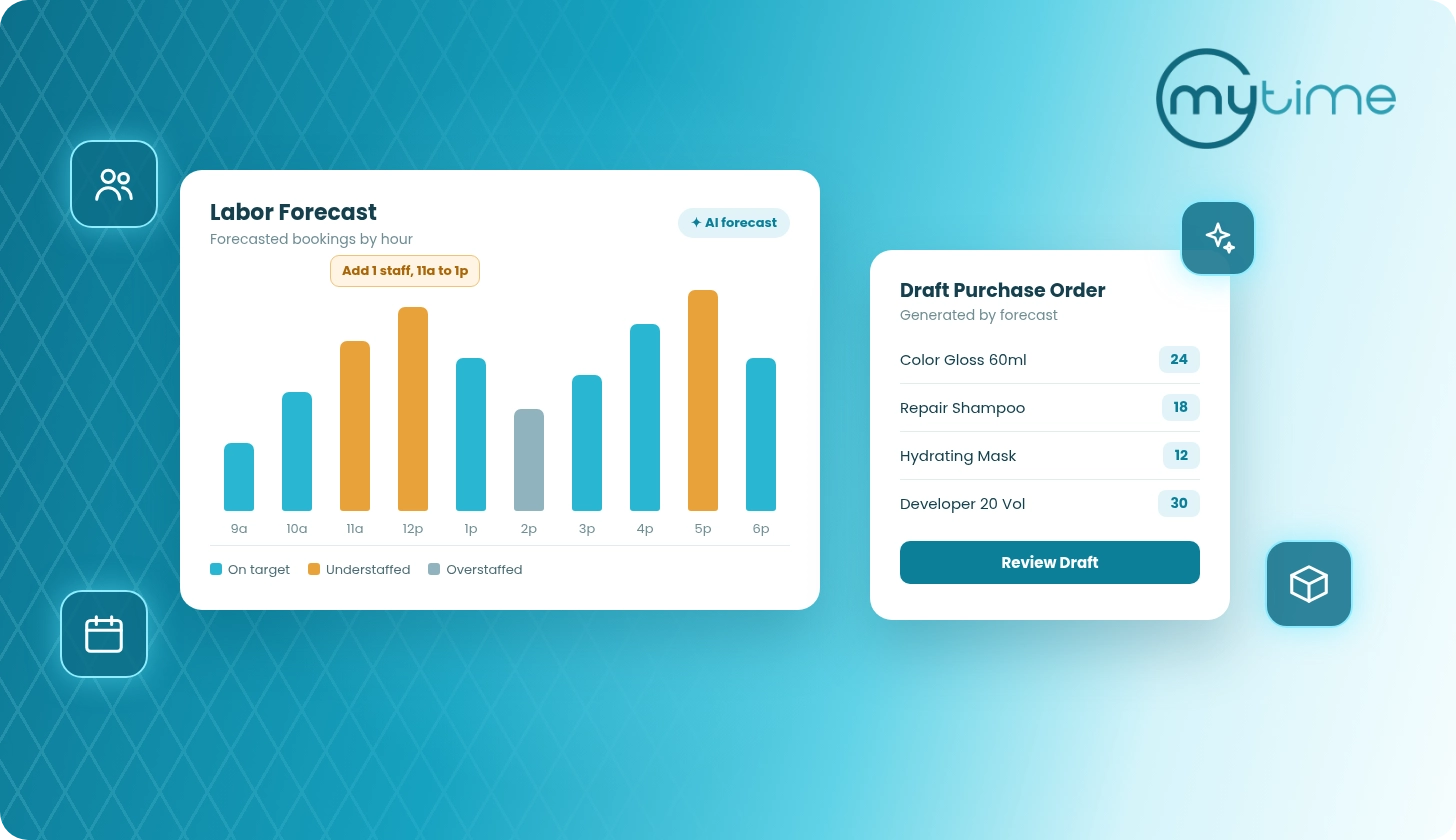




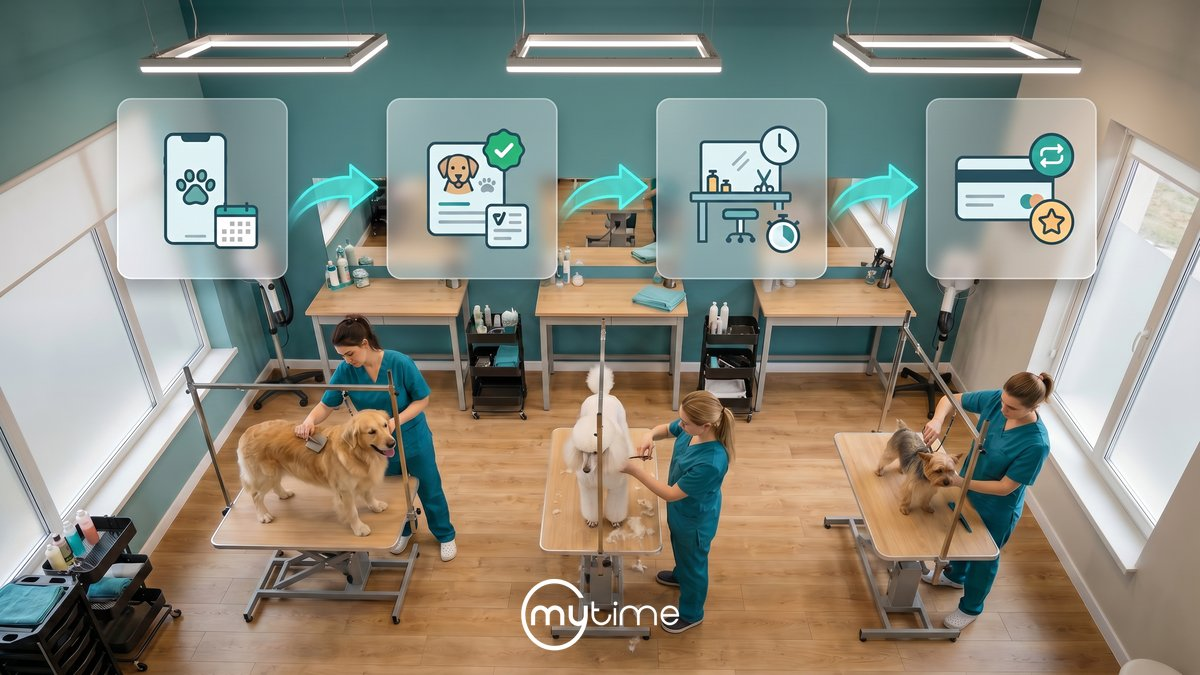
Pet grooming franchise software helps multi-location pet care brands manage grooming appointments, boarding and daycare stays, pet records, staff schedules, payments, memberships, marketing, reporting, and franchise controls from one platform. The best software should support pet-specific workflows such as breed- or size-based pricing, multi-pet households, multi-day boarding, vaccination reminders, pet-level memberships, and location-level reporting. It also needs enough franchisor control to standardize operations while giving local teams room to serve pet parents well.
That combination matters because pet care is not a simple appointment category. Grooming, boarding, daycare, walking, memberships, retail, reminders, and records all create different requirements. A single-location booking tool may work for one shop, but a franchise needs software that can scale without disconnected data or extra administrative work.
What is pet grooming franchise software?
Pet grooming franchise software is a connected business platform for pet grooming, boarding, daycare, and pet care brands with multiple locations. It helps teams manage appointments, pet profiles, service history, staff schedules, payments, packages, memberships, marketing, reporting, and franchise-level settings in one place.
The category is broader than pet salon scheduling software. The U.S. Bureau of Labor Statistics defines pet care services as establishments that provide services such as pet boarding, sitting, grooming, and training, and it separates those businesses from veterinary services (BLS). That distinction is important for software evaluation because pet care franchises need workflows for service delivery, records, payments, capacity, and repeat engagement, not veterinary practice management.
For a grooming-only business, the system needs appointments, providers, durations, notes, reminders, checkout, and rebooking. A grooming and boarding franchise also needs multi-day stays, add-ons, daycare, retail, vaccination requirements, pet preferences, and family accounts. Franchisors need one more layer: corporate control, local flexibility, consistent reporting, repeatable onboarding, and a reliable way to open new locations.
The practical question is not, “Can this software book a grooming appointment?” The better question is, “Can this software run the full pet care journey across every location?”
Why basic booking tools break
Pet care demand is large enough, and complex enough, that franchise operators need more than a calendar. APPA reported that U.S. pet industry expenditures reached $158 billion in 2025 and projected the market to reach $165 billion in 2026 (APPA). The same update reported that 95 million U.S. households owned at least one pet in 2025, including 71 million dog-owning households and 53 million cat-owning households (APPA).
That demand creates opportunity for grooming, boarding, daycare, and pet care brands. It also creates operational pressure. One owner may have multiple pets. One pet may need grooming, daycare, and boarding. One boarding stay may include add-on grooming. One franchise location may need to follow corporate vaccination rules while adjusting local prices, staff schedules, or service availability.
AVMA’s 2024 pet ownership statistics estimate 89.7 million dogs and 73.8 million cats in the U.S., based on a weighted opt-in online survey of 7,539 people (AVMA). Those pets are not generic customers in a booking system. Each may have a breed, size, temperament, health note, vaccination record, dietary requirement, grooming history, and preferred staff member.
The complexity grows quickly across locations. A basic booking tool may show available time slots, but it may not know whether a pet’s vaccinations are current, whether a grooming add-on should happen on day two of a boarding stay, or whether a membership applies to the pet rather than the owner. Those gaps become manual work for staff and inconsistent experiences for customers.
BLS reported that pet care services revenue more than quadrupled from 2004 to 2021, reaching $10.7 billion in 2021, while output grew 144.6% during the same period (BLS). It also found that labor productivity fell a cumulative 30.1% from 2004 to 2021, even as output and hours worked grew (BLS). Growth can add work faster than teams can absorb it unless the operating system removes manual coordination.
Core workflows to support
The best pet grooming franchise software should support the full operating model, not just the appointment book. Start by mapping the workflows that create the most friction for staff, franchisees, and pet parents.
Grooming appointments
Grooming scheduling needs more detail than a standard service appointment. Duration and price may vary by breed, size, coat condition, service type, add-on, and location. A puppy trim is not the same operational unit as a large-dog deshedding service.
MyTime supports grooming, boarding, daily walks, and more, with booking through a website, social media, Google search, the MyTime Branded Guest App, in person, or over the phone (MyTime pet care solution). Pet care brands can also configure different durations and pricing by breed, size, and service (MyTime pet care solution).
For operators, the goal is to make the booking flow smarter before staff have to intervene. When the system guides appointment length, provider, pet profile, reminders, and checkout, the front desk spends less time correcting the schedule.
Boarding, daycare, and multi-day stays
Boarding and daycare add another layer of scheduling complexity because the service may span multiple days or include add-ons during the stay. A boarding reservation is not just a start time. It may include check-in and check-out dates, feeding instructions, medication notes, grooming add-ons, deposits, payments, and capacity rules.
MyTime supports online multi-day booking with start and end dates, confirmation emails showing start and end date/time, add-on services for specific days during the stay, and automatic ticket generation after online booking (MyTime multi-day booking documentation).
That matters because boarding, grooming, and daycare often overlap. A dog may stay from Thursday to Sunday, receive a bath before pickup, and add daycare on one or more days. Connected software reduces sticky notes, manual calendar checks, and reliance on one staff member’s memory.
Multi-pet households
Pet parents often manage more than one pet. That creates awkward workflows when the system treats each pet as a separate customer or staff have to duplicate owner information.
MyTime links owners to their pets, and profiles can carry history, preferences, memberships, behavior icons, and notes brand-wide (MyTime pet care solution). Clients can also manage pet profiles through the booking widget account interface, including adding and editing pet profiles (MyTime pet profile documentation).
This is important for franchises with memberships, packages, or service histories. The owner relationship matters for payment and communication, but the pet relationship matters for service quality.
Vaccination records and pet profiles
Pet records are not just a convenience feature. They help staff deliver consistent care and catch requirements before service.
MyTime supports owner-linked pet records with service history, preferences, memberships, behavior icons, notes, vaccination tracking, medical history, dietary needs, and global records across locations (MyTime pet care solution). Expiration reminders can be added to custom pet fields, used for vaccination expiration, displayed as upcoming or expired badges, included in intake forms, and paired with file attachments such as vaccination records (MyTime expiration reminder documentation).
At franchise scale, these details reduce risk and rework. Staff should not have to search notes or check a separate system to know whether a vaccination record is missing or expired. The requirement should be visible during booking or check-in.
POS, memberships, packages, and gift cards
Pet care franchises often rely on more than one transaction type. A customer may pay a boarding deposit, buy a grooming package, redeem a membership benefit, purchase retail, use a gift card, or add a service at checkout.
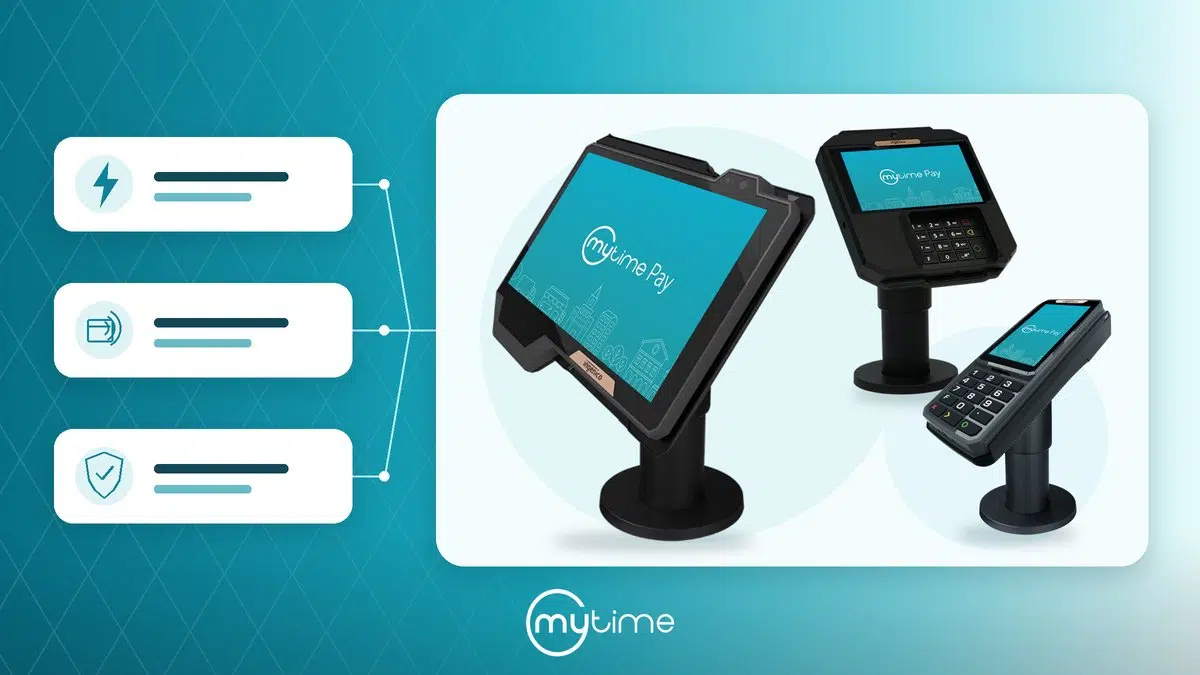
MyTime supports integrated secure payment processing for in-store and online transactions, split payments, refunds, gift cards, memberships, service packages, sales tracking, tax tracking, commission tracking, and cloud-based management across locations (MyTime POS and payments). Businesses can also create and customize membership plans, manage memberships from client profiles, create service packages, sell and track gift cards, and support franchise and multi-chain requirements (MyTime memberships).
For pet care brands, the membership model may need to be pet-specific. The Scenthound case study says Scenthound required memberships at the pet level rather than the owner level, because an owner with two dogs would need two memberships (Scenthound case study). That is different from a generic owner-level membership.
Reporting and franchise control
Franchise growth creates a visibility problem. Corporate teams need to know what is happening across locations, while franchisees need practical reports they can use to manage the day.
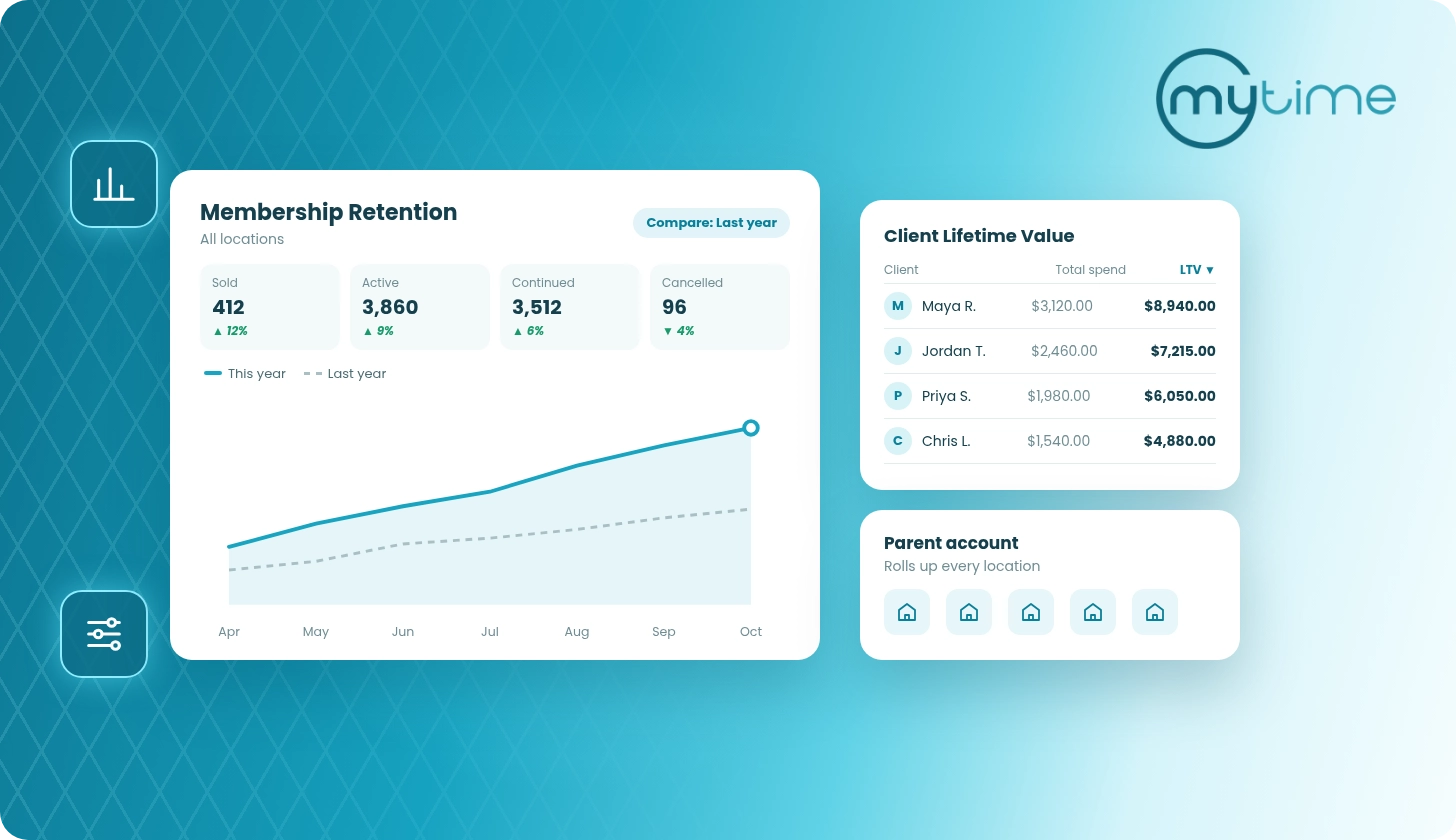
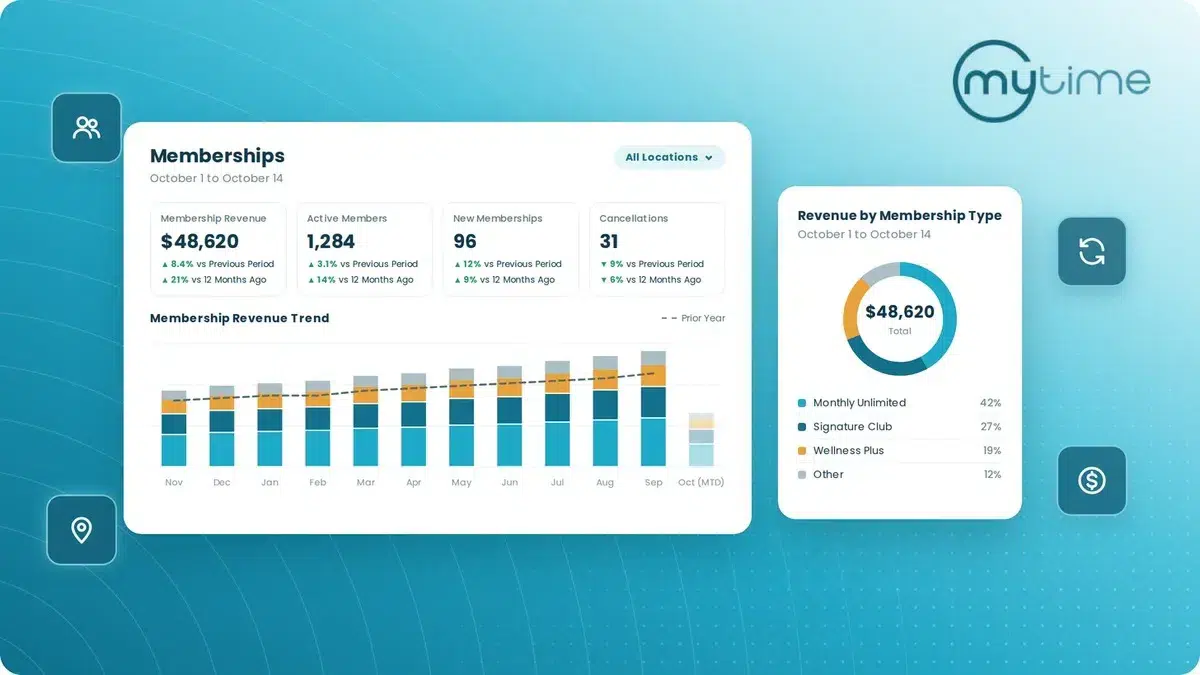
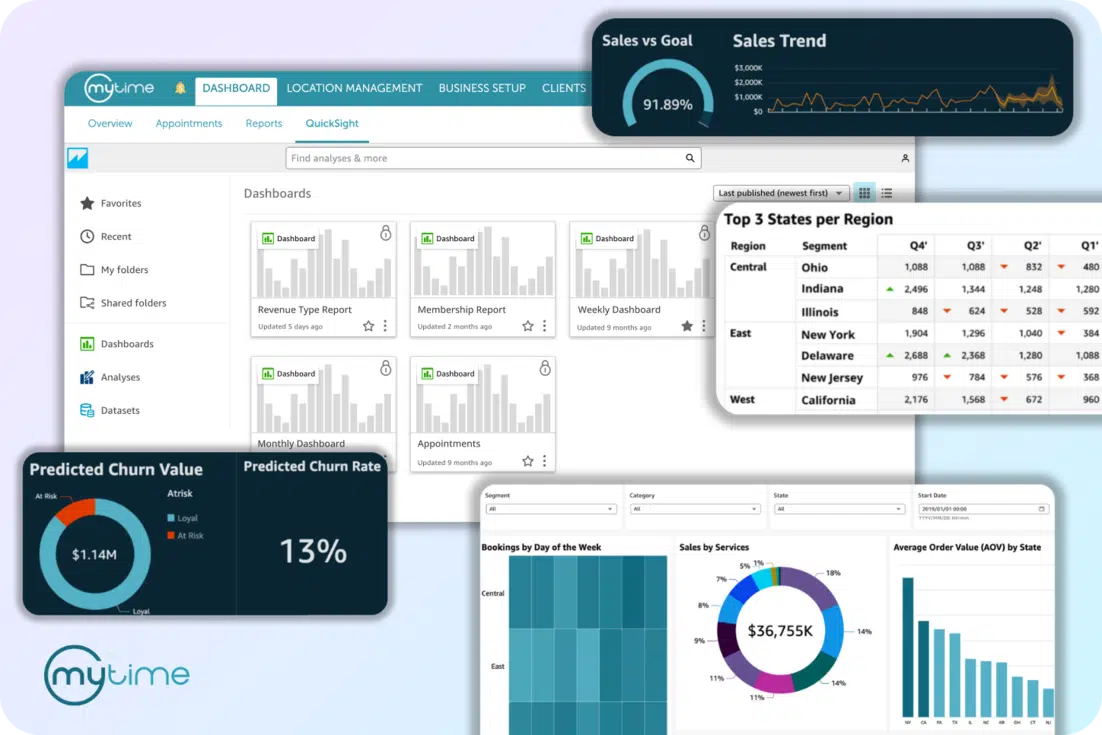
MyTime supports configurable control between franchisor and franchisee, saved templates for new locations, client record visibility rules, appointment booking, integrated POS and payments, automated email and SMS marketing, real-time reporting, royalty reporting, and productivity, revenue, and utilization tracking (MyTime franchise solution). It also provides more than 70 adaptable reports, with filters such as location, service, and staff, and visibility into operations, customer engagement, and financial performance across locations (MyTime reports and analytics).
That reporting layer helps leaders understand whether a problem is local demand, staffing, service mix, utilization, pricing, membership adoption, or operational execution.
Buyer’s checklist
Use the checklist below when evaluating pet grooming franchise software. The goal is not to collect the longest feature list. The point is to confirm that the platform can support the workflows that make pet care franchises different.
| Evaluation area | What to look for | Why it matters |
|---|---|---|
| Pet-specific booking | Breed/size pricing, grooming duration rules, multi-pet booking, multi-day booking, add-ons | Prevents manual workarounds and makes online booking more accurate |
| Pet records | Owner-linked profiles, service history, preferences, behavior notes, vaccination fields, attachments | Helps staff personalize care and avoid missing requirements |
| Boarding and daycare | Date ranges, check-in/check-out, day-specific add-ons, deposits, automatic tickets | Keeps multi-day stays connected to services and checkout |
| Franchise controls | Parent-level templates, permissions, service menus, campaign rules, local flexibility | Standardizes the brand without blocking local operations |
| POS and payments | Integrated checkout, deposits, gift cards, refunds, packages, membership payments | Reduces reconciliation and improves the customer experience |
| Memberships | Pet-level plans, credits, package redemptions, cross-location usage | Supports recurring revenue models that fit pet care |
| Marketing | Reminders, rebooking, reputation, loyalty, referrals, segmented campaigns | Helps keep calendars full and supports repeat visits |
| Reporting | Location, service, staff, revenue, utilization, membership, and channel reporting | Helps leaders coach, benchmark, and scale |
| Implementation | Migration, templates, onboarding, training, support, phased rollout | Reduces launch risk across franchise locations |
The strongest systems make these workflows feel connected. Booking should inform checkout, pet records should inform service delivery, memberships should inform redemption, and reporting should inform growth.
Questions to ask vendors
Before choosing a platform, franchise buyers should ask operational questions, not just feature questions. A software demo can look impressive, but the real test is whether it can handle the edge cases that happen every day inside a pet care location.
Start with workflow fit:
- Can the system handle grooming, boarding, daycare, walking, retail, and memberships in one platform?
- Do clients have a simple way to book multiple pets or add grooming during a boarding stay?
- Can pricing and durations vary by pet size, breed, service, staff member, or location?
- Can staff see pet history, behavior notes, dietary needs, and vaccination status while booking or checking in a pet?
- Are clients able to upload vaccination records or complete required fields during online booking?
Then move to franchise control:
- Can the franchisor standardize menus, permissions, campaigns, reports, and pet profile fields?
- Can local locations adjust only the settings they are allowed to control?
- Can a new location launch from a saved template?
- Can client and pet records work across locations, or are they locked to one site?
- Can the platform support different roles for corporate, franchisee, manager, and staff access?
Finally, test the revenue and reporting model:
- Can memberships apply at the pet level?
- Can gift cards, packages, memberships, and client records work across locations?
- Can the reporting show performance by location, service, staff, revenue, utilization, and booking channel?
- Does the POS support online and in-store payments, refunds, deposits, gift cards, packages, and memberships?
- What onboarding, training, data migration, and support are included?
The answers should be concrete. If a vendor cannot show how the system handles a multi-pet boarding stay with an add-on grooming service, vaccination requirement, deposit, package redemption, and location-level reporting, the buyer may be looking at a booking tool rather than a franchise platform.
How MyTime supports pet care franchises
MyTime helps pet grooming, boarding, daycare, and pet care franchises connect the workflows that are often split across multiple systems.
For booking, MyTime supports omnichannel booking through a website, social media, Google search, the MyTime Branded Guest App, in person, and over the phone (MyTime pet care solution). Pet-specific scheduling includes grooming, boarding, daily walks, multi-day stays, add-ons, multi-pet booking, multi-service booking, staff and resource scheduling, and different durations and pricing by breed, size, and service (MyTime pet care solution).
For records, MyTime supports owner-linked pet profiles with history, preferences, memberships, behavior icons, notes, vaccination tracking, medical history, dietary needs, automatic renewal reminders, and global visibility across locations (MyTime pet care solution). Vaccination and expiration workflows can use custom expiration reminder fields, upcoming and expired labels, intake form questions, attachments, and automated reminder notifications (MyTime expiration reminder documentation).
For payments and recurring revenue, MyTime supports integrated POS and payments, service packages, memberships, gift cards, discounts, refunds, sales and tax tracking, commission tracking, and multi-location payment operations (MyTime POS and payments). Franchise growth capabilities include configurable access controls, location templates, parent-level and location-level control, real-time reporting, royalty reporting, onboarding, and training (MyTime franchise solution).
For a deeper look at this vertical, read the related MyTime article on scalable pet care franchise software.
Proof from pet care franchises
Pet care franchises need software that matches the way their businesses actually operate. Scenthound is a useful example because its model depends on pet wellness, recurring memberships, and franchise growth.
The Scenthound case study identifies the company as the first membership-based dog grooming franchise in the U.S. and says Scenthound selected MyTime because it was an all-in-one franchise solution designed for the pet industry (Scenthound case study). Scenthound needed workflows such as grooming by pet size, price and appointment length by pet breed, vaccination records, and automated messages tied to pet history rather than only the pet parent (Scenthound case study).
That is the difference between a generic system and a pet-care operating system. A dog grooming franchise cannot always force its model into software designed for human appointments. It needs pet-level records, pet-level memberships, pet-specific communication, and franchise-level control.
Scenthound’s corporate team could centrally manage services, products, prices, and promotions and replicate those details at franchise locations (Scenthound case study). The case study also describes global client records, location-level and executive reporting, and memberships, packages, and gift cards usable across locations (Scenthound case study).
Hounds Town offers another pet care franchise proof point. The brand has 95+ locations that streamline cash flow with integrated POS and real-time reporting, and centralized data gives Hounds Town franchisees full operational control (MyTime customer stories).
Together, those examples show why buyers should evaluate the entire operating model: scheduling, records, POS, memberships, reporting, local control, and corporate visibility.
Implementation considerations
The right software still needs the right rollout plan. Pet care franchises should define the operating model before they configure the system.
Start with the service menu. Corporate teams should decide which grooming, boarding, daycare, walking, add-on, package, and membership offerings are standardized and which can vary locally.
Next, define pet profile fields. A pet care brand may need breed, size, coat notes, behavior icons, feeding instructions, medication notes, vaccination dates, attachments, emergency contacts, preferred staff, and service history.
Then define booking rules. Grooming may need different durations by pet size or service. Boarding may need date ranges, add-on services, deposits, and capacity rules. Daycare may need recurring patterns, packages, or membership rules.
Franchise teams should also define permission levels early. Corporate users, franchise owners, managers, front desk staff, groomers, and mobile staff may need different access. MyTime supports configurable access controls for what is handled at the franchisor level and what is delegated to franchisees (MyTime franchise solution).
Finally, decide what reports matter before launch. Corporate leaders may need revenue, utilization, memberships, royalty reporting, location performance, service mix, staff productivity, and marketing impact. Local managers may need daily schedules, upcoming vaccinations, open capacity, rebooking opportunities, and checkout activity.
Key takeaways
Pet grooming franchise software should support the full pet care journey, not just grooming appointments. Multi-location brands need booking, pet records, vaccination reminders, staff schedules, POS, memberships, marketing, reporting, and franchise controls to work together.
Multi-pet, multi-day, vaccination, and pet-level membership workflows are category-specific requirements. If a platform cannot support those workflows, staff may end up managing critical details outside the system.
Franchise buyers should evaluate both local usability and corporate control. The best platform helps local teams move faster while giving corporate leaders the visibility and consistency they need to scale.
Integrated POS, reporting, marketing, and memberships matter because pet care growth depends on repeat visits and operational visibility. A connected platform helps teams understand what is happening by location, service, staff, customer, and pet.
MyTime supports pet care franchises with connected booking, records, POS, marketing, reporting, memberships, and franchise controls. That makes it easier to standardize operations while supporting the pet-specific workflows that define grooming, boarding, daycare, and pet care brands.
FAQ
What is pet grooming franchise software?
Pet grooming franchise software is a platform that helps pet grooming and pet care franchises manage scheduling, pet profiles, payments, memberships, staff, marketing, and reporting across multiple locations. It is built for workflows such as grooming appointments, boarding stays, daycare, multi-pet households, vaccination records, and franchise-level controls.
What features should a pet grooming franchise look for?
Pet grooming franchises should look for online booking, multi-pet profiles, multi-day booking, breed- and size-based pricing, vaccination reminders, integrated POS, memberships, marketing automation, reporting, and franchise-level controls. The platform should support corporate standardization and local flexibility.
Is pet grooming franchise software different from salon software?
Yes. Pet care software needs pet-specific workflows such as owner-linked pet profiles, vaccination records, pet behavior notes, breed and size pricing, boarding stays, daycare, grooming add-ons, and memberships tied to individual pets. Generic salon software may not support those workflows without manual workarounds.
Why do pet care franchises need integrated POS and payments?
Integrated POS and payments connect booking, checkout, packages, deposits, gift cards, memberships, refunds, and reporting. This reduces manual reconciliation and gives corporate teams better visibility across locations.
How should software handle pet vaccination records?
Pet care software should let staff or clients enter vaccination dates, attach records, show upcoming or expired status, and trigger reminders before records expire. These requirements should be visible in pet profiles and appointment workflows so staff can act before service delivery.
What makes pet grooming franchise software scalable?
Scalable pet grooming franchise software supports centralized setup, repeatable templates, location-level permissions, consistent records, multi-location reporting, onboarding support, and workflows that can adapt as the brand adds services or locations. It should help the franchisor standardize the brand without leaving local teams dependent on manual workarounds.
Build a stronger pet care operating system
The right pet grooming franchise software should make the business easier to run at every level. Local teams need accurate schedules, complete pet records, simple checkout, and reminders that happen without extra follow-up. Franchise leaders need consistent standards, clean data, reliable reporting, and controls that help the brand grow without losing visibility.
MyTime helps pet grooming, boarding, daycare, and pet care franchises connect booking, pet profiles, POS, memberships, marketing, reporting, and franchise management in one platform. Book a demo to see how MyTime can support your pet care brand across every location.