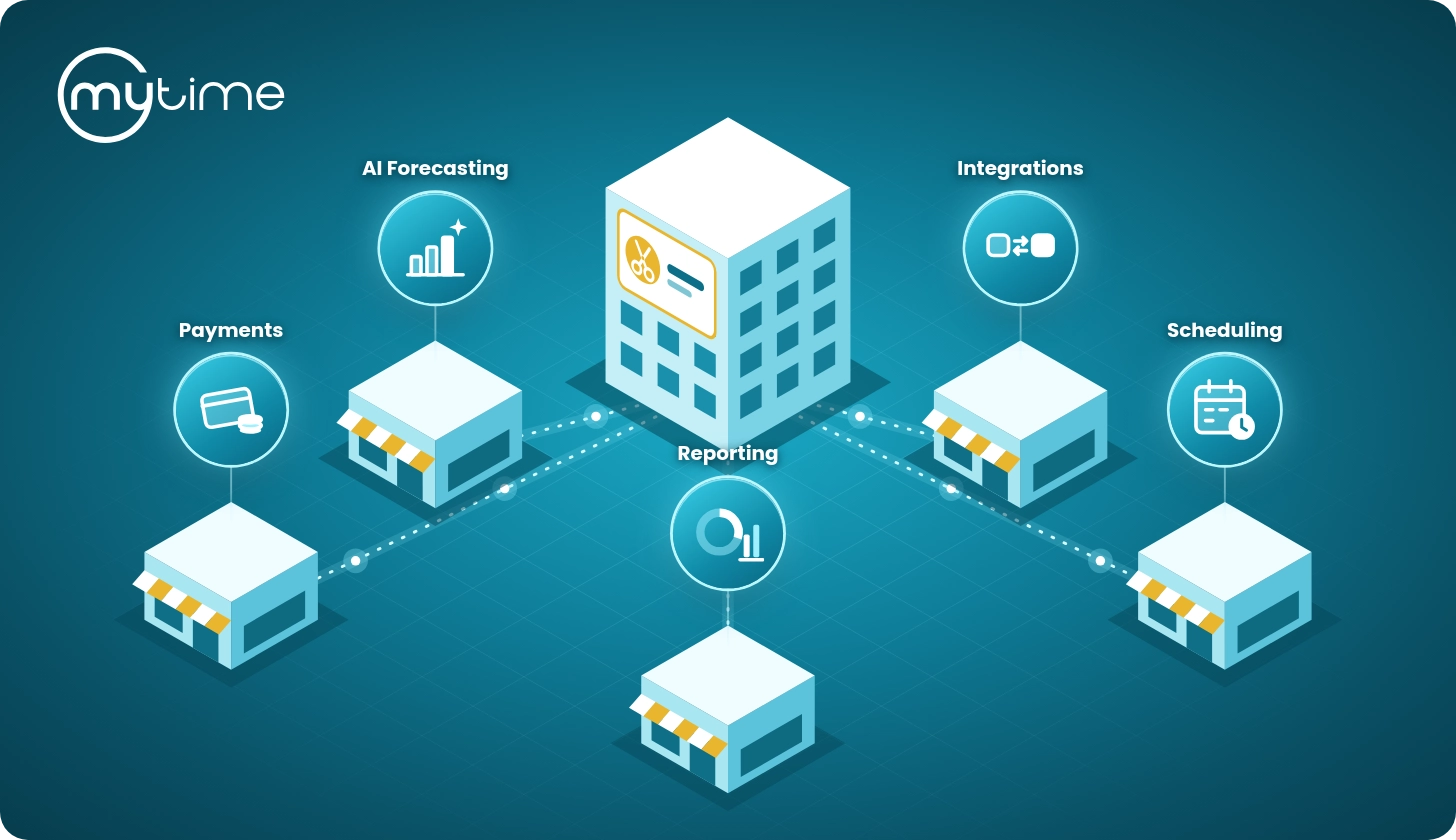




The best salon management software for chains is not just an appointment book. It is a connected operating platform that helps multi-location beauty, hair, nail, spa, and barbershop brands manage booking, staff schedules, POS, payments, inventory, client records, memberships, loyalty, messaging, reporting, and franchise controls across every location.
That matters because the salon category is large, labor-intensive, and operationally complex. The U.S. Census Bureau estimated 2021 employer-firm revenue at $22.785 billion for beauty salons, $10.604 billion for nail salons, and $1.471 billion for barber shops, based on the 2021 Service Annual Survey (U.S. Census Bureau). The Bureau of Labor Statistics projects employment for barbers, hairstylists, and cosmetologists to grow 5% from 2024 to 2034, with about 84,200 openings each year on average (BLS).
For a single salon, a simple calendar may be enough for a while. For a chain, every workflow becomes more complicated. Corporate teams need brand consistency, shared reporting, access controls, repeatable setup, and visibility across locations. Local teams need a system that is fast enough for the front desk, flexible enough for providers, and intuitive enough to support high-volume service days.
This guide explains what to look for in salon management software for chains, how to evaluate platforms, where leading competitors position themselves, and why MyTime is built for multi-location salon, spa, beauty, barbershop, and franchise operators.
Why salon chains and franchises outgrow basic booking software
Basic scheduling software solves one important problem: it helps clients book appointments. Salon chains need to solve a bigger operating problem. They have to coordinate calendars, staff coverage, services, payments, retail, memberships, marketing, client records, and reporting across multiple locations.
Staffing alone can make the operating model complex. BLS notes that barbers, hairstylists, and cosmetologists mostly work in barbershops or salons, and schedules may vary and often include evenings and weekends (BLS). BLS also says manicurists and pedicurists usually work in nail salons, spas, or hair salons, and their schedules may vary and include evenings and weekends as well (BLS).
That kind of staffing environment is hard to manage with disconnected tools. A chain needs to know which providers are available, which services they can perform, what their schedules look like, how commissions are calculated, which rooms or resources are available, and how those details affect the client booking experience.
The same is true for services and checkout. A hair salon chain may need color services, retail products, backbar tracking, stylist preferences, memberships, packages, gift cards, tips, commissions, and rebooking prompts. A nail salon chain may need walk-in handling, waitlists, recurring appointments, service add-ons, provider availability, and fast checkout. A barbershop chain may need memberships, recurring grooming visits, location-level reporting, and brand consistency across the client experience.
The takeaway is simple: the more locations you operate, the less useful it is to evaluate software as “just scheduling.” Multi-location salon software should function as the operating layer for the entire client, staff, and revenue cycle.
What salon chain software should support
The right platform should connect the workflows that affect revenue, client experience, and operational control. A buyer checklist should start with booking, but it should not stop there.
Online and omnichannel booking
Salon chains need clients to book from the channels they already use. That can include the brand website, a mobile app, Google, Instagram, Facebook, phone calls, and in-person booking. MyTime supports booking through website, mobile app, social media, Google, phone, and in person, with a configurable white-labeled booking widget and branded guest app (MyTime omnichannel booking).
The chain-level requirement is consistency. Corporate teams should be able to standardize services, descriptions, rules, and brand presentation, while local teams manage the actual day-to-day calendar. Without that balance, every location can drift into its own booking rules and client experience.
MyTime also supports appointment configurations for services, classes, consultations, durations, availability, staff, pricing, buffers, bundles, staff matching, self-rescheduling, reminders, mobile staff access, multi-day appointments, multi-provider appointments, and waitlist management (MyTime appointment scheduling). For a chain, those details matter because the booking experience has to reflect real staff capacity and real service rules.
Staff scheduling, permissions, and commissions
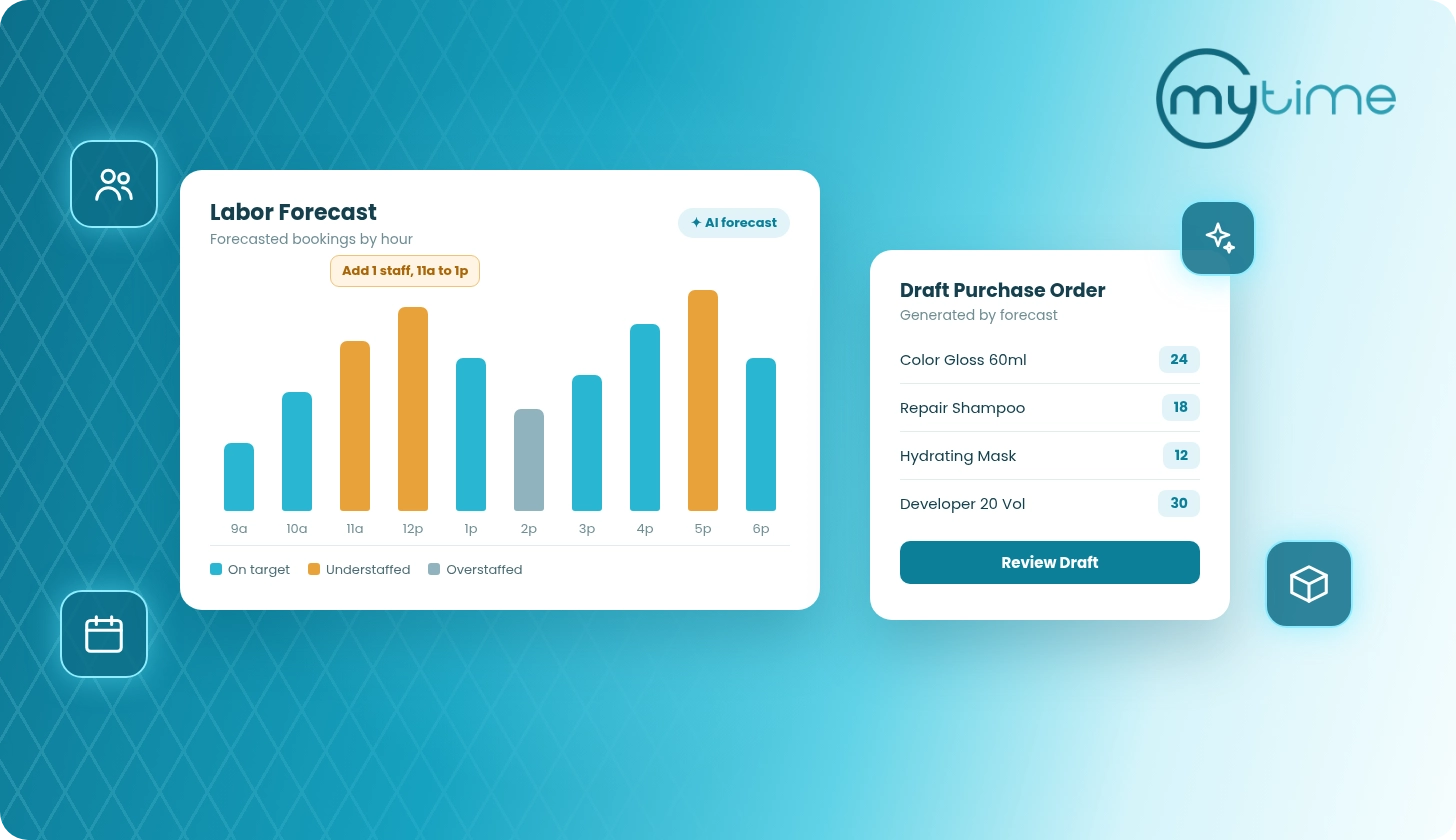
Salon chains run on staff coverage. The system needs to account for roles, schedules, time off, access permissions, service eligibility, compensation, commissions, productivity, and performance tracking. MyTime staff management is built for multi-site and franchise salons and spas, with tools for access, schedules, permissions, compensation, payroll, overtime, flat or tiered commissions, service or employee-level commissions, backbar fees, asset and space reservations, mobile schedule access, time-off requests, and staff performance metrics (MyTime staff management).
This is where basic booking tools often fall short. A location manager may need to adjust coverage for a busy Saturday, but corporate still needs controls over permissions, compensation rules, service standards, and reporting. The software should support both realities.
For chains, staff management also affects the client experience. If the platform understands provider availability, qualifications, service timing, and resources, clients are less likely to book into a slot that cannot actually be fulfilled. That helps protect both the client experience and the team’s day.
POS, payments, memberships, and checkout
Salon POS and scheduling software should make the appointment and checkout feel connected. That means the service, provider, client record, package balance, membership benefit, gift card, tax, tip, commission, and payment should work together.
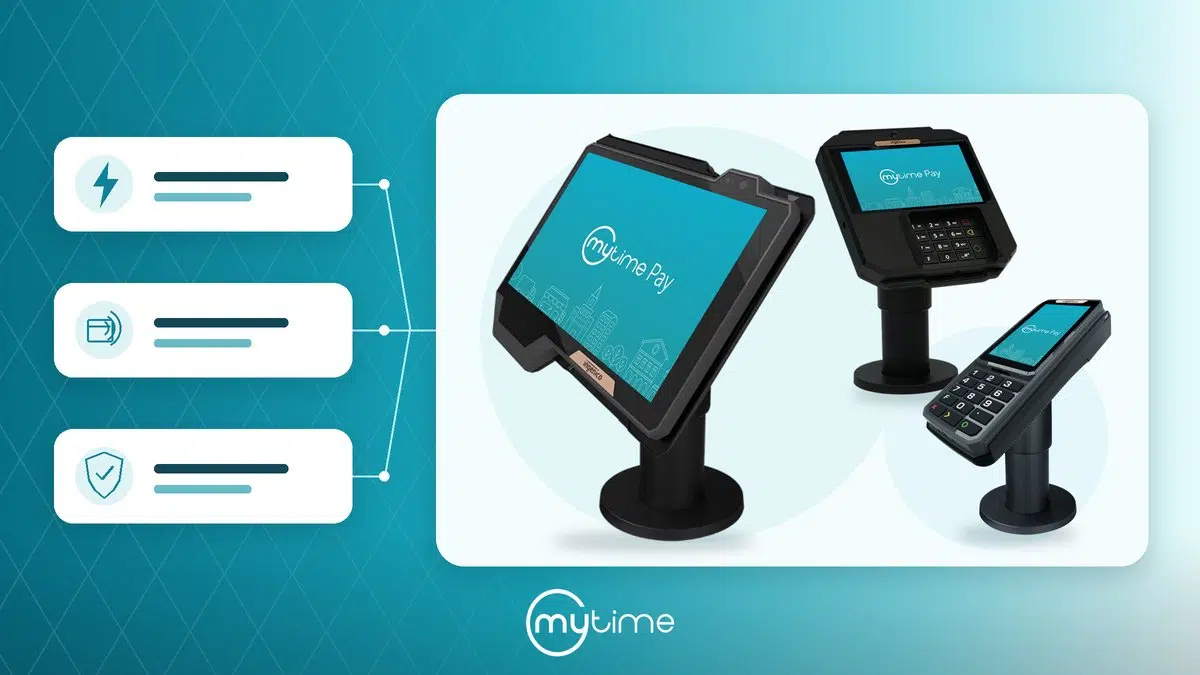
MyTime POS is positioned for multi-site and franchise payment operations, with cloud-based management, multiple registers, integrated credit card processing, online and in-store payments, EMV chip, swipe, contactless, split payments, refunds, gift cards, packages, memberships, taxes, commissions, and compensation tracking (MyTime POS and payments).
For chains, the goal is not just faster checkout. The goal is cleaner data and less manual reconciliation. If payments, packages, memberships, and commissions live in the same system as appointments and staff schedules, operators can see what is happening by location, service, staff member, and client segment.
Inventory, retail, and backbar visibility
Beauty, hair, nail, spa, and barbershop chains often sell products and consume supplies as part of services. Hair color, retail products, professional tools, backbar supplies, and treatment products all affect profitability. MyTime highlights inventory sync, automatic calculations for taxes, staff commissions, and promotions, and connected multi-location management capabilities (MyTime).
Inventory visibility helps operators answer practical questions. Which locations are running low on key products? Which services use the most supply? Which retail products sell best after certain services? Which providers drive retail attachment? A platform does not need to make inventory complicated, but it does need to connect inventory to the rest of the operating model.
Client records, loyalty, referrals, and rebooking
Client history is one of the most valuable assets in a salon chain. The system should capture service history, preferences, memberships, package balances, gift cards, loyalty rewards, referrals, communication preferences, and rebooking behavior.
MyTime’s Branded Guest App lets clients view real-time availability, book services, reschedule or cancel, manage profiles, update preferences for services, staff, and communication, track memberships, packages, and referrals, and receive reminders and promotions in a brand-customized app for Android and iOS (MyTime branded guest app).
MyTime also supports memberships, packages, and gift cards for franchise and multichain requirements, including membership management from client profiles, gift card sales and reloads across in-store, online, and guest app channels, and usage and redemption tracking (MyTime memberships, packages, and gift cards). For more detail on loyalty strategy across locations, see our guide on how loyalty programs actually work in multi-location businesses.
Automated messaging and client engagement
Automated messaging should do more than send appointment reminders. For a chain, messaging can support confirmations, rebooking prompts, win-back campaigns, membership updates, review requests, promotions, and location-level communications.
The challenge is governance. Corporate teams need brand-approved templates and campaign rules, while local teams may need flexibility to send messages that fit their schedule and market. Our automated messaging guide explains how brand-level teams can configure templates at the parent level and push them to every location, while local flexibility can be configured where appropriate (MyTime automated messaging article).
Good messaging should feel helpful, not noisy. The best systems use client history, appointment behavior, membership status, and timing to make communication more relevant.
Reporting and benchmarks matter
Salon chains cannot manage what they cannot see. Corporate leaders need performance visibility across the whole network, while regional and local managers need to understand what is happening in their own locations.
The Professional Beauty Association describes KIM as the beauty industry’s monthly salon metrics report, with monthly averages for revenue per salon, service ticket, product sale revenue, unique clients, unique visits, services, color services, number of staff, and other metrics (Professional Beauty Association). PBA says KIM uses responsible, anonymized data and represents more than 50,000 salons and 22 million clients across the U.S. (Professional Beauty Association).
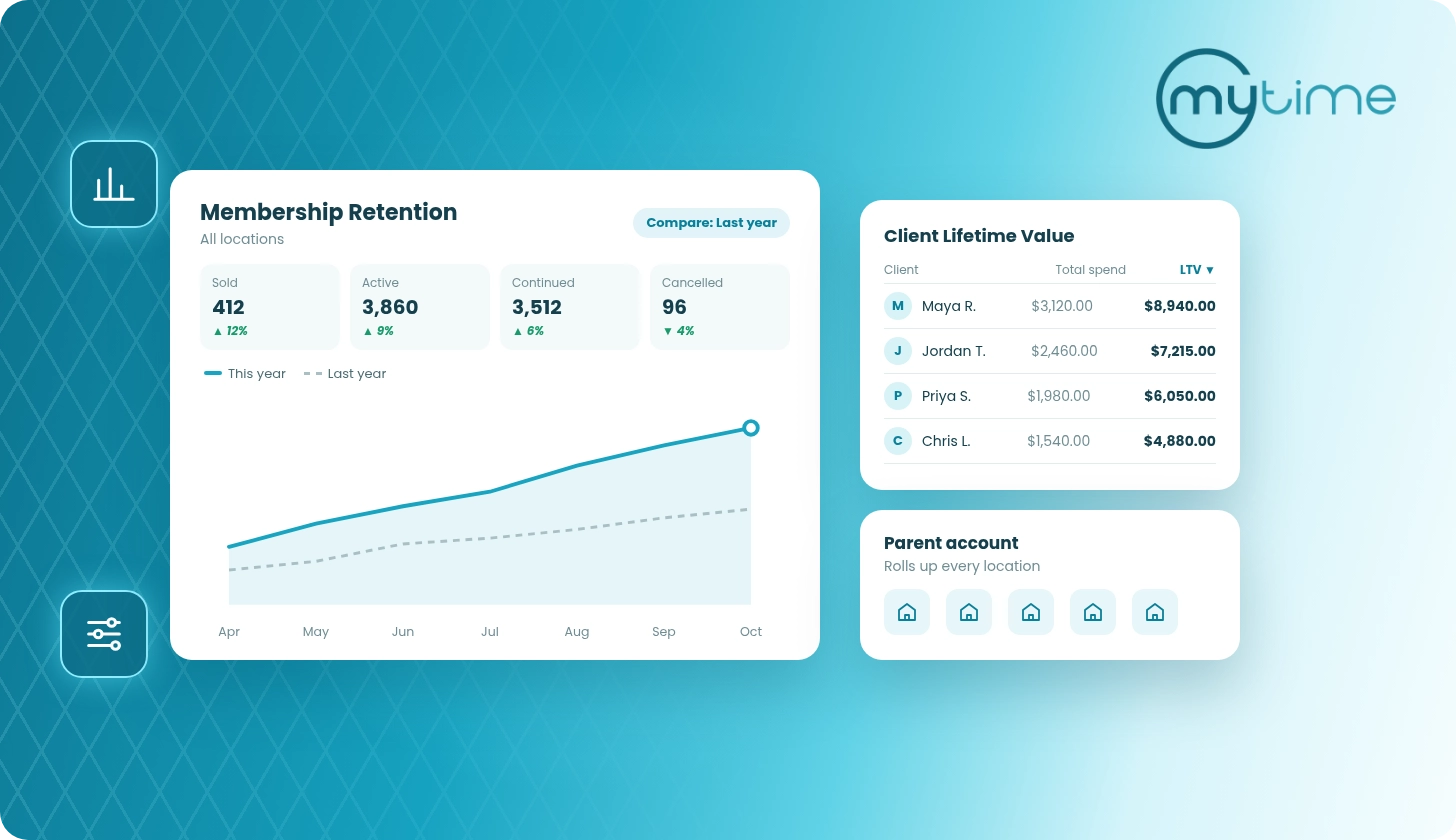
That kind of benchmarking reinforces an important point: salon chains should treat reporting as a core requirement, not a back-office add-on. A multi-location operator should be able to review revenue, average ticket, retail sales, rebooking, staff utilization, service mix, memberships, gift cards, loyalty, client retention, reviews, and campaign performance.
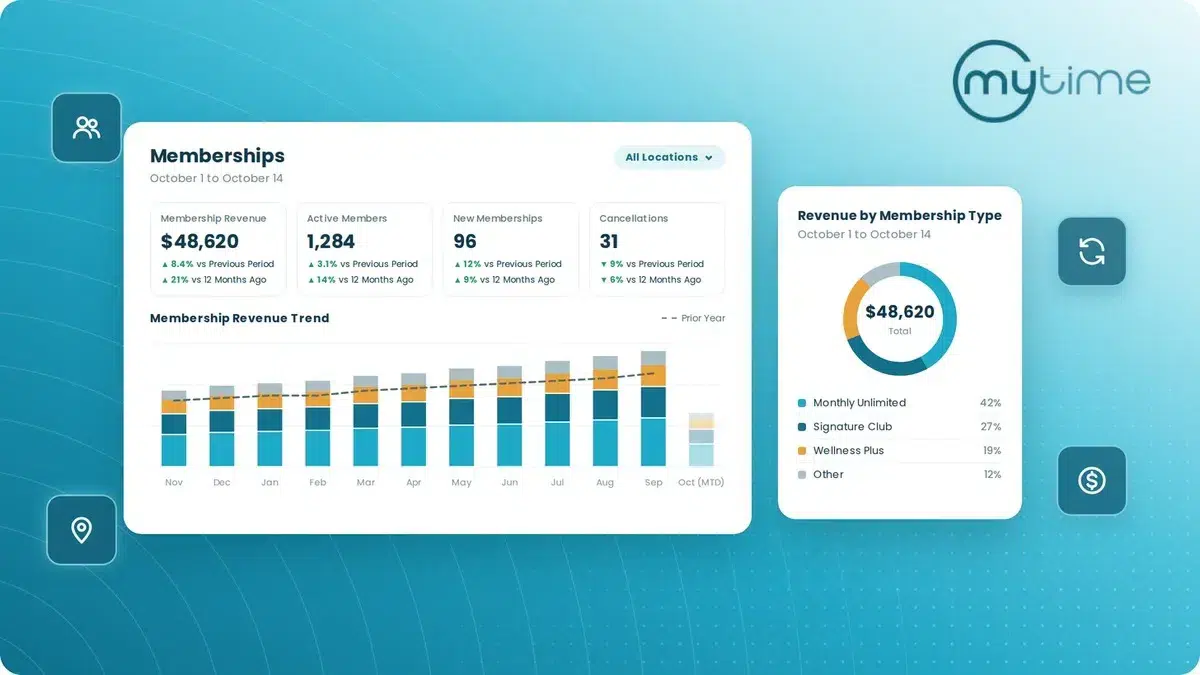
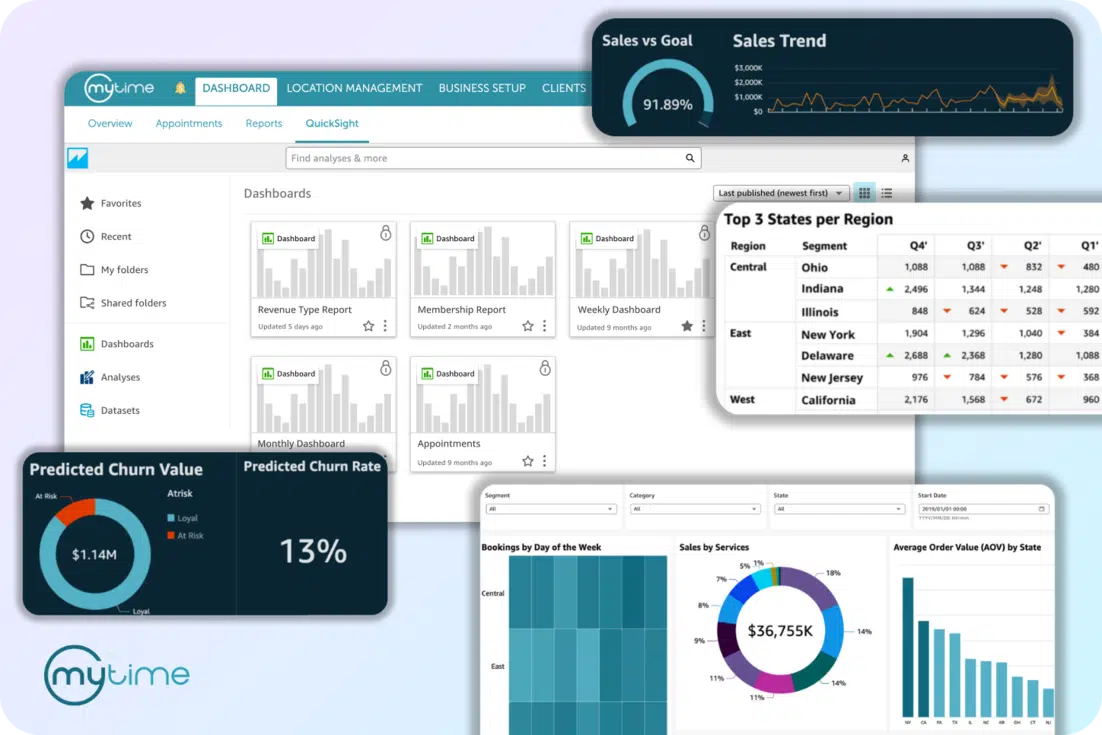
MyTime reports and analytics includes more than 70 adaptable reports with filters such as location, service, and staff, along with visibility into operations, customer engagement, and financial performance across all locations (MyTime reports and analytics). MyTime reports can be generated on demand or delivered automatically, and report categories include financial summaries, client retention metrics, staff productivity reports, and appointment trends (MyTime reports and analytics).
For salon chains, the most useful reporting answers both “what happened?” and “what should we do next?” If one location has strong membership conversion, another has high no-shows, and another is losing retail attachment, leadership needs to see those patterns quickly.
What makes software chain-ready or franchise-ready
Chain-ready salon software should give operators a way to standardize what matters and localize what should stay local. That is especially important for franchise systems, where corporate teams need brand oversight and franchisees need enough control to run the location.
MyTime’s franchise solution includes in-store and online appointment booking, POS and credit card processing, automated email and SMS marketing, and advanced reporting and analytics for franchisees and home office teams (MyTime franchise solution). MyTime supports networks from “two or two-thousand locations” and helps scale appointment scheduling, client management, email marketing, and integrated payments across a franchise system (MyTime franchise solution).
Key chain-ready requirements include access controls, franchisor and franchisee delegation, uniform service menus with local pricing flexibility, parent-level marketing templates, coupon code controls, client record access rules, saved templates for new locations, reputation management, real-time network data, royalty reporting, and onboarding support. MyTime’s franchise capabilities include configurable access controls, franchisor and franchisee delegation, service menu controls, marketing templates, saved templates for new locations, white-labeled embedded booking, automated retention marketing, listings and reputation management, and royalty reporting (MyTime franchise solution).
For a deeper operating framework, see our guide on how to manage multi-location salon operations without losing control.
How leading salon software platforms position themselves
Most salon software platforms claim to help with booking, payments, client management, marketing, reporting, or automation. The better question is whether the platform fits the operating model of a multi-location beauty, hair, nail, spa, or barbershop chain.
Here is how several leading platforms position themselves based on their official pages:
| Platform | Official positioning | What chain buyers should evaluate |
|---|---|---|
| Zenoti | Zenoti positions itself as AI-powered salon, spa, medspa, and fitness software, trusted by 30,000+ salon, spa, and medspa businesses across 50+ countries, with workflows from booking to payroll in one system (Zenoti). | Enterprise AI, scale, data migration, booking-to-payroll workflows, and fit for the brand’s operating model. |
| Meevo | Meevo positions itself for salons, spas, and med spas, with a multi-location enterprise page for businesses with “two locations, 200 or more” and Central Office for real-time data, location reporting, and multi-location management (Meevo multi-location). | Central Office model, multi-location reporting, implementation process, and how well workflows fit beauty, spa, and franchise operations. |
| Mindbody | Mindbody positions its beauty software for salons, shops, studios, spas, barbershops, nail salons, brow bars, and waxing studios, with team and client management, payments, scheduling, online booking, reporting, branded apps, marketplace access, an AI receptionist, and partner integrations (Mindbody beauty software). | Marketplace strategy, app ecosystem, partner integrations, beauty and wellness breadth, and chain-level control needs. |
| Boulevard | Boulevard positions itself as a client experience platform for self-care businesses, with Precision Scheduling, POS for beauty and wellness brands, marketing, messages, memberships, loyalty, client profiles, purchase orders, reporting, and beauty salon software for smart online booking and staff productivity (Boulevard, Boulevard beauty salon software). | Client experience, booking, POS, membership and loyalty workflows, reporting, and fit for franchise or network-level governance. |
| Vagaro | Vagaro positions itself as software and an app for beauty, wellness, and fitness, serving independent providers through multi-location businesses and listing salon, barber, nail, and other beauty categories among supported business types (Vagaro Pro). | Breadth across business types, app experience, multi-location needs, and whether the platform supports enough central control for a growing chain. |
| Mangomint | Mangomint positions itself as salon and spa software with booking, payments, automations, client management, memberships and packages, forms and charting, gift cards, campaigns, offers, discounts, and a virtual waiting room for categories including hair salons, nail salons, barbershops, spas, med spas, massage studios, and wellness centers (Mangomint). | Usability, modern booking and payments, automation, client management, and depth for chain or franchise governance. |
The point is not that one competitor has no value. The point is that salon chains should evaluate software against the operating model they actually run. A platform that works well for an independent studio may not provide the controls, reporting, templates, permissions, and rollout support that a chain or franchise system needs.
Buyer checklist for salon chains
Use this checklist when comparing salon management software for chains:
- Can clients book through web, app, social, Google, phone, and in person?
- Can corporate standardize service menus while locations adjust approved local details?
- Can staff schedules account for roles, availability, qualifications, commissions, and time off?
- Can POS handle in-store and online payments, refunds, gift cards, packages, memberships, taxes, tips, and commissions?
- Can inventory and backbar usage connect to services and retail sales?
- Can client records, preferences, memberships, packages, loyalty, and referrals work across locations?
- Can automated messages be managed at the brand level with local flexibility?
- Can reports show performance by location, service, staff, revenue, utilization, client retention, and campaigns?
- Can new locations launch from templates?
- Can the platform support beauty salon, hair salon, nail salon, spa, and barbershop workflows without category mismatches?
The strongest platform is the one that reduces operational friction while giving leadership better visibility. For a chain, “easy to use” and “easy to govern” both matter.
Why MyTime fits salon chains and franchises
MyTime is built for multi-location service brands that need scheduling, POS, staff management, marketing, memberships, reporting, and franchise controls in one connected platform. MyTime positions itself as “The Leading POS and Scheduling Solution for Chains & Franchises” and supports business types including Beauty Salons, Hair Salons, Nail Salons, and Spas (MyTime).
For salon chains, that direct vertical and operating-model fit is important. MyTime connects booking, POS, staff management, marketing, memberships, loyalty, referrals, branded app, reporting, and multi-location management. MyTime’s franchise solution supports configurable access controls, franchisor and franchisee delegation, saved templates for new locations, local flexibility, real-time data across the network, and royalty reporting (MyTime franchise solution).
MyTime also has customer proof in salon and barbershop environments. Hair Saloon said, “Switching to MyTime was a breath of fresh air. The user experience for both our staff and guests improved dramatically. The onboarding process for new employees became almost intuitive, and the customizable app allowed us to maintain strong brand integrity” (MyTime customer stories). Scissors & Scotch said, “To scale, you must maintain brand and operational control, and MyTime is the platform that provides that kind of granular level of detail and oversight” (MyTime customer stories).
MyTime’s memberships page also notes that Scissors & Scotch has 20,000 members in its membership program, which is a useful example of how recurring revenue and brand consistency can matter in a multi-location service model (MyTime memberships, packages, and gift cards).
For chains that want to scale without losing control, the priority is not adding more disconnected tools. The priority is bringing the appointment book, client experience, staff workflows, payments, memberships, marketing, and reporting into one operating system.
FAQs
What is the best salon management software for chains?
The best salon management software for chains is a connected platform that manages booking, staff schedules, POS, memberships, loyalty, inventory, messaging, reporting, and multi-location controls across every location.
What features should salon franchise software include?
Salon franchise software should include omnichannel booking, staff management, POS, inventory, memberships, packages, gift cards, loyalty, referrals, automated messaging, reporting, access controls, location templates, corporate permissions, and local flexibility.
Why do salon chains need more than appointment scheduling software?
Salon chains need more than scheduling because they must manage staff, service menus, inventory, payments, memberships, marketing, reporting, client experience, and brand standards across multiple locations.
How should salon chains compare MyTime with Zenoti, Meevo, Mindbody, Boulevard, Vagaro, and Mangomint?
Salon chains should compare platforms by operating-model fit, not feature lists alone. The best choice should support multi-location booking, POS, staff management, memberships, marketing, reporting, brand consistency, local flexibility, global client profiles, cross location reconciliation, corporate controls, and rollout support.
How should salon chains evaluate reporting?
Salon chains should evaluate reporting by location, service, staff, revenue, average ticket, retail sales, rebooking, memberships, loyalty, retention, utilization, campaign performance, and client behavior.
Choose software that fits the way chains and franchises operate
Salon chains need software that connects the full operating model, not just the appointment book. The right platform should help every location deliver a consistent client experience while giving corporate teams the visibility and controls they need to grow.
MyTime brings scheduling, POS, staff management, memberships, marketing, reporting, and franchise-ready controls together for beauty, hair, nail, spa, barbershop, chain, and franchise operators.