




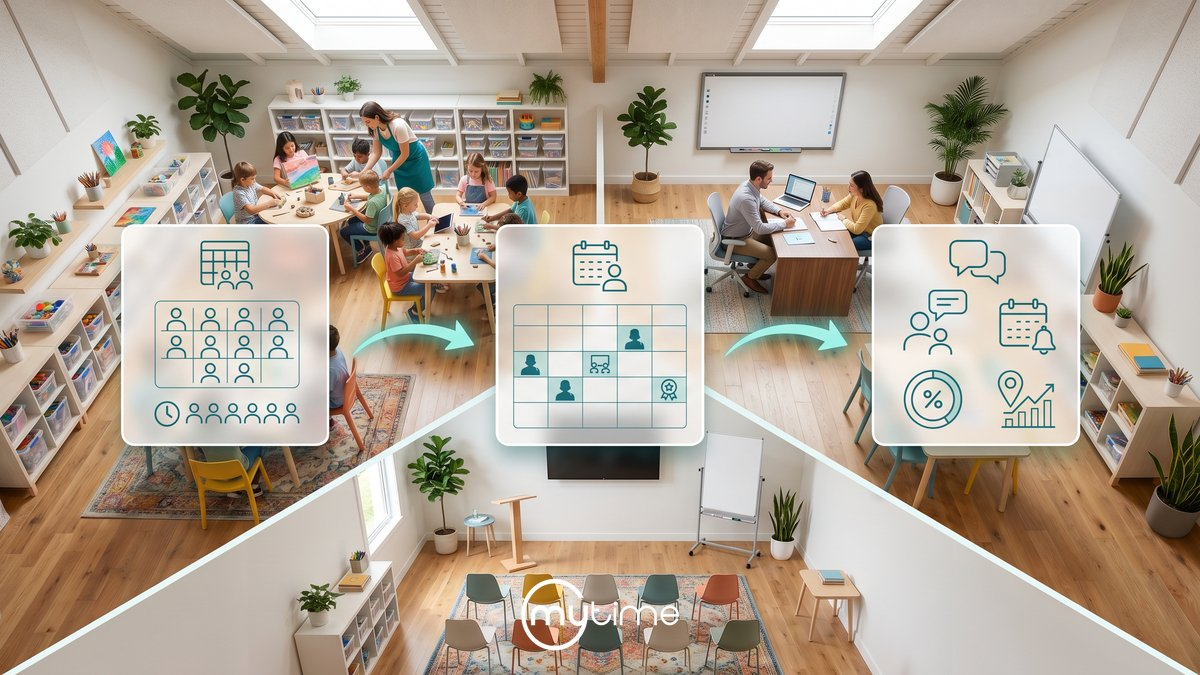
Learning and enrichment franchises do not just manage class times. They manage instructors, tutors, rooms, materials, class capacity, waitlists, private sessions, workshops, client records, reminders, payments, packages, memberships, and multi-location brand standards.
That is why class scheduling software for learning franchises needs to do more than publish a calendar. The right platform connects class booking, instructor availability, room and resource capacity, client communication, waitlists, payments, reporting, and franchise controls so every location can deliver a more consistent experience.
Demand for enrichment and after-school programs also creates real capacity pressure. IES and NCES reported that 85% of U.S. public K-12 schools offered after-school programs in 2024-25, but only 42% said they could provide academically focused after-school programs to all students who wanted to participate (IES/NCES).
The Afterschool Alliance reported that nearly 6.7 million middle school students had parents who wanted afterschool programs for them, while 5.2 million middle schoolers were being left behind (Afterschool Alliance). For learning and enrichment franchises, that kind of unmet demand makes scheduling, capacity management, and waitlist follow-up more than administrative tasks. They become growth infrastructure.
Why class scheduling gets harder as learning franchises grow
A single-location studio can often manage early growth with a simple calendar, a spreadsheet, or a few manual workarounds. That breaks down when a brand expands across locations, instructors, rooms, age groups, programs, workshops, and private sessions.
The complexity is not just client-facing. Operators need to know which instructor is available, which room is open, whether the right materials or equipment are ready, whether a client is booking a class or a private session, and whether a waitlist should be activated when a class fills.
Staffing adds another constraint. BLS defines self-enrichment teachers as those who teach or instruct individuals or groups for self-enrichment or recreation, and estimated 272,110 self-enrichment teachers in May 2023 (BLS). IES and NCES reported that 30% of public schools that did not offer academically focused after-school programs cited inability to find staff as a reason, which reinforces how important scheduling and staff coordination can be in education-adjacent services (IES/NCES).
For franchise brands, the goal is not just to schedule one class correctly. The goal is to make the same scheduling logic, communication standards, reporting structure, and client experience repeatable across the network.
Class scheduling software should manage classes, workshops, and private sessions
Learning and enrichment brands often sell more than one type of experience. A client might book a group class, a workshop, a tutoring session, a study session, a private lesson, or an add-on such as materials or a follow-up session.
MyTime supports learning and enrichment businesses with bookings for pottery classes, tutoring sessions, group painting classes, study sessions for multiple students, workshops, and one-on-one sessions (MyTime Learning & Enrichment). MyTime also lets clients book classes, workshops, and more online, through the Branded Guest App, or through social media (MyTime Learning & Enrichment).
That flexibility matters because not every learning experience fits the same scheduling pattern. MyTime can configure appointment types such as services, classes, and consultations, with different durations, availability, staff, and pricing for each appointment type (MyTime appointment scheduling).
MyTime also supports service bundles, precise timeframe setting, staff assignment, staff availability and certification matching, buffer times, multi-day scheduling, multi-provider scheduling, client notes, integrated checkout, analytics, flexible notifications, and service and class waitlist management (MyTime appointment scheduling). For a franchise, that means scheduling can reflect the actual operating model instead of forcing every class, workshop, and private session into one generic booking flow.
Capacity and waitlists protect revenue when classes fill up
A full class is a good sign, but only if the brand captures the next layer of demand. Without a waitlist, full classes can turn interested clients into lost opportunities.
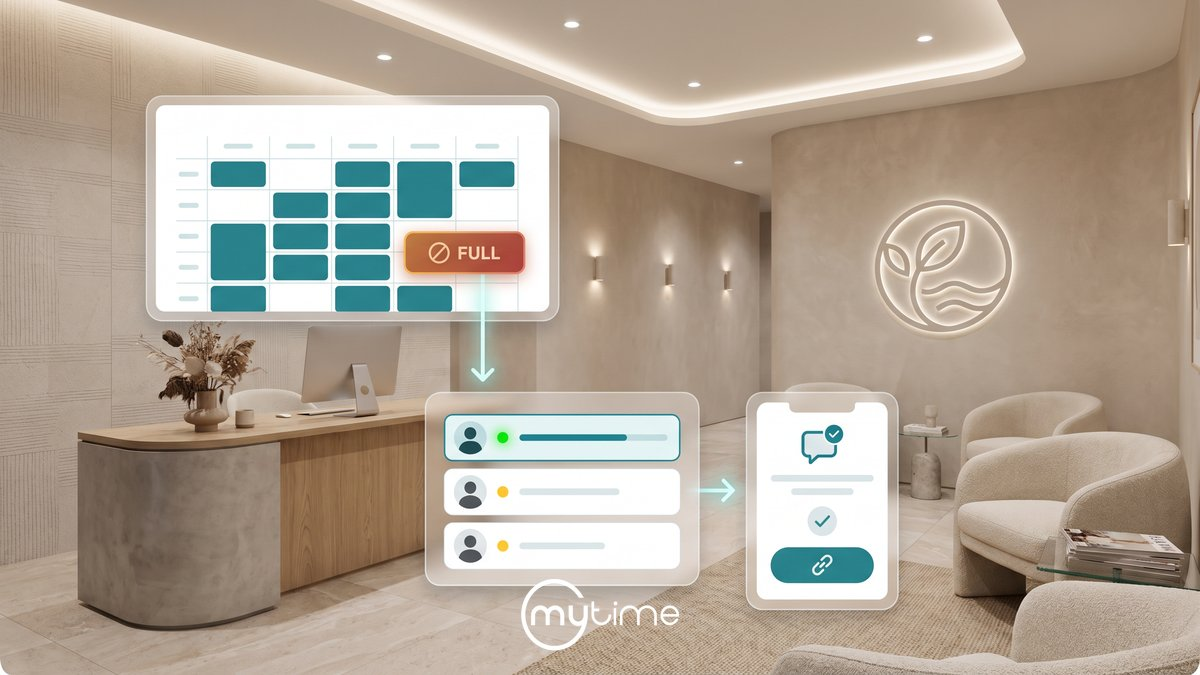
MyTime says when services or classes are full, clients can join a waitlist and get notified when a spot opens (MyTime). MyTime’s waitlist feature captures demand for both service appointments and classes, lets clients join from the online booking flow, and allows them to choose either the next available time or a specific time window (MyTime waitlist management).
Waitlists are especially important in class-based businesses because cancellations and no-shows create open capacity that staff may not have time to refill manually. MyTime lets staff manage class capacity and service demand from a dedicated waitlist view in Scheduler, monitor waitlisted clients, convert entries into bookings in one click, and reach out through Communicator with two-way SMS or branded-app conversations (MyTime waitlist management).
Automation helps make that process faster and more consistent. MyTime says when a fully booked appointment or class has a cancellation, waitlisted clients can be notified immediately with a direct link to complete the booking (MyTime automated messaging).
For franchise teams, this creates a stronger operating loop. Demand is captured when a class is full, clients receive a clear next step, and locations have a repeatable way to backfill open spots.
Instructor and resource scheduling keep classes running smoothly
Class scheduling is not only about finding an open seat. It is also about matching the right instructor, tutor, classroom, equipment, and time.
MyTime helps keep instructors, tutors, and class spaces in sync through smart staff and resource scheduling, double-booking prevention, and resource management for classrooms and equipment (MyTime Learning & Enrichment). MyTime also supports central management of staff hours and ensures eligible providers and resources appear at booking (MyTime).
That matters for any enrichment brand with multiple lesson types, instructor qualifications, rooms, and materials. A music school may need a specific instructor and room. A tutoring center may need the right tutor for a subject or age group. A creative studio may need a classroom, supplies, and enough cleanup time between sessions.
MyTime appointment scheduling supports staff assignment, staff availability and certification matching, buffer times, multi-day scheduling, multi-provider scheduling, and staff transitions (MyTime appointment scheduling). These scheduling controls help locations reduce preventable friction before the class begins.
Client profiles and communication improve the parent experience
Learning and enrichment businesses rely on trust, consistency, and clear communication. Clients want to know what they booked, where to go, what to bring, whether a spot opened, when a package expires, and how to book again.
MyTime helps learning and enrichment brands keep detailed client profiles, service preferences, service history, automated reminders, follow-ups, and detailed service notes in one system (MyTime Learning & Enrichment). For children’s enrichment programs, those records can also support a better parent experience because communication often flows through parents or guardians.
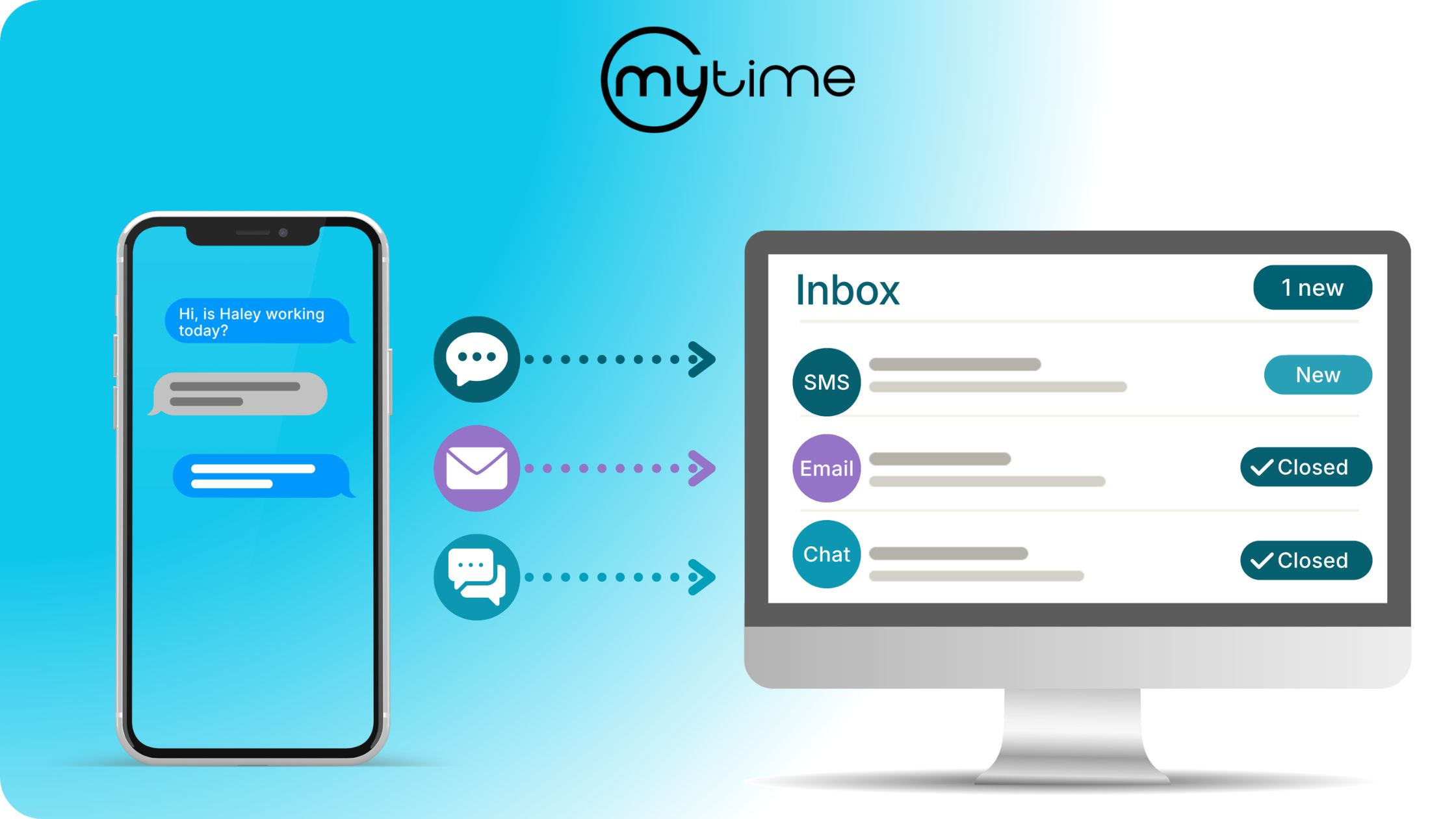
Automated messaging keeps the relationship moving before and after the class. MyTime automated message templates can cover booking confirmations, appointment and class reminders, post-visit messages, review requests, rebooking reminders, waitlist and flash sale notifications, membership renewal consent, package and membership expiration reminders, and lapsed client re-engagement (MyTime automated messaging).
For franchise operators, message governance is important. MyTime lets operators configure message templates at the parent level and push them to every location automatically, with controls for whether templates are locked or open to local adjustment (MyTime automated messaging).
That balance matters. Corporate teams can protect the brand voice and required communication standards, while local teams can still respond to location-specific needs.
Payments, packages, memberships, and loyalty should connect to scheduling
Class-based businesses often sell bundles, memberships, packages, gift cards, workshops, add-ons, and recurring programs. If those revenue tools are disconnected from scheduling, staff may have to reconcile usage manually or answer avoidable client questions.
MyTime says its booking system can suggest add-ons such as a private session or additional materials, support multiple services in a single booking session, and help create and sell service bundles such as a “Painting Class Package” or “Tutoring Bundle” (MyTime Learning & Enrichment).
The MyTime Branded Guest App lets clients book classes, purchase gift cards, manage memberships, receive in-app messages, receive real-time notifications, use self-check-in, track loyalty points, use referral rewards, choose preferred locations, check availability, and book across a network (MyTime Learning & Enrichment).
This is especially useful for brands that want steadier revenue. MyTime’s membership and loyalty article says learning and enrichment brands can experience enrollment-driven revenue spikes followed by lulls, and that memberships can create a recurring revenue baseline, smooth cash flow, increase engagement, improve retention, and improve future revenue visibility (MyTime memberships, loyalty, and referrals).
Loyalty and referrals can also support long-term engagement. MyTime’s membership and loyalty article says loyalty works best when it encourages long-term behavior, cross-service or add-on purchases, and a consistent experience across locations (MyTime memberships, loyalty, and referrals).
Franchise controls keep every location aligned
A learning and enrichment franchise needs local flexibility, but it also needs brand-wide consistency. Corporate teams may need to standardize class menus, pricing rules, permissions, taxes, templates, reporting, campaign controls, and location launch processes.
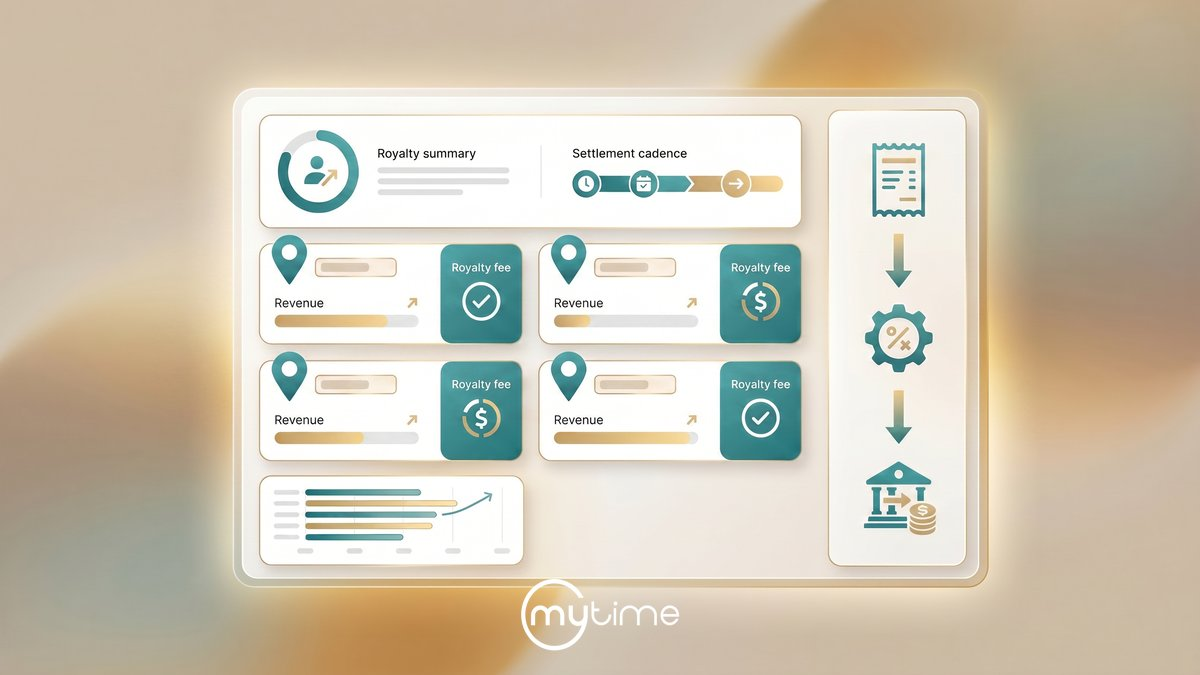
MyTime says learning businesses can open new locations by cloning menus, permissions, and configurations, tailor POS, pricing, and taxes by site, keep data synced across the brand, manage royalties, auto-reconcile memberships, gift cards, and loyalty balances across locations, and launch global campaigns with local controls (MyTime Learning & Enrichment).
MyTime also includes custom roles and access permissions, audit trails with timestamps, location management and grouping, APIs, webhooks, Zapier, and integrations with tools such as QuickBooks, Xero, ADP, and HubSpot (MyTime).
Reporting helps franchise leaders see what is happening across the network. MyTime provides over 70 comprehensive reports, real-time data aggregations, precision filtering, charts, dashboards, exports, and integrations with business intelligence tools (MyTime).
MyTime’s franchise management software article says reporting can show appointments booked per week, booking channel, booked appointments, canceled appointments, no-show appointments, revenue, productivity, and franchisee support needs (MyTime franchise management software).
For a growing enrichment brand, this matters because the franchisor needs to see both the big picture and the location-level details that shape performance.
What to look for in class scheduling software for learning and enrichment franchises
The right class scheduling software should support the way learning and enrichment franchises actually operate. Use this checklist as a starting point:
- Online class, workshop, and private-session booking.
- Configurable appointment types, durations, availability, staff, pricing, and capacity.
- Instructor, tutor, classroom, equipment, and resource scheduling.
- Waitlists for full classes and canceled spots.
- Direct waitlist notifications by email, SMS, or push.
- Client profiles, service history, preferences, notes, and booking history.
- Parent and client reminders, follow-ups, and rebooking messages.
- Branded guest app for booking, account management, notifications, memberships, and loyalty.
- Integrated payments, packages, memberships, gift cards, loyalty, and referrals.
- Brand-level communication templates with local flexibility.
- Cross-location reporting and analytics.
- Role-based permissions, audit trails, APIs, and integrations.
- New-location cloning for menus, permissions, and configurations.
How MyTime supports learning and enrichment franchises
MyTime brings scheduling, booking, waitlists, communication, payments, memberships, marketing, reporting, and franchise controls into one platform for learning and enrichment brands.
For class and session booking, MyTime supports classes, workshops, private sessions, social booking, online booking, the Branded Guest App, add-ons, service bundles, and multiple services in a single booking session (MyTime Learning & Enrichment). For staff and resource scheduling, MyTime helps keep instructors, tutors, class spaces, classrooms, and equipment aligned while reducing double-booking (MyTime Learning & Enrichment).
For demand capture, MyTime supports waitlists for services, classes, and walk-ins so brands can backfill cancellations and no-shows (MyTime). For communication, MyTime supports booking confirmations, class reminders, post-visit messages, review requests, rebooking reminders, waitlist notifications, membership reminders, package reminders, and lapsed client re-engagement (MyTime automated messaging).
For franchise operations, MyTime helps learning businesses clone menus, permissions, and configurations, tailor POS, pricing, and taxes by site, keep data synced, manage royalties, reconcile memberships, gift cards, and loyalty balances, and launch global campaigns with local controls (MyTime Learning & Enrichment).
If your learning or enrichment franchise is ready to simplify class scheduling and scale operations across locations, book a MyTime demo.
FAQs
What is class scheduling software for learning and enrichment franchises?
Class scheduling software for learning and enrichment franchises helps multi-location learning brands manage class booking, workshops, instructors, rooms, resources, client records, reminders, waitlists, payments, reporting, and franchise standards. It should help each location run day-to-day scheduling while giving corporate teams visibility and control.
What features should class scheduling software include?
Class scheduling software should include online booking, configurable class types, instructor and resource scheduling, class capacity, waitlists, automated reminders, client profiles, payments, memberships, reporting, and franchise controls. For learning and enrichment franchises, it should also support workshops, private sessions, packages, loyalty, and multi-location templates.
Why are waitlists important for learning and enrichment franchises?
Waitlists help learning and enrichment franchises capture demand when classes are full. They also help locations fill cancellations, reduce manual outreach, and give clients a clear path to book when capacity opens.
Can class scheduling software support private sessions and workshops?
Yes. Class scheduling software should support multiple appointment types, including classes, workshops, consultations, private sessions, bundles, and add-ons. This flexibility helps enrichment brands schedule both group and individual learning experiences.
How does MyTime support learning and enrichment franchises?
MyTime supports learning and enrichment franchises with class and session booking, staff and resource scheduling, waitlists, a Branded Guest App, client profiles, automated reminders, payments, memberships, loyalty, referrals, marketing campaigns, reporting, permissions, and franchise controls.