



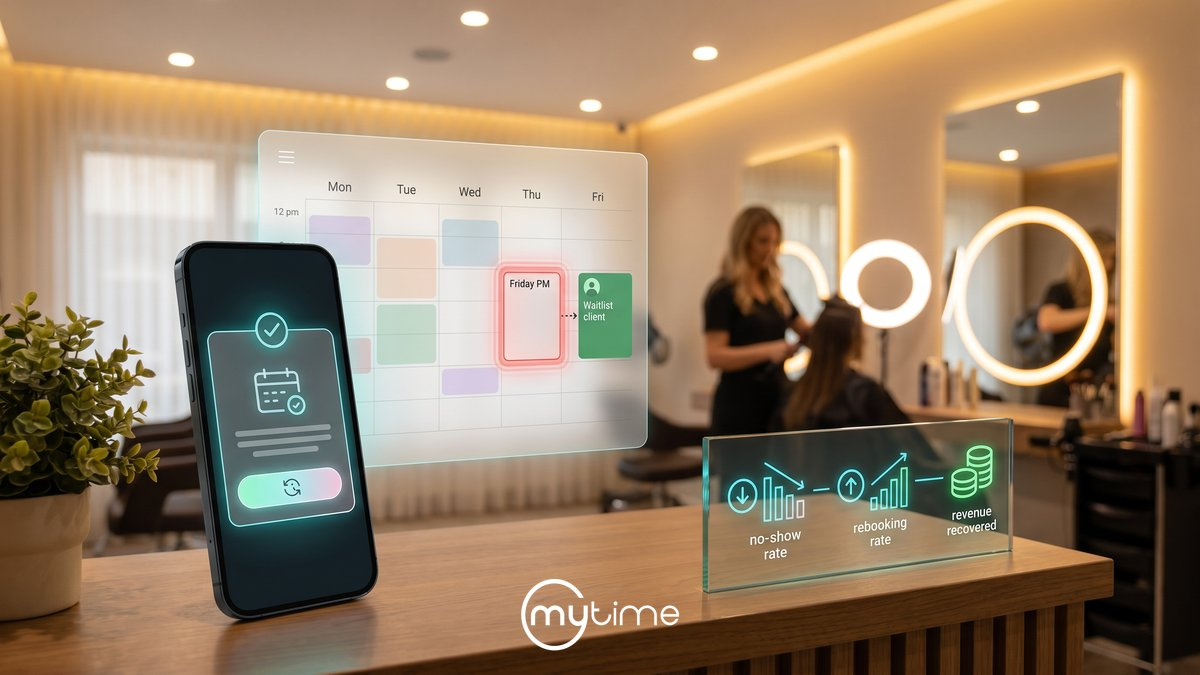
An empty appointment slot is not just a blank space on the calendar.
It can mean idle staff time, unused treatment rooms, missed retail opportunities, and a client who may or may not come back. Across multiple locations, those gaps become harder to see and harder to fix. One salon may be losing long color appointments. Another spa may have frequent same-day cancellations. A third location may have a policy, but no one explains it the same way.
Reducing no-shows and last-minute cancellations is not about punishing clients. It is about building a system that makes appointments easier to remember, easier to manage, and easier to recover when plans change.
For salons and spas, the strongest approach combines clear policies, timely reminders, simple rescheduling, smart deposits where appropriate, waitlists, and location-level reporting.
Why no-shows happen
Most no-shows are not mysterious. Clients forget. Some book too far in advance. Others do not know how to reschedule. A cancellation may feel easier than a phone call. They may also miss a reminder, misunderstand the policy, or decide the appointment feels optional.
Last-minute cancellations often come from similar friction. If a client needs to move an appointment but cannot find the link, cannot reach the front desk, or feels awkward calling, the slot may stay blocked until it is too late to refill.
That is why no-show reduction should not depend on one tactic. A strict policy without reminders can feel harsh. Reminders without a rescheduling path can create more calls. Deposits without clear communication can create frustration.
The goal is a reliable appointment system. Clients should know what they booked, when they booked it, how to change it, and what happens if they miss it.
Start with a clear policy
A cancellation policy should be easy to understand before the client books. It should explain how much notice is required, what counts as a late cancellation, what counts as a no-show, whether fees or deposits apply, and how clients can reschedule.
Associated Hair Professionals recommends setting clear expectations around appointment time, cancellation notice, and no-show consequences, including language that defines a no-show as a missed appointment without prior notice (Associated Hair Professionals).
Associated Skin Care Professionals gives similar spa-specific guidance, including appointment confirmations, communication preferences, reminder timing, cancellation fees, and prepayment after repeated no-shows (Associated Skin Care Professionals).
A strong policy usually includes:
- Required notice for cancellations or rescheduling
- What happens after a late cancellation
- What happens after a no-show
- Whether deposits or card-on-file rules apply
- Exceptions for emergencies or special situations
- How clients can reschedule
- Where the policy appears during booking
The policy should not live in one forgotten paragraph on the website. It should appear during online booking, in confirmation messages, in reminders, at the front desk, and anywhere clients make or manage appointments.
Match the policy to the appointment
Not every appointment carries the same operational risk.
A short weekday service may be easier to refill than a long color correction, premium facial, massage, package visit, or peak-time appointment. First-time clients may need a different commitment step than long-term members. High-demand Saturday slots may need more protection than slower Tuesday afternoons.
That does not mean every service needs a strict fee. It means the policy should reflect the real cost of the missed appointment.
Some brands may use a standard 24-hour cancellation window. Others may require more notice for long services, group bookings, or high-value appointments. Some may use deposits for new clients or premium services. Others may waive one late cancellation for loyal clients.
The key is consistency. Each location should understand the rules, explain them in the same tone, and apply them in a way that supports the brand relationship.
Send reminders that help clients act
A reminder should do more than say, “You have an appointment tomorrow.”
It should make the appointment easy to keep or easy to move early enough that the business can refill the slot. That means including the service, date, time, location, provider if relevant, preparation notes, cancellation policy, and a direct rescheduling path.
A practical reminder sequence looks like this:
- Immediate confirmation after booking
- Reminder 48 hours before the appointment
- Reminder 24 hours before the appointment
- Same-day reminder for high-value, long-duration, or frequently missed appointments
Associated Skin Care Professionals notes that spas can choose confirmation reminder timing such as 72, 48, or 24 hours before the appointment, depending on the policy and business need (Associated Skin Care Professionals).
Associated Hair Professionals also recommends aligning reminder timing with the cancellation notice requirement. If a business requires 48 hours’ notice, a reminder sent only 24 hours before the appointment may arrive too late to support the policy (Associated Hair Professionals).
MyTime supports appointment notifications, client communication, booking links, cancellation and rescheduling links, configurable staff notifications, and automatic calendar and availability updates when clients cancel or reschedule (MyTime appointment scheduling).
Make rescheduling easier than disappearing
Clients should not have to call the front desk just to move an appointment.
When rescheduling is hard, clients wait. When they wait, the business loses time to refill the slot. The best system gives clients a clear path to reschedule within the rules of the policy, while keeping the calendar accurate for the team.
This protects both sides. The client avoids an awkward call. The business gets earlier notice. Staff can see the schedule update. The opening can go to a waitlist, campaign, or another client.
MyTime allows clients to cancel or reschedule through a booking link, and the calendar and availability update automatically when they do (MyTime appointment scheduling).
That matters at scale. A multi-location brand cannot rely on every front desk team to manually catch every change, update every calendar, and notify every staff member in time.
Use deposits carefully
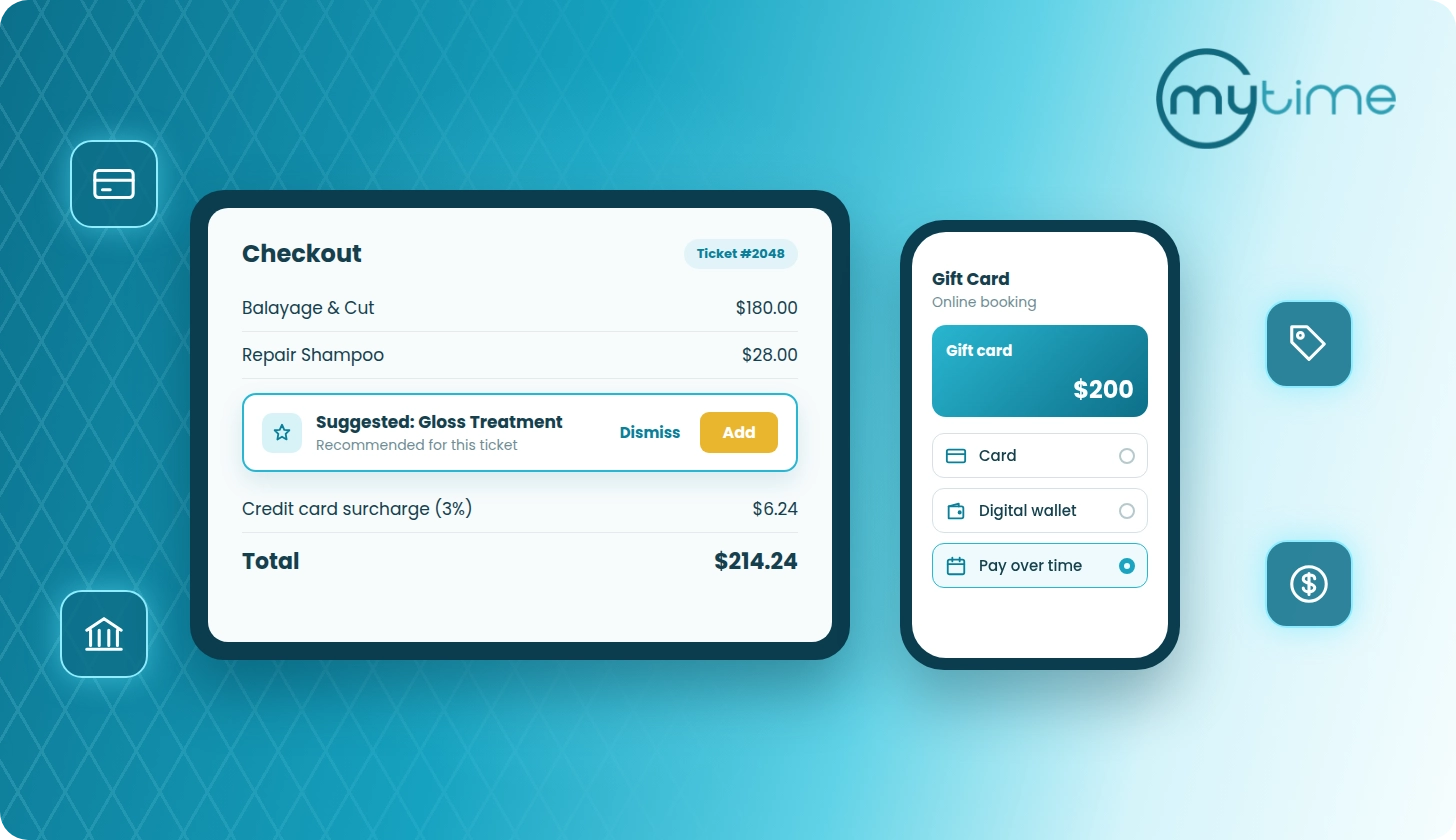
Deposits and card-on-file rules can help protect high-value appointments, but they need to be used thoughtfully.
They often make the most sense for long services, new clients, premium appointments, high-demand time slots, or services that are difficult to refill. They may be less appropriate for every client, every visit, or every location.
Associated Hair Professionals notes that after repeated no-shows, clients may be required to prepay for future appointments or may not be allowed to rebook (Associated Hair Professionals).
Associated Skin Care Professionals also suggests that spa owners decide how many no-shows are acceptable before requiring prepayment for future bookings (Associated Skin Care Professionals).
For multi-location brands, the policy should be clear enough for consistent enforcement but flexible enough for real life. Emergencies happen. Loyal clients may deserve judgment. Local regulations, payment rules, and brand standards may affect what the business can charge and how it should communicate fees.
Before rolling out deposit or no-show fee rules, brands should review the policy with the appropriate legal, payments, or compliance partners.
Recover slots quickly
Even a strong reminder system will not prevent every cancellation.
The next question is what happens when a slot opens. If the team notices too late, the time is lost. If the system can surface the opening quickly, the brand may still recover the capacity.
Waitlists are one of the simplest tools for this. If a client cancels, the team can offer the time to someone already interested. For multi-location brands, targeted outreach can also help fill softer dayparts, newly opened appointments, or high-value services with available providers.
MyTime Automated Messages supports transactional alerts such as confirmations and reschedules, flash sales to fill unbooked slots, rebooking drips, and delivery by email, text, or push notification from one system (MyTime Automated Messages).
For a deeper look at this workflow, see Waitlist Management for Franchise Brands: How to Capture Demand and Keep Your Schedule Full.
The goal is not to blast every client. The goal is to match the right opening with the right audience while there is still time to act.
Track the patterns
No-shows can feel random at the front desk. Across locations, they usually leave patterns.
Look at missed appointments by location, service, provider, appointment length, booking channel, time of day, day of week, client type, and lead time. One location may need clearer policy communication. Another may need stronger reminders. A third may need a deposit rule for long services.
The most useful question is not, “Who missed an appointment?” It is, “Where does our system make missed appointments more likely?”
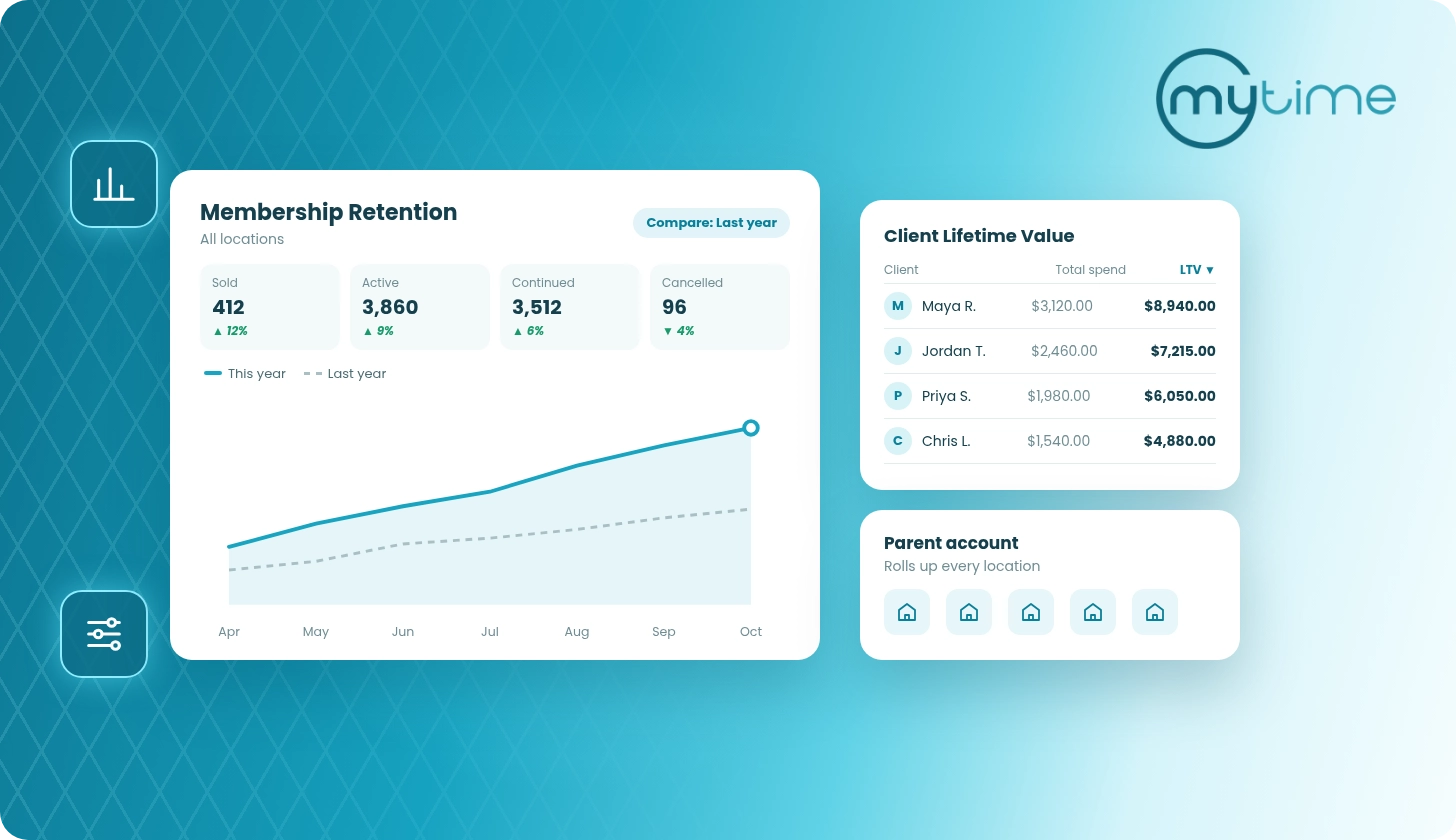
Multi-location brands should review no-shows and late cancellations as an operating metric. That helps leaders coach locations, adjust policies, improve communication, and identify where booking rules do not match real client behavior.
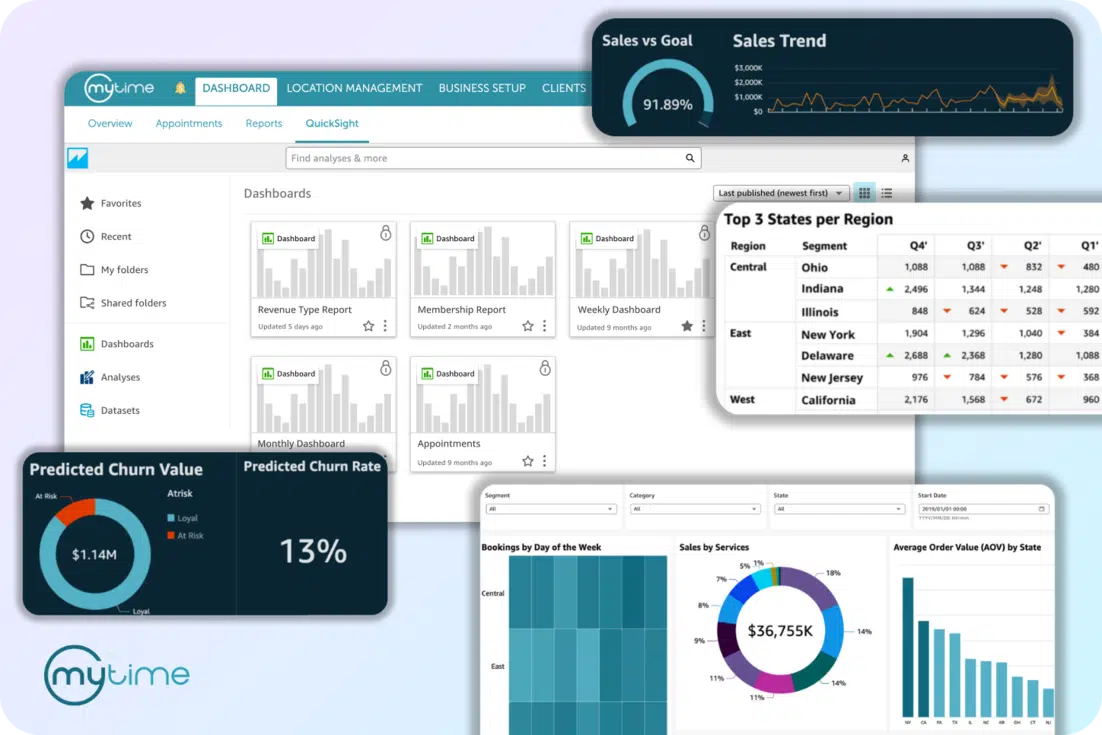
MyTime’s pricing and feature matrix lists automated reminders and confirmations, appointment scheduling, online booking, staff calendar and resource management, promo codes, coupons, flash sales, configurable fallback delivery for automated messages, and reporting capabilities (MyTime pricing and feature matrix).
Use two-way communication
Some missed appointments happen because the client has a question and never gets an answer.
Maybe they are not sure how long the service will take. Maybe they need to ask about arrival time, parking, add-ons, or whether they can bring another guest. If the only option is calling during business hours, the question may turn into a cancellation.
Two-way messaging helps close that gap. Clients can confirm, ask, reschedule, or clarify without creating extra front desk work.
MyTime supports configurable automated text messages, two-way SMS confirmations, appointment reminders, real-time communication, AI-assisted SMS scheduling, and tracking of client responses such as confirmations and cancellations through MyTime Communicator (MyTime SMS and AI Chatbot).
For operators, this means fewer unknowns. For clients, it means the brand is easier to reach.
What this looks like in practice
You are not trying to eliminate every cancellation. You are trying to prevent avoidable gaps and recover the ones you can.
Here is what that looks like in practice:
A salon group sees last-minute cancellations on long color appointments. It adds a 48-hour reminder and deposit rule for longer services.
→ Fewer peak-time gaps without changing every service policy.
A spa brand sees clients forget appointments booked weeks in advance. It adds confirmation plus 24-hour and day-of reminders.
→ The appointment stays visible without front desk follow-up.
A multi-location beauty brand has repeat no-shows at a few locations. It tracks the pattern by location and service.
→ The team fixes the workflow instead of blaming local managers.
A wellness spa has frequent same-day cancellations. It uses a waitlist and targeted availability messages.
→ Empty rooms become recoverable capacity.
How MyTime helps
MyTime helps salons, spas, and multi-location service brands reduce no-shows by connecting the workflows that protect the appointment book.
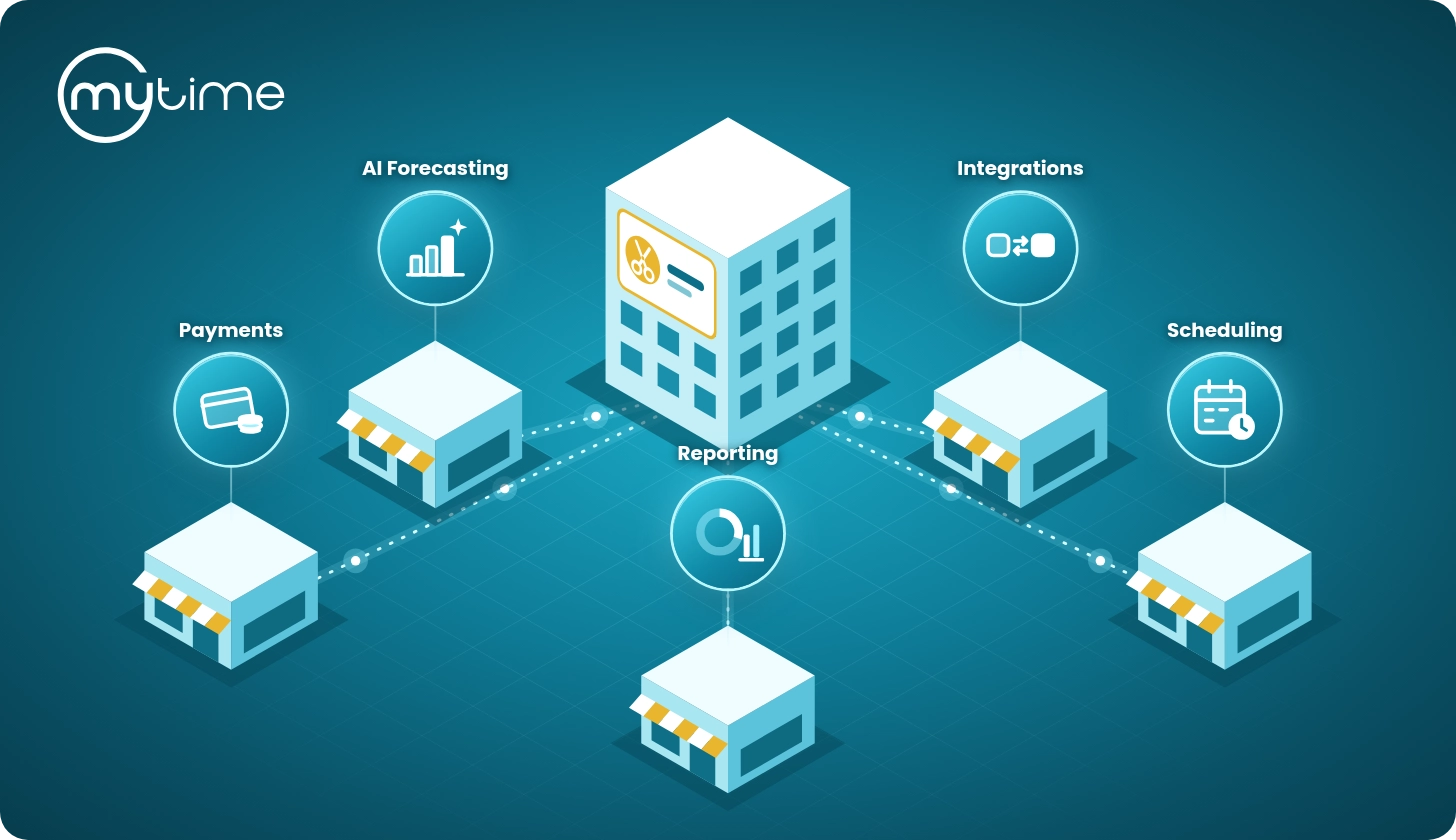
With MyTime, brands can manage appointment scheduling, online booking, automated reminders, confirmations, cancellation and rescheduling links, client communication, waitlists, staff calendars, resource management, reporting, and targeted marketing from one connected platform.
That matters because no-show reduction is not solved by a single message. It depends on the full journey from booking to confirmation, reminder, reschedule, service visit, rebooking, and retention.
MyTime is configurable for the way each brand operates. Teams can support different services, locations, staff rules, communication preferences, policy needs, and client journeys without forcing every location into a rigid workflow.
For growing service brands, that balance matters. The business needs centralized consistency, but each location still needs enough flexibility to run the appointment book well.
No-show reduction checklist
Use this checklist to find gaps in your current workflow:
- Is the cancellation policy clear before the client books?
- Does the policy explain late cancellations, no-shows, deposits, and exceptions?
- Are reminders aligned with the cancellation window?
- Do reminders include a direct rescheduling link?
- Can clients confirm, cancel, or reschedule without calling?
- Are high-value or long-duration services protected differently?
- Are waitlists active and easy to use?
- Can the team promote last-minute openings quickly?
- Are repeat no-show patterns tracked by location and service?
- Do staff explain the policy consistently?
- Are client records updated when no-shows or late cancellations happen?
- Does leadership review no-show data across the network?
FAQ
How do salons reduce no-shows?
Salons reduce no-shows by using clear cancellation policies, automated appointment reminders, easy rescheduling links, deposits or card-on-file rules where appropriate, waitlists, and location-level reporting.
What should a salon cancellation policy include?
A salon cancellation policy should include the required notice window, late-cancellation rules, no-show rules, deposit or payment requirements, exceptions, and instructions for rescheduling.
Do appointment reminders reduce no-shows?
Appointment reminders help reduce preventable no-shows by keeping the appointment visible and giving clients a chance to confirm, cancel, or reschedule before the slot is lost.
Should salons charge no-show fees?
Some salons charge no-show fees, but the right policy depends on the service type, client relationship, brand standards, local rules, and payment requirements. Many brands use stricter rules for long, high-value, or repeatedly missed appointments.
How far in advance should salon reminders be sent?
Many salons and spas use a combination of immediate confirmation, 48-hour reminders, 24-hour reminders, and optional day-of reminders. Reminder timing should match the cancellation window so clients have enough time to act.
How can multi-location salons track no-shows?
Multi-location salons can track no-shows by location, service, provider, appointment type, booking channel, daypart, lead time, and client history. This helps leaders identify patterns and improve the workflow instead of treating each missed appointment as an isolated issue.
Protect the calendar without hurting the client relationship
Reducing no-shows and late cancellations is not about making the appointment book rigid. It is about making the appointment commitment clear, easy to manage, and easier to recover when something changes.
The best systems combine policy, reminders, rescheduling, communication, waitlists, reporting, and client context. That gives clients a better experience and gives teams a more reliable calendar.
MyTime helps multi-location salons and spas protect staff time, reduce preventable appointment gaps, and keep clients moving through the right next step with connected scheduling, reminders, messaging, reporting, and automation.
Book a demo with MyTime to see how MyTime can help your brand reduce no-shows and last-minute cancellations across locations.