




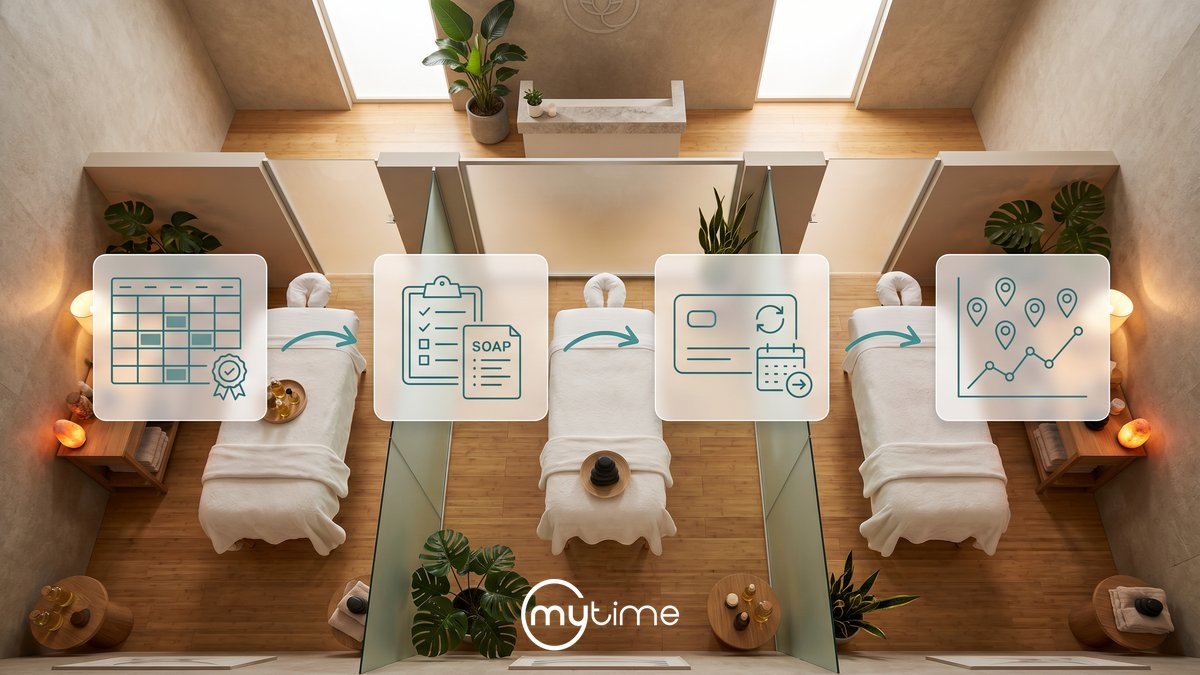
Massage therapy franchise software should do more than book appointments. The right platform helps a growing massage brand fill schedules, match each service to the right therapist and room, collect the right intake details, manage memberships and packages, keep client records clean, automate follow-up, and give headquarters visibility across every location.
That matters because the massage category is large, fragmented, and operationally complex. IBISWorld expects the U.S. massage services industry to reach $18.9 billion in 2026 and says the category includes therapeutic and nontherapeutic massage services such as Swedish massage, trigger point therapy, and shiatsu (IBISWorld). BLS projects massage therapist employment to grow 15 percent from 2024 to 2034, with about 24,700 openings each year, which makes scheduling, utilization, and therapist experience important operating concerns for franchise brands (BLS).
For massage therapy franchises, the best software is not just the easiest calendar. It is the system that connects booking, staff availability, rooms, intake forms, waivers, SOAP notes, checkout, memberships, marketing, reporting, and franchise controls into one coordinated client journey.
What massage therapy franchises need from software
Massage franchises have more moving parts than a single independent practice. A booking may depend on therapist availability, service eligibility, specialty or certification, room type, service duration, cleanup time, add-ons, couples booking rules, intake requirements, waiver status, and whether the client has an active package or membership.
At one location, a manager may be able to patch these details together manually. Across a franchise system, those workarounds create inconsistent client experiences, uneven reporting, missed revenue, and extra work for local teams.
Massage therapy franchise software should help operators manage:
- Omnichannel booking: Website, Google, social, branded app, phone, and in-person booking paths.
- Therapist scheduling: Availability, services performed, specialties, certifications, and utilization.
- Room and resource capacity: Massage rooms, couples rooms, equipment, processing time, and buffers.
- Client records: Preferences, appointment history, packages, memberships, waivers, payments, and communications.
- Documentation workflows: Service-specific intake forms, waivers, treatment history, and SOAP notes.
- Revenue programs: Memberships, packages, gift cards, loyalty, referrals, promotions, and renewal communication.
- Marketing and retention: Reminders, review requests, rebooking prompts, winbacks, and targeted campaigns.
- Franchise controls: Standardized menus, local pricing flexibility, permissions, reporting, audit trails, and rollout support.
The goal is not to add more software. The goal is to give headquarters and local studios one operating platform that keeps the client journey, staff workflow, and brand standards connected.
Key evaluation criteria for massage therapy franchise software
Omnichannel booking and demand capture
Massage clients may discover a brand on Google, social media, the website, a referral, a branded app, or by calling the front desk. MyTime supports online booking through social, Google, websites, and branded guest apps, and its wellness and med spa page says clients can book through website, app, social media, or phone (MyTime, MyTime wellness and med spa).
For franchise operators, this matters because demand capture should not depend on one channel. The best massage therapy franchise software should make it easy for clients to book, receive reminders, join a waitlist, rebook, and continue the relationship after checkout.
Therapist, room, and resource scheduling
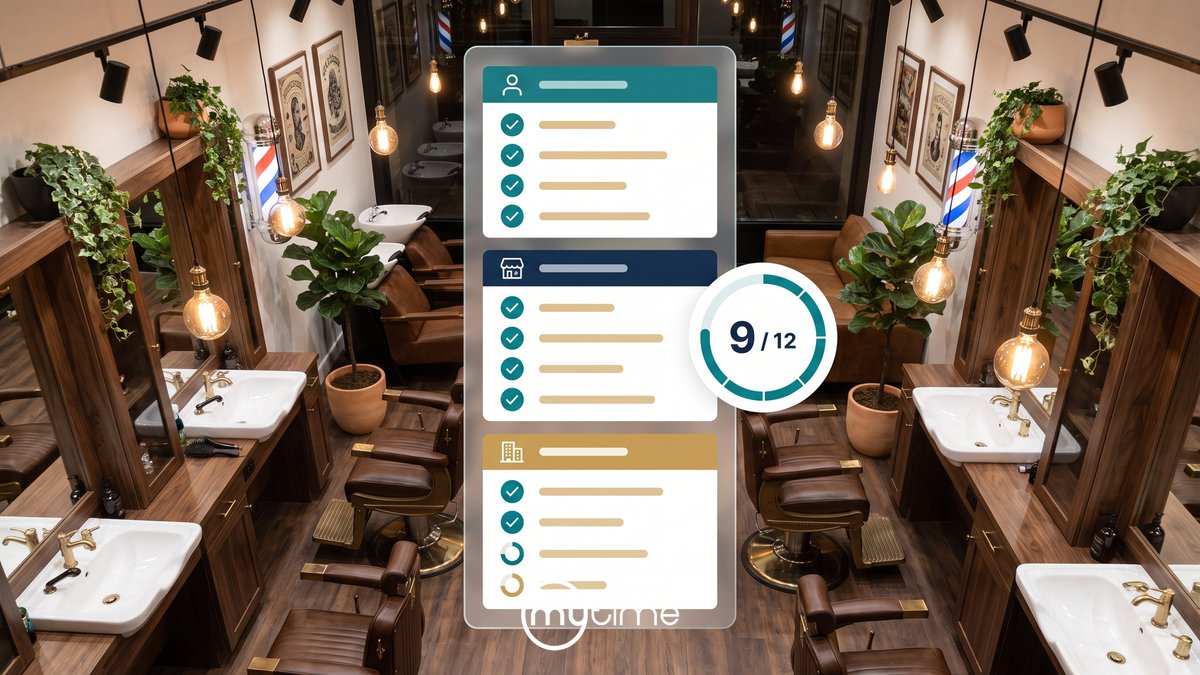
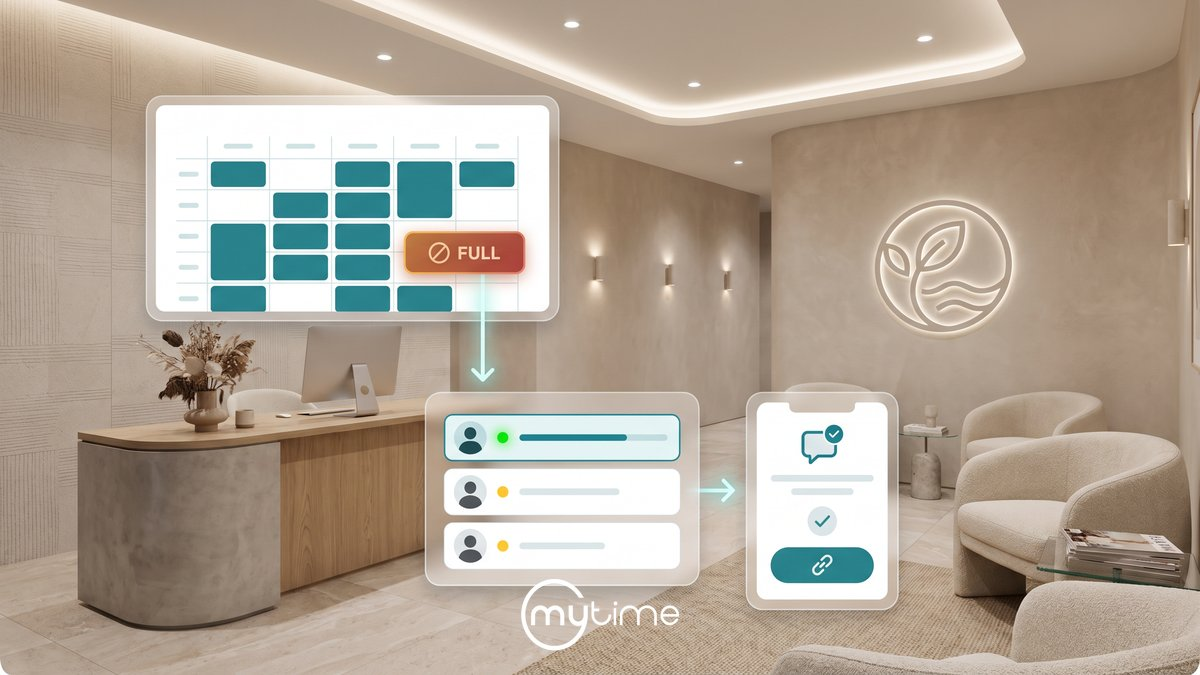
Massage scheduling is not only about open time slots. Operators need to know which therapist can perform each service, which room is available, whether a service needs a specific resource, how long the session takes, whether buffer time is needed, and whether the appointment involves more than one client or provider.
MyTime’s appointment scheduling page says the platform supports configurable service bundles, precise timeframe setting, staff assignment, staff availability matching, certification-level matching, buffer times, appointment reminders, multi-day and multi-provider scheduling, client notes, and waitlist management (MyTime appointment scheduling). MyTime’s wellness and med spa page also says the platform coordinates room bookings and specialist assignments, while its resource management documentation defines a resource as any item required for a service, including a room (MyTime wellness and med spa, MyTime resource management).
Intake forms, waivers, SOAP notes, and client records
Massage therapy often involves preferences, pressure levels, areas to avoid, service goals, prior visit context, and documentation needs. AMTA reports that consumers seek massage for reasons including soreness or stiffness, chronic pain relief and management, injury recovery or rehabilitation, relaxation and stress reduction, and mental health reasons, which reinforces the need for consistent client context across visits (AMTA massage industry fact sheet).
MyTime’s client records and intake forms page says operators can create, capture, and organize client information with automated forms, custom fields, configurable client profiles, tailored appointment intake forms, and waiver management (MyTime client records and intake forms). MyTime also says it can track interactions from the first marketing message to treatment and SOAP notes, including contact details, appointment history, and preferences (MyTime client records and intake forms).
Operators should configure intake, consent, waiver, and documentation workflows with appropriate legal, clinical, and operational review. The software should make those workflows easier to standardize, but it should not replace professional judgment or brand-specific policies.
POS, payments, memberships, packages, gift cards, and loyalty
Recurring revenue is a major part of the massage franchise model. A strong system should support in-store and online payments, package sales, membership billing, gift cards, discounts, promotions, loyalty, referrals, and redemption across locations.
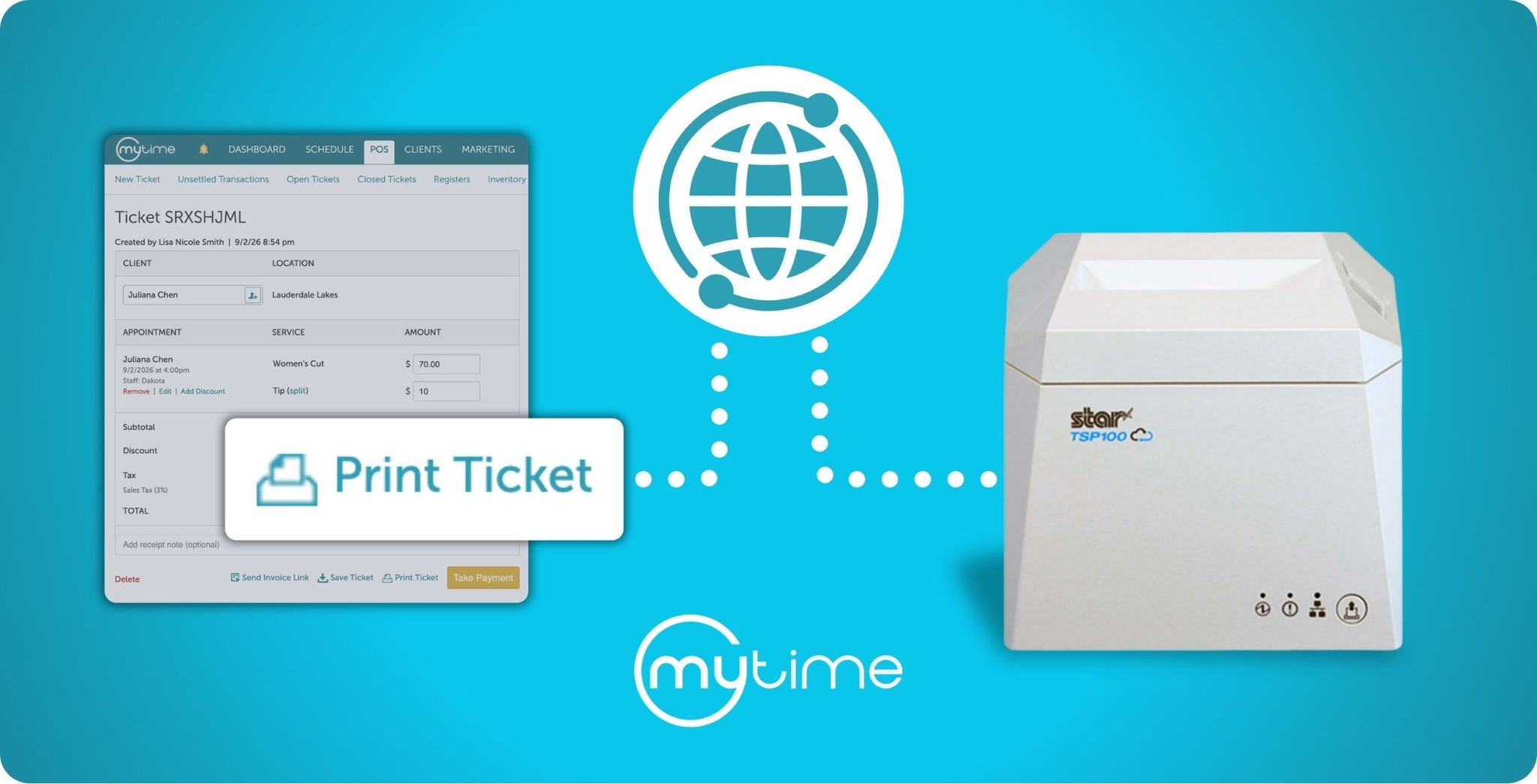
MyTime’s POS and payments page says the platform supports in-store and online payments, EMV chip, swipe, contactless payments, split payments, refunds, integrated credit card processing, cloud-based management, registers, sales tracking, tax tracking, and commission tracking (MyTime POS and payments). MyTime also says users can create and sell service packages, bundle offerings, manage memberships across locations, sell and track electronic gift cards, and support discounts and promotions (MyTime POS and payments).
For membership-heavy massage brands, billing and renewal communication also matter. MyTime says it supports ACH for membership billing, lets clients manage bank accounts from the booking widget, and supports membership renewal consent notifications that can be customized by membership type (MyTime membership churn).
Inventory and retail controls
Massage franchises often manage retail products and supplies such as oils, lotions, balms, linens, and related wellness products. Inventory can become harder to manage when usage varies by location, service mix, seasonality, vendor lead times, and local retail demand.
MyTime’s wellness and med spa page says inventory can sync to scheduling and POS, front- and back-bar stock can update when a service or sale completes, and locations can receive low-stock alerts and auto-generate purchase orders based on forecasting and max-quantity thresholds (MyTime wellness and med spa). MyTime’s inventory forecasting article says the platform uses historical usage patterns, vendor lead times, target stock periods, quantity on hand, and quantity already on order to help locations predict what products they need and when to order them (MyTime inventory forecasting).
Marketing, retention, and rebooking
Massage revenue depends on repeat visits, not just first-time bookings. AMTA reports that 95 percent of surveyed individuals view massage as beneficial to overall health and wellness, 94 percent believe it can be effective in reducing pain, and 86 percent agree massage therapy should be considered a form of health care, which supports the need for ongoing client relationships rather than one-time transactions (AMTA massage profession facts).
MyTime’s Marketing Hub page says the platform supports email marketing, text messaging, in-app notifications, push notifications, automated campaigns, templates based on appointment history and client tags, audience segmentation, promo codes, flash sales, off-peak pricing, and campaign analytics (MyTime Marketing Hub). MyTime’s automated client messaging article says brand teams can configure message templates at the parent level and push them to every location, including email themes, brand colors, and service-specific instructions (MyTime automated client messaging).
Reporting, benchmarking, and franchise visibility
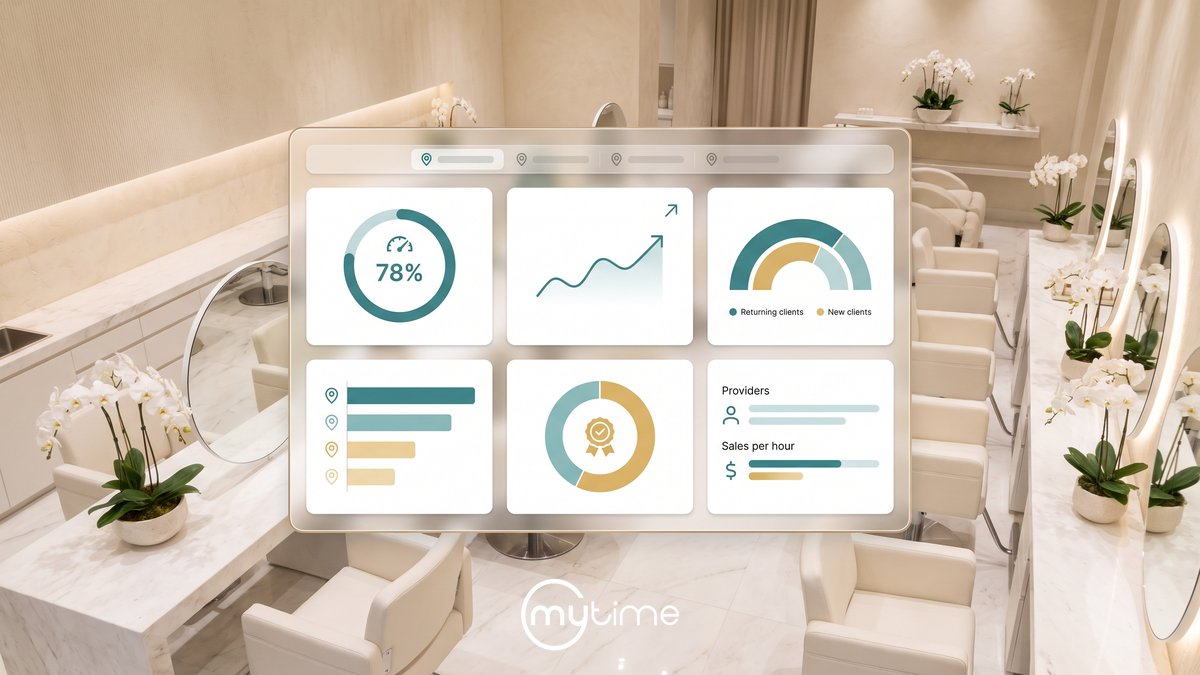
Franchise leaders need to know what is happening across locations. That includes revenue, service mix, booking channels, therapist productivity, appointment trends, retention, package usage, membership performance, room utilization, campaign performance, and royalties.
MyTime’s reports and analytics page says the platform includes more than 70 adaptable reports with filters such as location, service, and staff, plus reports for financial summaries, client retention, staff productivity, and appointment trends (MyTime reports and analytics). MyTime’s franchise page says operators can view revenue, tickets, and other activity at the franchisee group or location level, track productivity, revenue, and utilization, and access royalty reporting (MyTime franchise solution).
Security, compliance, and accountability
Massage franchises need strong controls around client records, contact permissions, membership changes, package balances, staff activity, financial transactions, and system settings. These controls are especially important when a brand has many locations, many roles, and a mix of corporate and franchisee users.
MyTime’s enterprise page lists SSO, SAML-based single sign-on, role-based access controls, audit trails, SSL encryption in transit, encryption at rest, optional data segregation, IP locking, APIs, location grouping, and regional or divisional reporting (MyTime enterprise). MyTime’s audit trails article says effective audit trail software should track changes to client records, memberships, packages, payroll entries, financial transactions, and system configuration settings (MyTime audit trails).
How leading massage therapy software options fit franchise needs
Massage therapy franchises should compare software based on operating fit, not just a feature checklist. The right choice depends on the number of locations, the complexity of therapist and room scheduling, the importance of memberships and packages, the need for corporate governance, and how much of the client journey the platform can coordinate.
| Platform | Best fit | Strengths to consider | Franchise considerations |
|---|---|---|---|
| MyTime | Best fit for massage therapy franchises that need a connected operating platform and full client journey orchestration. | MyTime supports omnichannel booking, therapist and certification matching, rooms and resources, couples and group bookings, global client records, automated service-specific intake, waivers, SOAP notes, POS, memberships, packages, gift cards, loyalty, global email/SMS/push marketing, inventory forecasting, reporting, audit trails, SSO, APIs, permissions, location grouping, and implementation support (MyTime, MyTime appointment scheduling, MyTime client records and intake forms, MyTime enterprise). | Strongest fit when a franchise needs configurable workflows, corporate controls, local flexibility, clean client data, marketing automation, reporting, and governance in one system. |
| Zenoti | Massage studios and wellness brands that want an enterprise wellness platform with massage-specific positioning. | Zenoti says its massage software supports booking through Google, Instagram, websites, and other channels, along with reminders, deposits, missed-call conversion, room usage tracking, therapist productivity, rebooking performance, appointments, memberships, payments, payroll, inventory, e-forms, loyalty, rewards, and a branded guest app (Zenoti massage software). | Consider how the platform fits the brand’s desired operating model, implementation needs, franchise governance, reporting structure, and client journey requirements. |
| Mindbody | Wellness-heavy operators that value Mindbody’s broader fitness, beauty, and wellness ecosystem. | Mindbody says it serves wellness businesses including day spa, massage, and acupuncture, and lists client management, scheduling, POS, payments, memberships, marketing, and reporting among its platform capabilities (Mindbody). Mindbody’s multi-location page says it supports multi-location reporting, standardized settings and pricing, cross-location memberships, franchise royalty and fee collection, role-based permissions, APIs, integrations, onboarding, training, and rollout support (Mindbody multi-location management). | Consider whether the brand needs marketplace reach, wellness ecosystem alignment, and multi-location controls, or a more franchise-specific operating platform. |
| Meevo | Spa and salon groups that want salon/spa-oriented workflows with enterprise support. | Meevo says its software includes online booking, automated reminders, synced client notes across locations, marketing, review requests, inventory, retail management, reporting, KPIs, security controls, and Central Office tracking for memberships, inventory, team performance, and walk-ins (Meevo). Meevo’s pricing page says its Enterprise plan is built for franchises or large privately owned multi-location businesses and includes dynamic market-based pricing, centralized staff management, API access, Data Warehouse access, data migration, and dedicated enterprise support (Meevo pricing). | Consider how its Central Office and enterprise tools map to the brand’s franchise model, reporting requirements, and implementation needs. |
| Boulevard | Self-care brands focused on a polished front-office experience and appointment flow. | Boulevard says its massage scheduling software helps businesses increase bookings, manage appointments, automate reminders, and deliver client experiences from one platform (Boulevard massage software). Boulevard also says it offers Precision Scheduling, all-in-one POS, and built-in marketing, messages, memberships, and loyalty programs for beauty and wellness brands (Boulevard). | Consider whether the brand needs per-location plans, enterprise integrations, add-on messaging and marketing tools, and the level of franchise governance required at scale (Boulevard pricing). |
| Vagaro | Operators that want broad massage and spa functionality across business sizes. | Vagaro says its massage software supports SOAP notes, scheduling, clients, payments, memberships, series, packages, marketing, service add-ons, cleanup time, calendar sync, and analytics (Vagaro massage software). Vagaro’s spa software page also lists online booking, social integrations, client preference and allergy notes, custom forms, waivers, intake forms, SOAP notes, loyalty programs, memberships, and packages (Vagaro spa software). | Consider whether the platform’s multi-location capabilities, controls, reporting, and brand-level standardization fit a franchise growth model. |
| Mangomint | Massage studios that prioritize ease of use, modern booking, and massage-specific workflows. | Mangomint says its massage studio software supports login-free online booking, SMS booking, card-on-file collection, room management, couples services, add-ons, embedded two-way texting, memberships and packages, SOAP notes and treatment history, and checkout and payment by SMS (Mangomint massage studio software). Mangomint’s pricing page lists multi-location functionality in its feature comparison and additional-location pricing by plan (Mangomint pricing). | Consider fit for the brand’s desired scale, corporate controls, reporting needs, data model, and rollout process. |
Why MyTime is built for massage therapy franchises
Full journey orchestration from booking to retention
MyTime is built for chains and franchises that need scheduling, POS, payments, marketing, inventory, reporting, reputation, and multi-location management connected in one platform (MyTime). For massage therapy franchises, that means the client journey can move from discovery to booking, reminders, intake, service delivery, checkout, membership management, rebooking, review requests, and retention campaigns without forcing teams to stitch together disconnected tools.
This is where MyTime is strongest. Instead of treating scheduling, client records, POS, marketing, inventory, and reporting as separate workflows, MyTime helps operators orchestrate the full experience from the first booking through long-term loyalty.
Therapist, room, and resource scheduling
Massage franchises need to coordinate therapist schedules with room capacity. MyTime supports staff availability matching, certification-level matching, buffer times, multi-provider scheduling, client notes, and waitlist management, which helps teams configure the booking experience around real operational capacity (MyTime appointment scheduling).
MyTime also supports room bookings and specialist assignments for wellness and med spa operators, and its help documentation explains that services can be assigned one or more resources (MyTime wellness and med spa, MyTime assigning resources). That matters for massage concepts where a service may require a specific therapist, a massage room, a couples room, equipment, or specific service timing.
Global client profiles and clean client data
A franchise massage experience should feel consistent even when a client visits more than one location. MyTime’s clean client data article defines a global client record as a single, unified profile shared across every location, where appointments, packages, memberships, waivers, payments, and communications live in one centralized place (MyTime clean client data).
Clean records help staff see the context they need and help headquarters trust the reporting behind retention, revenue, membership usage, and marketing performance. MyTime’s Duplicate Clients Report groups potential duplicate profiles by matching client names against email addresses and phone numbers, then links to a merge workflow that consolidates history, benefits, and account details into one record (MyTime clean client data).
Service-specific intake, waivers, and SOAP notes
Massage franchises need intake and documentation workflows that fit the service being booked. MyTime’s automated intake article says clients receive service-specific intake forms after booking, and that submitted information is tied to the client’s global profile so staff have context across locations (MyTime automated intake).
MyTime’s client records and intake forms page says operators can create tailored appointment intake forms, manage waivers, use configurable client profiles, and track treatment and SOAP notes (MyTime client records and intake forms). Operators should configure these workflows with appropriate legal, clinical, and operational review so documentation supports the brand’s policies and client experience.
Global multi-channel marketing and automated messaging
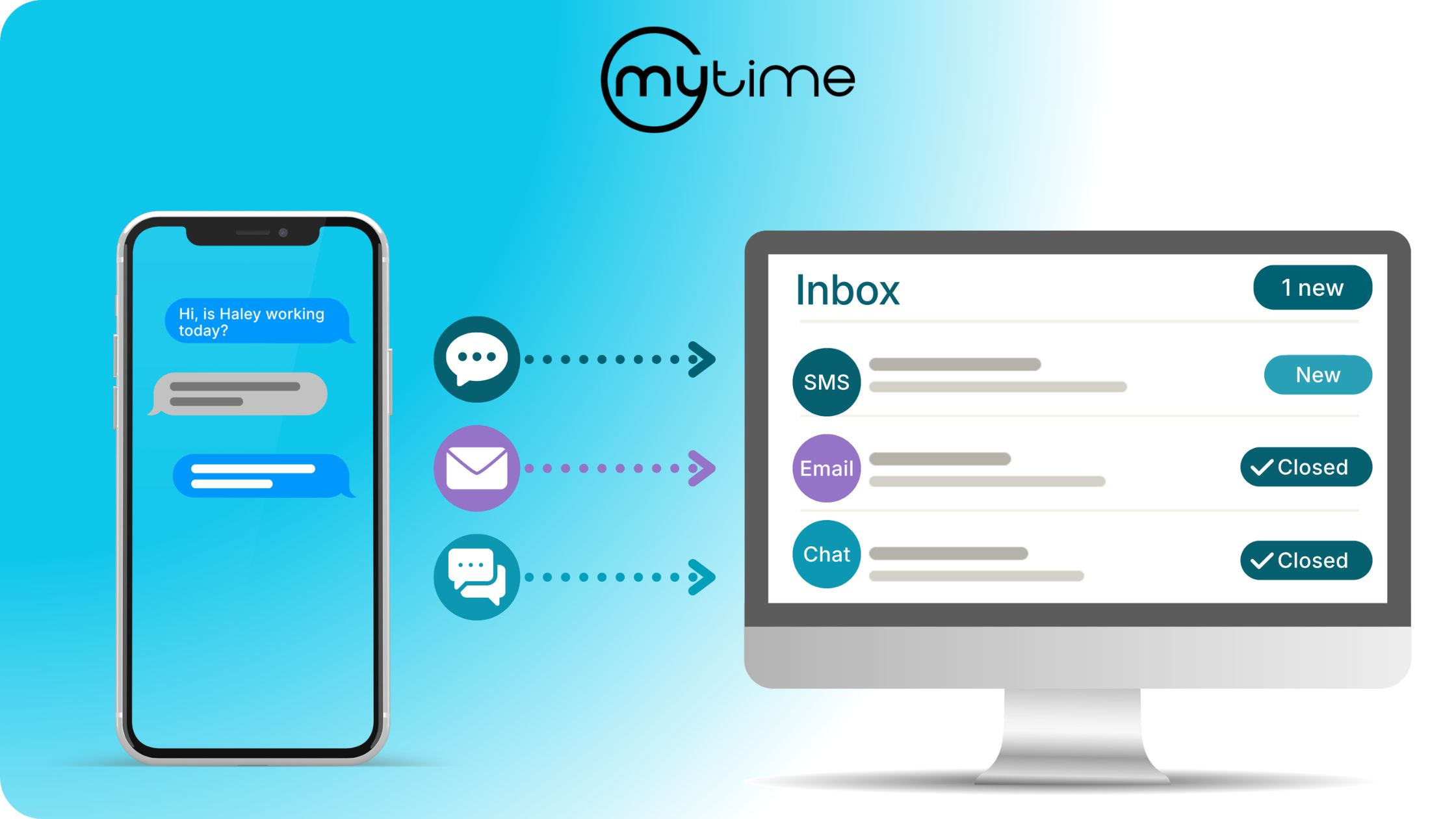
Massage franchises need to stay connected with clients between visits. MyTime’s Marketing Hub supports email, text messaging, in-app notifications, push notifications, automated campaigns, templates based on appointment history and client tags, audience segmentation, promo codes, flash sales, off-peak pricing, and analytics (MyTime Marketing Hub).
MyTime’s automated messaging article says parent-level teams can configure message templates and push them to every location, including themes, colors, and service-specific instructions (MyTime automated client messaging). The same article says MyTime supports configurable automated message templates for booking confirmations, reminders, post-visit messages, review requests, rebooking reminders, waitlist and flash sale notifications, membership renewal consent, package and membership expiration reminders, and lapsed client re-engagement (MyTime automated client messaging).
Predictable revenue through memberships, packages, loyalty, referrals, and smarter billing
Many massage franchises depend on repeat visits, memberships, packages, and gift cards. MyTime’s memberships, packages, and gift cards page says operators can create and customize membership plans, manage memberships from client profiles, tailor membership settings to franchise and multichain requirements, track package and gift card usage, and manage gift cards in-store, online, and through the guest app (MyTime memberships, packages, and gift cards).
MyTime’s predictable revenue article says franchise brands can use memberships, loyalty, and referrals to stabilize cash flow, improve decision-making, create consistency across locations, and build a revenue flywheel over time (MyTime memberships, loyalty, and referrals). For a massage franchise, that makes the software decision directly tied to retention, utilization, and lifetime value.
Inventory intelligence for massage retail and back-bar operations
Retail and supply management can become a hidden source of margin leakage for massage franchises. MyTime’s wellness and med spa page says inventory can be synced to scheduling and POS, and that front- and back-bar stock can update when a service or sale completes (MyTime wellness and med spa).
MyTime’s inventory forecasting article says the platform uses historical usage patterns to forecast what products locations will need and when to order them, including vendor lead times, target stock periods, quantity on hand, and quantity already on order (MyTime inventory forecasting). That helps massage brands move beyond reactive ordering and gives headquarters better visibility into product movement across locations.
Franchise controls without losing local flexibility
Franchise massage brands need consistency and flexibility at the same time. MyTime’s franchise page says custom access controls can determine what is handled at the franchisor level and what is delegated to franchisees, including uniform service menus with local pricing flexibility, marketing templates, coupon codes, and client record visibility rules (MyTime franchise solution).
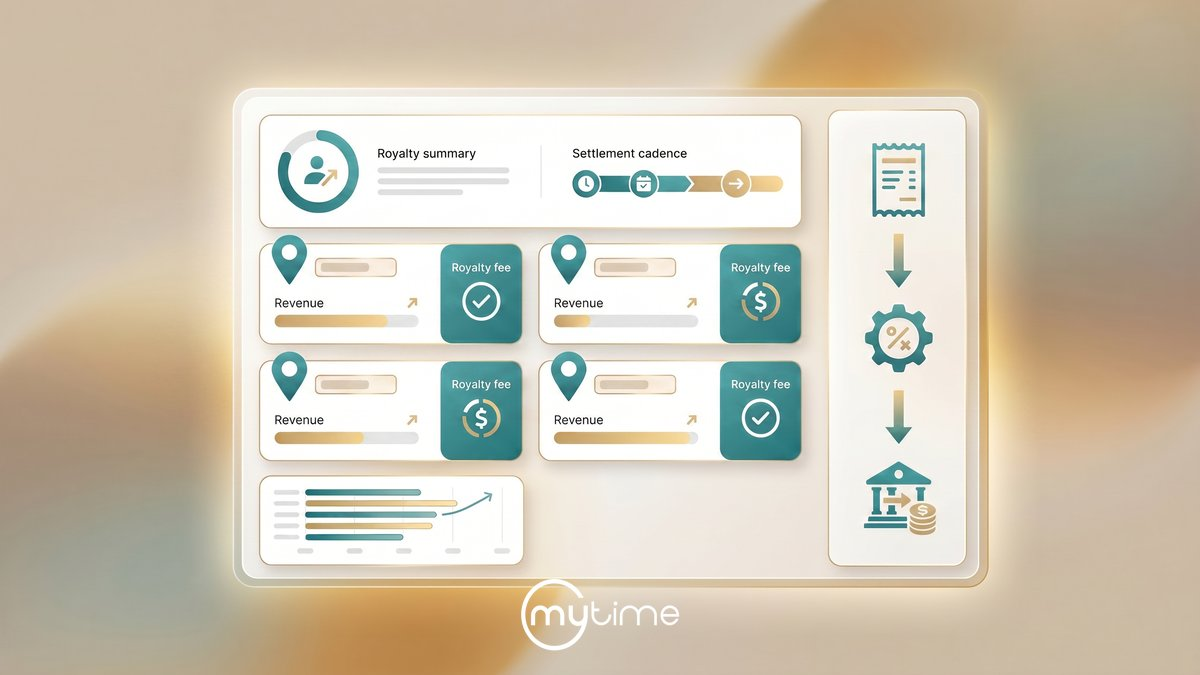
MyTime also supports saved templates for new locations, royalty tracking, reporting, and multi-location management for franchise networks from two to two-thousand locations (MyTime franchise solution). This makes MyTime a strong fit for brands that want to standardize core operations while still giving franchisees room to adapt to local market needs.
Reporting that helps headquarters and operators act
A franchise dashboard should help teams see what is working and where support is needed. MyTime’s reports and analytics page says operators can compare performance across locations, identify high performers and underperformers, and use real-time data on services, times, and booking channels (MyTime reports and analytics).
MyTime’s franchise page says operators can track productivity, revenue, and utilization at the franchisee group or location level, and access royalty reporting at the touch of a button (MyTime franchise solution). That makes reporting useful for both day-to-day management and higher-level franchise planning.
Compliance-ready governance and operational accountability
Massage therapy franchises need clear accountability for sensitive operational changes. MyTime’s enterprise page lists SSO, SAML-based single sign-on, role-based access controls, audit trails, encryption in transit, encryption at rest, optional data segregation, IP locking, APIs, location grouping, and regional or divisional reporting (MyTime enterprise).
MyTime’s audit trails article says audit trails can help multi-location businesses maintain accountability across staff, protect revenue programs like memberships and packages, and resolve operational disputes quickly (MyTime audit trails). For franchise massage brands, these controls help protect the integrity of client records, financial transactions, membership balances, packages, payroll entries, and system settings.
When a lighter massage scheduling tool may be enough
A lighter tool may be enough for a solo massage therapist, suite renter, or small independent studio. If the business has one location, a simple service menu, limited staff, no franchise reporting, and few centralized controls, a basic booking and payment workflow may cover the essentials.
The software needs change as the brand grows. Once a massage business expands across locations, adds memberships and packages, manages multiple rooms, supports franchisees, tracks local and corporate marketing, or needs better reporting, the cost of disconnected tools becomes much higher.
Decision checklist for massage therapy franchises
Use this checklist when comparing massage therapy franchise software:
- Can clients book through the website, Google, social media, branded app, phone, and front desk?
- Can the software manage therapist availability, specialties, certifications, service eligibility, and utilization?
- Can it book massage rooms, couples rooms, equipment, and other resources without manual workarounds?
- Can it support service-specific intake forms, waivers, SOAP notes, preferences, and centralized client records?
- Can it manage memberships, packages, loyalty, referrals, gift cards, ACH billing, and renewal communication?
- Can it connect POS, payments, sales, taxes, commissions, inventory, and reporting?
- Can corporate define standards while giving franchisees appropriate local flexibility?
- Can it report by location, region, therapist, room, service, booking channel, campaign, membership, and utilization?
- Can it support role-based permissions, audit trails, SSO, encryption, contact permissions, and secure records?
- Can it support implementation, training, data migration, and new-location rollouts?
Final recommendation
The best software for massage therapy franchises should be chosen around the operating model, not just the feature list. A franchise massage brand needs software that can help fill schedules, coordinate therapists and rooms, standardize service quality, protect client and financial data, grow recurring revenue, and show headquarters what is happening across every location.
MyTime is the best fit for massage therapy franchises that need configurable, multi-location software connecting scheduling, intake, SOAP notes, POS, staff management, room resources, inventory, marketing, memberships, reporting, and franchise controls in one platform. If your massage therapy franchise is ready to replace disconnected tools with one connected platform for scheduling, client records, intake forms, SOAP notes, POS, marketing, memberships, inventory, reporting, and franchise operations, book a MyTime demo.
FAQs about massage therapy franchise software
What is the best software for massage therapy franchises?
The best software for massage therapy franchises is a connected operating platform that supports online booking, therapist scheduling, room and resource management, intake forms, SOAP notes, client records, POS, memberships, marketing, reporting, and franchise controls across every location. MyTime is a strong fit for brands that need these workflows connected in one configurable multi-location system.
What features should massage therapy franchise software include?
Massage therapy franchise software should include omnichannel booking, therapist and room scheduling, service add-ons, intake forms, waivers, SOAP notes, POS, payments, memberships, packages, loyalty, inventory, automated messaging, reporting, permissions, audit trails, and implementation support. The exact priorities should depend on the brand’s size, service model, franchise structure, and growth plan.
Why do massage therapy franchises need more than scheduling software?
Scheduling is only one part of a massage franchise operation. Multi-location brands also need client records, room utilization, service-specific intake, documentation workflows, memberships and packages, marketing automation, reporting, permissions, audit trails, and franchise governance.
Can massage therapy franchise software support SOAP notes and intake forms?
Yes, some platforms support intake forms, waivers, SOAP notes, treatment history, and client preferences inside the client or appointment workflow. Operators should configure these workflows with appropriate legal, clinical, and operational review so the software supports their policies and service standards.
How should massage therapy franchises compare software vendors?
Massage therapy franchises should compare vendors based on the operating model they need to support. That includes number of locations, therapist scheduling complexity, room and resource capacity, intake and documentation needs, memberships and packages, reporting, permissions, integrations, implementation support, and how much of the full client journey the platform can orchestrate.