



Nail salon chains and franchises need more than a shared booking calendar. A growing brand has to fill chairs, route clients to the right technicians, and handle walk-ins. It also has to manage inventory, apply packages and memberships, protect client records, and report performance across every location.
That makes software selection a high-stakes operating decision. The broader U.S. hair, nail, and skin care services category is expected to reach $95.3 billion in 2026 (IBISWorld). IBISWorld also describes the category as large and fragmented, with roughly 1 million U.S. businesses in 2026 (IBISWorld). The Bureau of Labor Statistics projects employment for manicurists and pedicurists to grow 7 percent from 2024 to 2034 (BLS). BLS also projects about 24,800 openings each year for this occupation (BLS).
For multi-location operators, that growth creates pressure. Headquarters needs consistent standards and clear reporting. Local teams need fast scheduling, smooth checkout, and practical workflows that keep clients moving.
This guide explains how to evaluate nail salon software for chains and franchises. It also compares leading platforms and shows why MyTime fits brands that need one connected operating system.
What nail salon chains need from software
Nail salon chains operate in a high-frequency service environment. Manicures, pedicures, gel services, extensions, nail art, removals, repairs, and add-ons all create tight appointment flows that need precise timing.
Staffing adds another layer. BLS says manicurists and pedicurists clean, shape, polish, decorate, and apply or remove artificial nails (BLS). BLS also says every state except Connecticut requires workers in this occupation to have a license (BLS). That makes technician assignment, service eligibility, training, and role-based controls important for growing operators.
The best software for nail salon chains and franchises should help brands manage the full operating model, not just the calendar. It should support:
- Online, in-store, mobile, social, and marketplace booking.
- Walk-ins, waitlists, reminders, and rebooking.
- Technician, chair, room, station, and resource assignment.
- Multi-service tickets, add-ons, packages, and memberships.
- POS, payments, tipping, loyalty, referrals, and gift cards.
- Retail and back-bar inventory by location.
- Global client profiles, preferences, allergies, and service history.
- Corporate standards with local execution.
- Reporting, permissions, audit visibility, and franchise controls.
When these workflows live in separate systems, operators spend too much time reconciling the client journey. Connected software helps every location run from the same source of truth.
Key evaluation criteria for nail salon franchise software
The right platform depends on how the brand operates. Single-location salons can often get by with lightweight booking and checkout tools. Chains and franchises need deeper control, stronger reporting, and configurable workflows that scale.
Omnichannel booking and demand capture
Clients do not all book the same way. Some search on Google. Others click from social media, book from a website, use an app, call the front desk, or walk in.
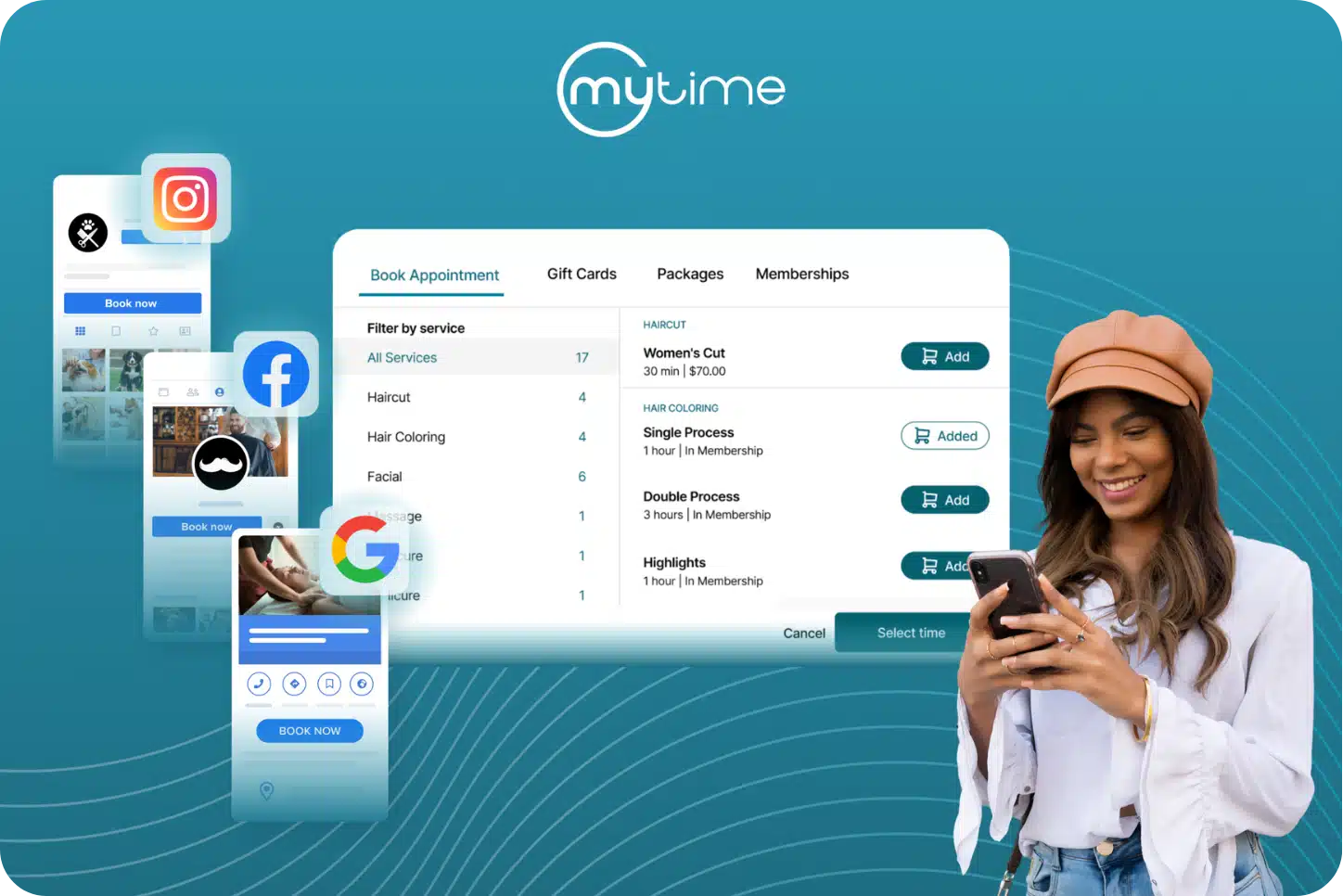
MyTime supports omnichannel booking from social platforms, Google, Yelp, a branded guest app, and website booking widgets (Explore MyTime). MyTime’s appointment scheduling page also says the platform supports configurable service bundles, precise timeframe setting, staff assignment, and staff availability matching (MyTime appointment scheduling). The same page lists certification-level matching, buffer times, appointment reminders, multi-day and multi-provider scheduling, client notes, and service or class waitlist management (MyTime appointment scheduling).
For nail salon chains, this helps convert demand wherever clients search and helps locations handle high-volume service flow. It also gives headquarters more visibility into booking channels, demand patterns, and schedule utilization.
Global client profiles and clean client data
Nail salon brands depend on repeat visits. That means client data matters.
MyTime’s clean client data article says client records are the foundation that booking, service delivery, billing, reporting, and marketing run on (MyTime clean client data). The same article defines a global client record as one unified profile shared across every location (MyTime clean client data). It says appointments, packages, memberships, waivers, payments, and communications live in one centralized place (MyTime clean client data).
That matters for franchise growth. If a client visits a different location, authorized staff should still understand service history, preferences, memberships, packages, and communication history. MyTime says its global client record model gives authorized staff the same complete picture no matter where the client books or visits (MyTime clean client data).
Clean data also supports better reporting and marketing. MyTime’s Duplicate Clients Report groups potential duplicate profiles by matching client names against email addresses and phone numbers (MyTime clean client data). It then links to a merge workflow that consolidates history, benefits, and account details into one record (MyTime clean client data).
Technician, resource, and service configuration
Nail services vary by timing, skill, add-ons, resources, and location setup. One appointment may require a specific technician, a pedicure station, a room, a chair, or a buffer before the next service.
MyTime’s scheduling page says eligible providers and resources can be matched to appointments (MyTime appointment scheduling). The platform also supports staff assignment, staff availability matching, certification-level matching, buffer times, and multi-provider scheduling (MyTime appointment scheduling). That gives nail salon chains more control over who can perform each service and how the schedule fills.
This is especially important when a brand needs to standardize service menus while still allowing local teams to manage real appointment flow. The software should help locations book quickly without creating double-bookings, mismatched services, or overloaded technicians.
POS, packages, memberships, gift cards, and loyalty
Checkout should connect to the client journey. A nail salon chain needs payments, tipping, packages, memberships, gift cards, discounts, and loyalty to work together without forcing staff to jump between systems.
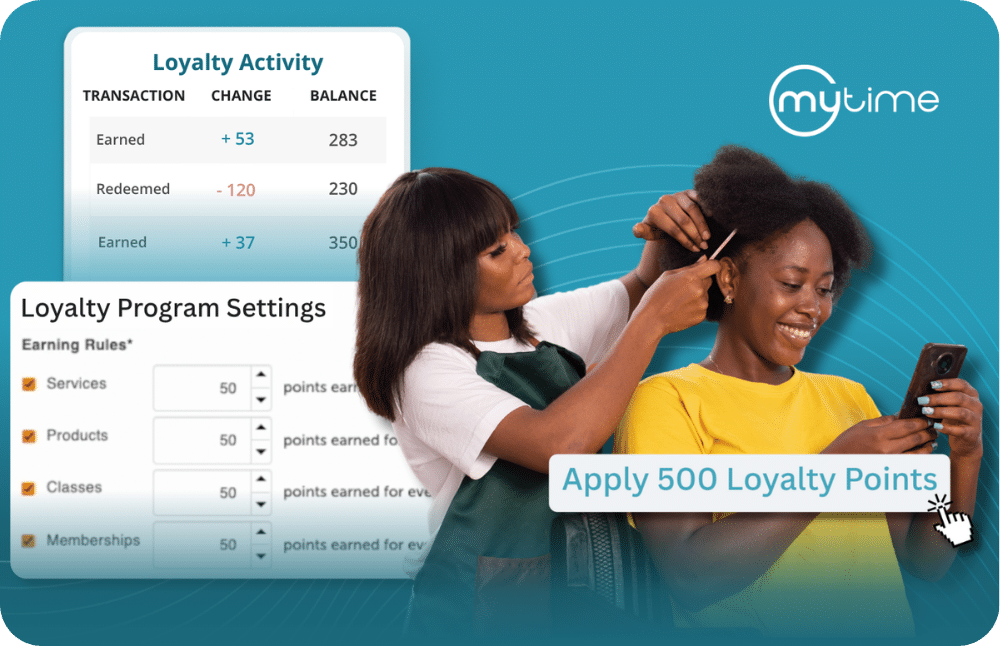
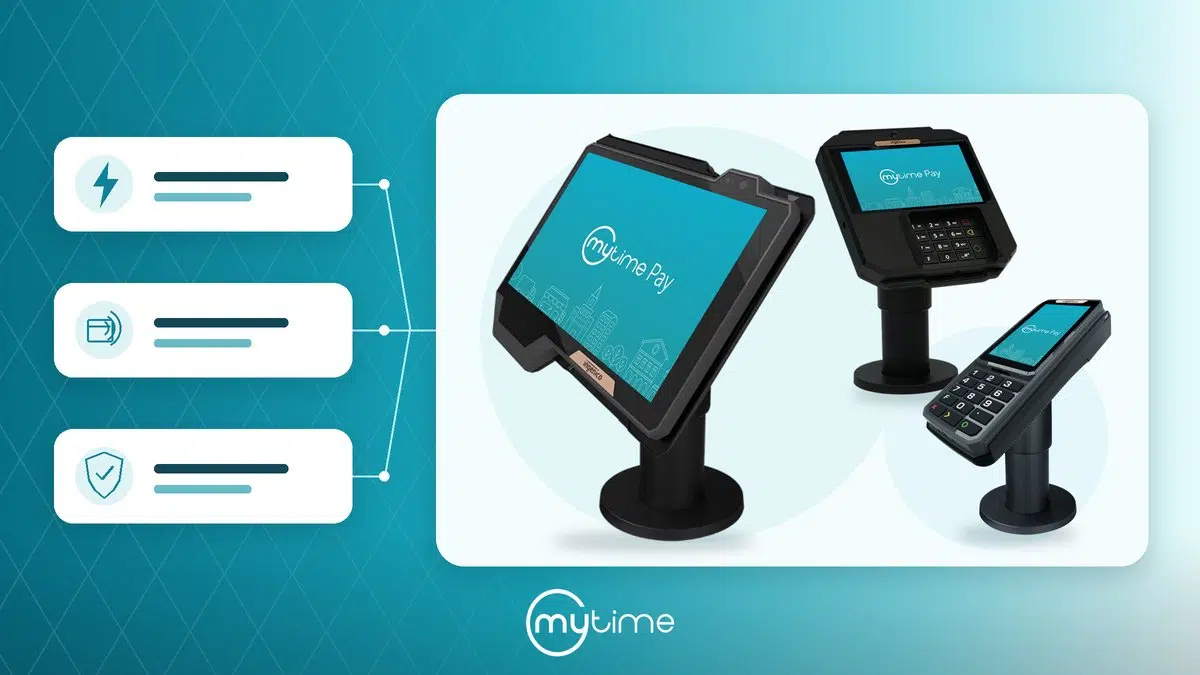
MyTime’s homepage says its POS accepts payments by tap, dip, swipe, online, and in-app (MyTime). It can also auto-apply memberships, packages, gift cards, and loyalty at checkout (MyTime). MyTime’s memberships, packages, and gift cards page says operators can create and customize membership plans and manage memberships from client profiles (MyTime memberships, packages, and gift cards). The page also says teams can tailor membership settings to franchise and multichain requirements, track gift card and package usage, and manage gift cards in-store, online, and through the guest app (MyTime memberships, packages, and gift cards).
Predictable revenue programs also matter. MyTime’s article on memberships, loyalty, and referrals says these programs help franchise brands stabilize cash flow and improve decision-making (MyTime memberships, loyalty, and referrals). It also says they help create consistency across locations and build a revenue flywheel over time (MyTime memberships, loyalty, and referrals).
Inventory and retail controls
Nail salons manage both retail inventory and service-related supplies. Polish, gels, dips, acrylics, tips, tools, disinfectants, and retail products all need location-level visibility.
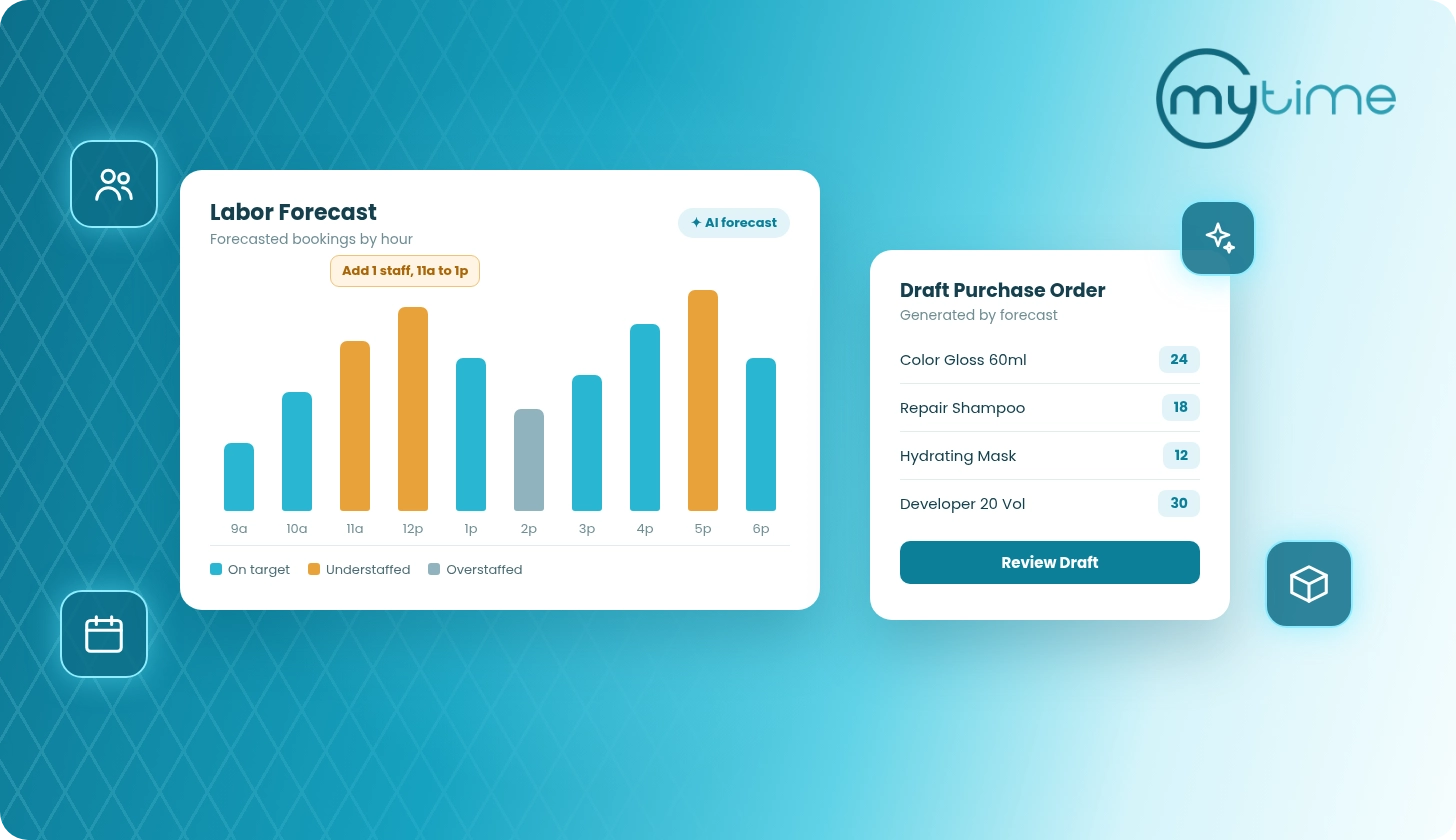
MyTime’s homepage says inventory sync keeps stock accurate and can automatically deduct front- and back-bar stock as services and sales occur (MyTime). It also says AI forecasting recommends reorders (MyTime). MyTime’s inventory forecasting article says the platform uses historical usage patterns to predict which products locations will need and when to order them (MyTime inventory forecasting). That helps multi-location brands prevent excess inventory and stockouts that interrupt services and reduce revenue (MyTime inventory forecasting).
For chains, inventory issues can quickly become client experience issues. If a location runs out of key colors, supplies, or retail products, the brand loses revenue and consistency. Software should help teams order based on usage, vendor lead times, current stock, and quantities already on order.
Marketing and retention
The best nail salon software should help brands drive the next visit. That means reminders, rebooking, winback campaigns, membership messaging, review requests, birthday offers, and targeted promotions should connect to client data.
MyTime’s Marketing Hub supports email marketing, text messaging, in-app notifications, push notifications, automated campaigns, and campaign analytics (MyTime Marketing Hub). It also supports templates based on appointment history and client tags, audience segmentation, promo codes, flash sales, and off-peak pricing (MyTime Marketing Hub). MyTime’s automated client messaging article says brand-level teams can configure message templates at the parent level and push them to every location automatically (MyTime automated client messaging). Those templates can include email themes, brand colors, and service-specific instructions (MyTime automated client messaging).
That balance matters for franchises. Corporate teams can protect brand standards while local teams execute campaigns that fit their location.
Reporting, governance, and accountability
Multi-location brands need reporting that goes beyond daily sales. They need to compare locations, understand staff productivity, track service performance, monitor retention, and identify operational gaps.
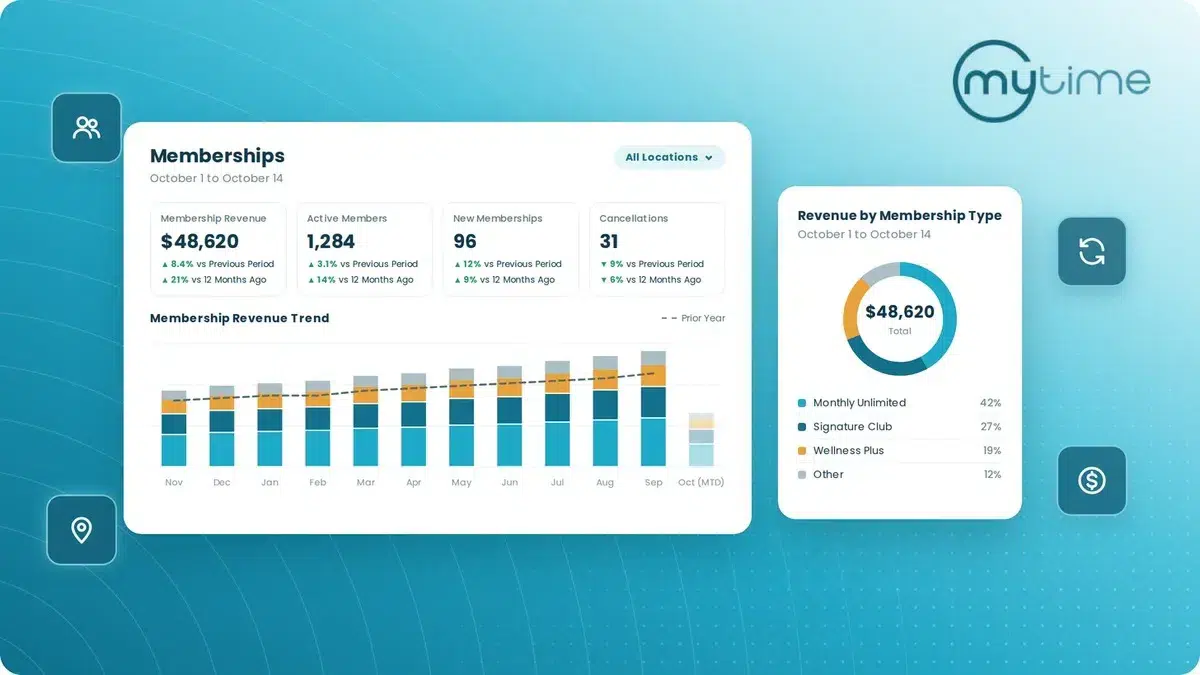
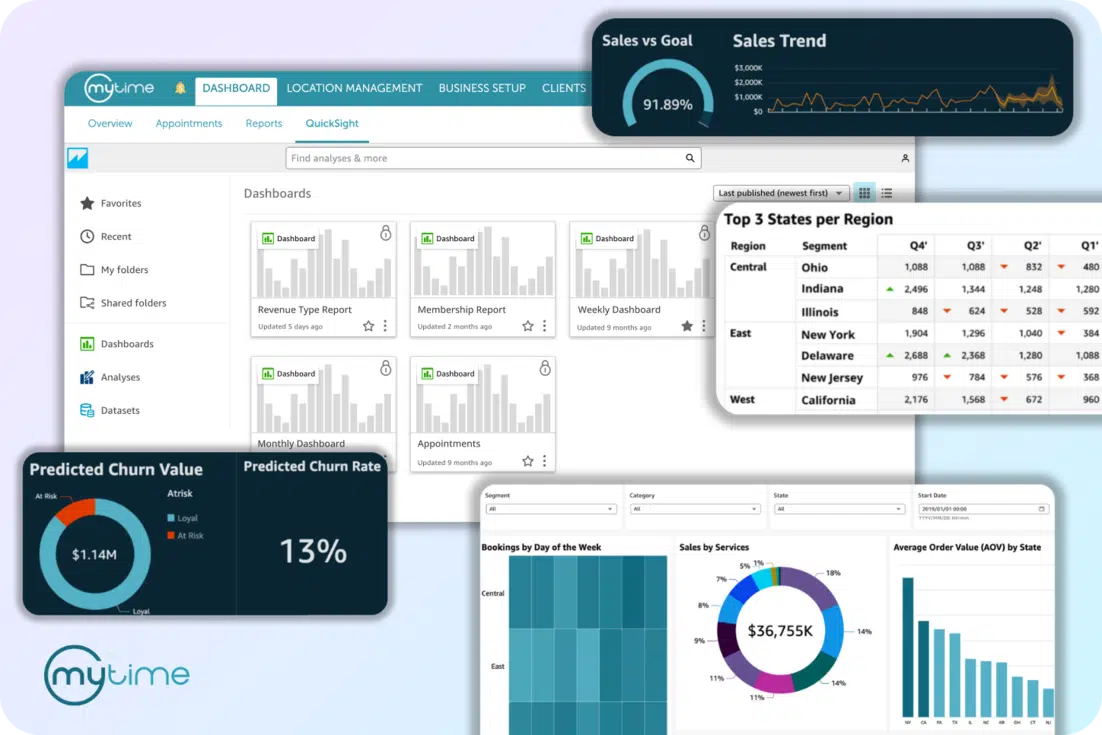
MyTime’s reports and analytics page says the platform includes more than 70 adaptable reports with filters such as location, service, and staff (MyTime reports and analytics). It also includes reports for financial summaries, client retention, staff productivity, and appointment trends (MyTime reports and analytics). MyTime’s enterprise page lists SSO, SAML-based single sign-on, role-based access controls, audit trails, encryption in transit, encryption at rest, optional data segregation, IP locking, APIs, location grouping, and regional or divisional reporting (MyTime enterprise).
Accountability becomes more important as teams grow. MyTime’s audit trails article says effective audit trail software should track changes to client records, memberships, packages, payroll entries, financial transactions, and system configuration settings (MyTime audit trails).
How leading nail salon software platforms fit chain and franchise needs
The right software depends on the brand’s operating model, budget, and growth stage. This comparison looks at official vendor pages and focuses on chain and franchise needs.
| Platform | Best fit | Strengths to consider | Chain and franchise considerations |
|---|---|---|---|
| MyTime | Multi-location nail salon brands that need a connected operating platform and full client journey orchestration | Omnichannel booking, scheduling, POS, payments, global client records, memberships, packages, gift cards, loyalty, marketing, inventory, reporting, audit trails, permissions, APIs, and implementation support (MyTime, MyTime franchise solution) | Strong fit when the brand needs centralized standards, local execution, global client profiles, reporting, governance, and franchise-ready controls |
| Zenoti | Salon and spa organizations that want enterprise software with AI-forward automation | Zenoti says its salon platform supports online booking, AI-powered marketing, guest engagement, staff enablement, POS, staff scheduling, client records, inventory tracking, and real-time insights (Zenoti) | Zenoti says it supports one or many locations and is used by more than 30,000 salons, spas, medspas, and barbershops across 50+ countries (Zenoti) |
| Mindbody | Wellness and beauty organizations that already operate in the Mindbody ecosystem | Mindbody says it supports multi-location reporting, standardized settings and pricing, franchise royalties and fees, cross-location memberships, role-based permissions, APIs, integrations, onboarding, training, and rollout support (Mindbody multi-location management) | Mindbody says more than 3,000 multi-location brands operate over 18,000 worldwide locations on its platform (Mindbody multi-location management) |
| Boulevard | Self-care brands focused on front-office experience and polished booking and checkout workflows | Boulevard’s nail salon page says its software supports scheduling, marketing, and payments for managing and growing a nail salon (Boulevard nail salon software) | Boulevard’s pricing page lists per-location plan pricing and a bespoke Enterprise plan for large complex operations with APIs and enterprise-grade integrations (Boulevard pricing) |
| Meevo | Salon and spa operators that want booking, staff, inventory, reporting, and multi-location tools | Meevo says it supports single-location, multi-location, and franchise operators with booking, waitlists, staff scheduling, time clock, payments, marketing, inventory, security controls, customization, and multi-location data tracking (Meevo salon software) | Meevo’s salon page lists more than 150 reports for salon operators (Meevo salon software) |
| Vagaro | Operators that value broad marketplace visibility and nail-specific booking workflows | Vagaro’s nail salon page says it supports 24/7 booking from a website, Instagram, Google, or Yelp, along with waitlists, technician assignment, reminders, client notes, deposits, saved cards, marketplace discovery, and loyalty points (Vagaro nail salon software) | Vagaro says it manages businesses of all sizes, from independent to enterprise (Vagaro nail salon software) |
| Mangomint | Brands prioritizing a modern salon and spa interface with booking, POS, automations, and client workflows | Mangomint lists nail salons among supported business types and includes booking, payments, automations, calendar, online booking, POS, client management, memberships and packages, forms, gift cards, campaigns, discounts, and virtual waiting room (Mangomint) | The reviewed Mangomint homepage lists nail salons and relevant features, but it does not explicitly surface multi-location or franchise controls on that page (Mangomint) |
Why MyTime is built for nail salon chains and franchises
MyTime is built for nail salon brands that are scaling beyond single-location workflows. It connects the client journey with the operational control that chains and franchises need.
Full journey orchestration from booking to retention
MyTime’s Explore MyTime page describes a unified lifecycle solution that streamlines operations, elevates client experiences, and scales service businesses across scheduling, omnichannel booking, POS, reminders, marketing, branded guest app, inventory, and multi-location management (Explore MyTime). That connected model matters because nail salon growth depends on every step working together.
A client may discover the brand on Google, book online, receive reminders, check in, add a service, pay at checkout, use loyalty, receive a review request, and rebook later. If each step lives in a different tool, the brand loses visibility.
MyTime helps connect those moments in one platform. That gives corporate teams more control and gives locations a simpler workflow.
Global client profiles across every location
Global client profiles help nail salon chains deliver a consistent experience. They also help teams avoid duplicate records, lost preferences, disconnected package balances, and fragmented client histories.
MyTime’s clean client data article says a global client record is a single, unified profile shared across every location (MyTime clean client data). It includes appointments, packages, memberships, waivers, payments, and communications in one centralized place (MyTime clean client data). For nail salon chains, that can support more informed service when clients visit different locations.
This is especially useful for preferences and recurring services. Staff can see the information they need to deliver a more consistent experience, while leadership gains cleaner data for reporting, marketing, and retention.
Global multi-channel marketing and automated messaging
Retention marketing works best when it connects to real client behavior. MyTime’s Marketing Hub lets operators segment audiences by service history, preferences, and demographics, and target flash sales by location, service, or staff (MyTime Marketing Hub).
MyTime’s automated client messaging article says the platform includes configurable automated templates for booking confirmations, reminders, post-visit messages, and review requests (MyTime automated client messaging). It also lists rebooking reminders, waitlist and flash sale notifications, membership renewal consent, package and membership expiration reminders, and lapsed client re-engagement (MyTime automated client messaging).
For nail salon chains, those workflows can help keep schedules full without making each location build its own communication system from scratch.
Predictable revenue through memberships, packages, loyalty, and referrals
Memberships, packages, loyalty, and referrals can turn a one-time nail appointment into a longer client relationship. MyTime’s memberships, packages, and gift cards page says operators can create and customize membership plans and manage memberships from client profiles (MyTime memberships, packages, and gift cards). It also says teams can track gift card and package usage and tailor membership settings to franchise and multichain requirements (MyTime memberships, packages, and gift cards).
MyTime’s predictable revenue article says membership, loyalty, and referral systems help franchise brands stabilize cash flow and improve decision-making (MyTime memberships, loyalty, and referrals). It also says these systems help create consistency across locations and build a revenue flywheel over time (MyTime memberships, loyalty, and referrals). The same article says centralized loyalty programs with cross-location visibility help clients be recognized wherever they go (MyTime memberships, loyalty, and referrals). It also gives leadership insight into system-wide performance (MyTime memberships, loyalty, and referrals).
This matters for nail salon franchises because repeat visits drive utilization. A connected system helps memberships, loyalty, and rebooking support the same retention strategy.
Inventory intelligence for multi-location nail salon operations
Inventory is not a back-office detail for nail salon chains. It affects service availability, retail sales, and client experience.
MyTime’s inventory forecasting article says the platform factors in vendor lead times, target stock periods, quantity on hand, and quantity already on order (MyTime inventory forecasting). It then surfaces a ready-to-act replenishment list across locations (MyTime inventory forecasting). That helps brands prevent overordering and stockouts.
For nail salons, this can support better control over retail items and service supplies. It also gives headquarters more visibility into location-level usage patterns.
Multi-location control without losing local flexibility
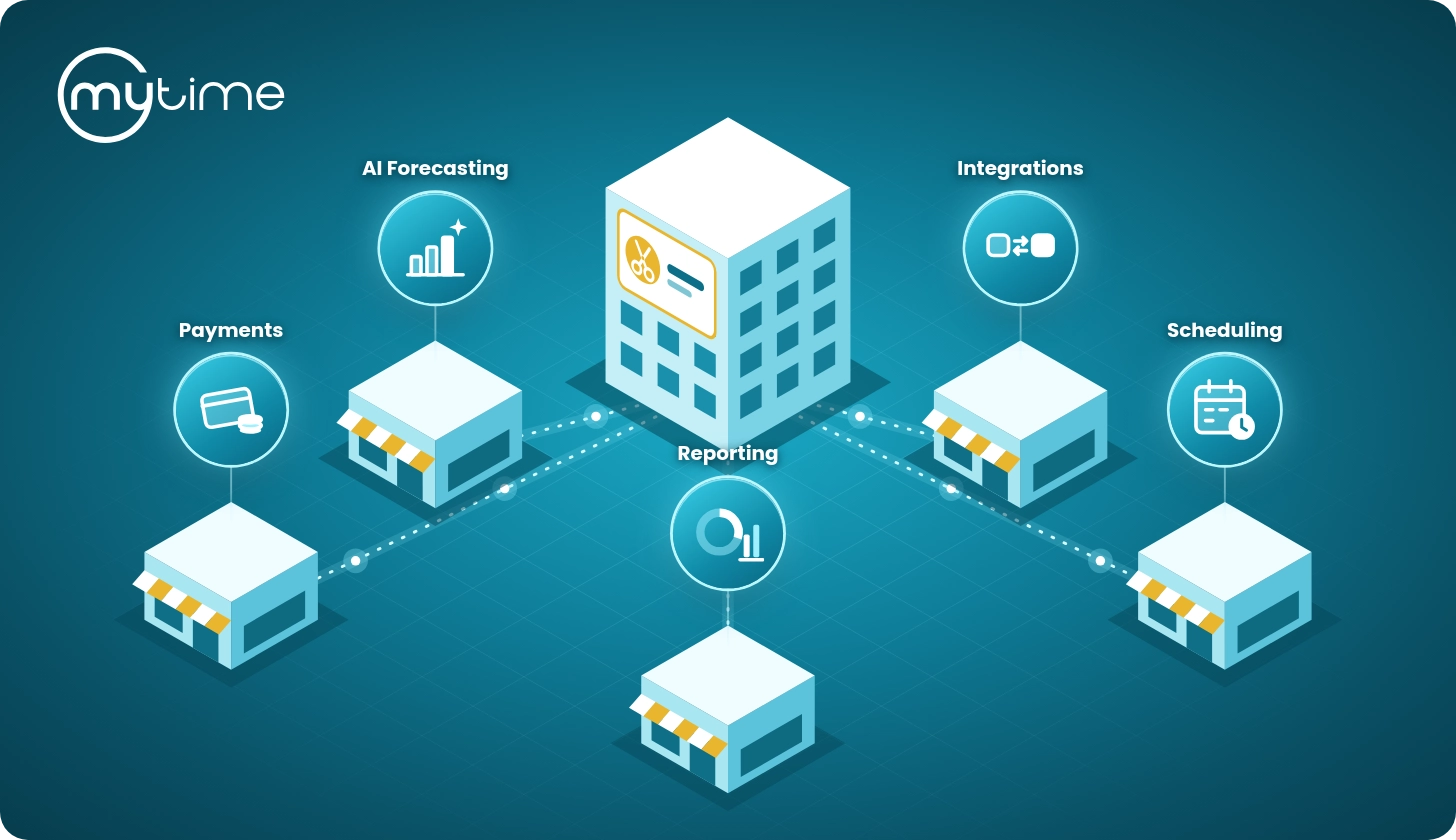
Franchisors need consistency, but local operators still need room to run their business. MyTime’s franchise page says the platform supports retail franchises from two to two-thousand locations (MyTime franchise solution). The page lists in-store and online booking, POS, credit card processing, automated email and SMS marketing, reporting and analytics, royalty tracking, billing and subscriptions, reputation management, promotions, and campaign management (MyTime franchise solution).
MyTime’s franchise page also describes custom access controls that let brands decide which teams can access different parts of the product (MyTime franchise solution). Brands can also decide whether franchisors or franchisees manage specific functions (MyTime franchise solution). That helps corporate teams set standards while giving local teams the tools they need.
This is the difference between basic nail salon booking software and a franchise operating platform. The brand needs enough structure to scale and enough flexibility to support real-world location operations.
Reporting and governance for headquarters
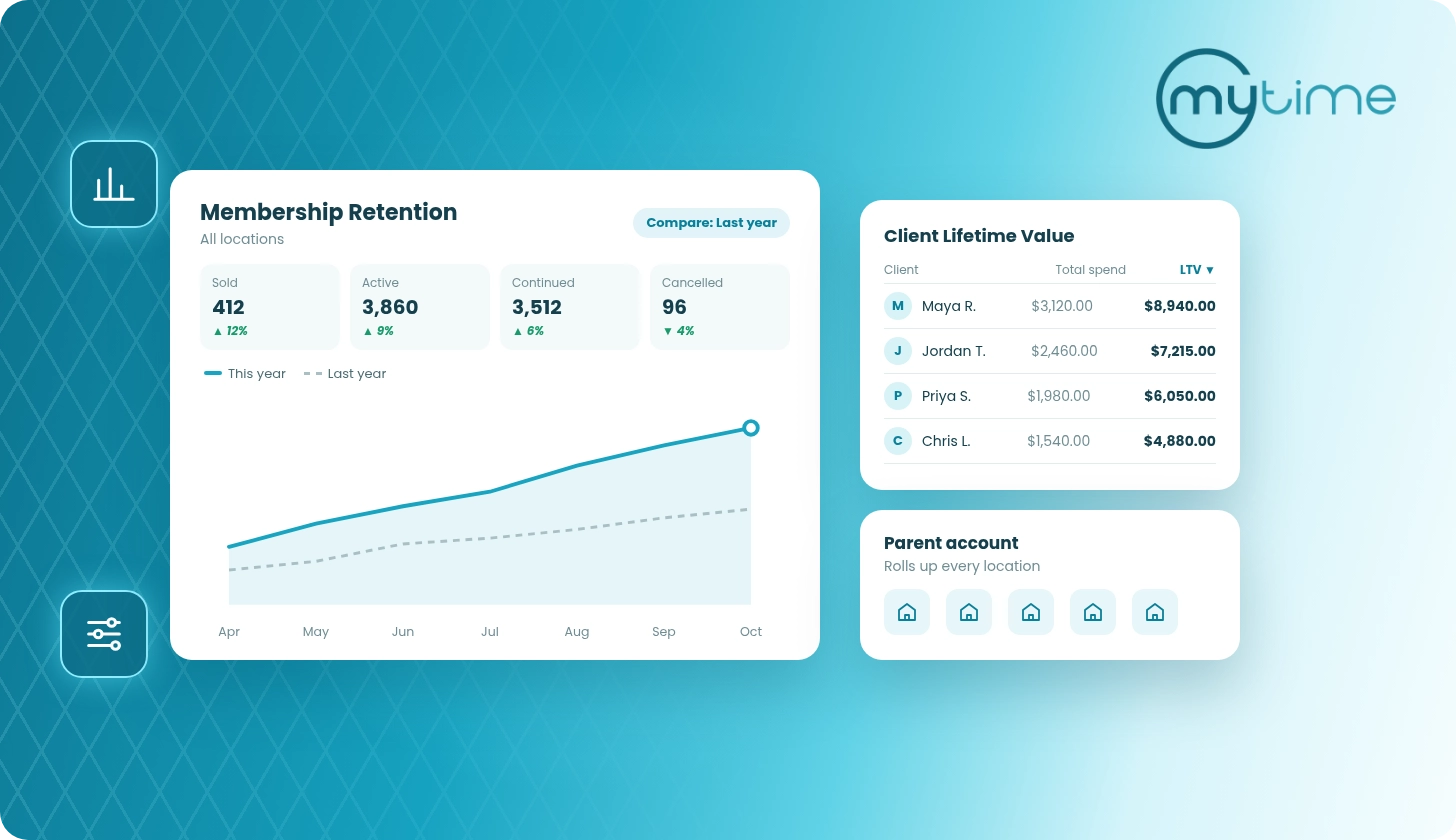
Headquarters needs data it can act on. MyTime’s reports and analytics page says operators can compare performance across locations to identify high performers and underperformers, and use real-time data on services, times, and booking channels (MyTime reports and analytics).
Governance also matters. MyTime’s enterprise page lists role-based access controls, SSO, audit trails, encryption, optional data segregation, APIs, location grouping, and regional or divisional reporting (MyTime enterprise).
MyTime’s audit trails article says audit trails help multi-location businesses maintain accountability across staff, protect revenue programs like memberships and packages, and resolve operational disputes quickly (MyTime audit trails).
For nail salon chains, these controls help protect client records, financial activity, membership programs, package balances, and system settings as more people use the platform.
When a lighter nail salon software tool may be enough
Not every nail salon needs enterprise-level software. A single-location salon or small independent team may not need franchise controls, regional reporting, APIs, SSO, advanced permissions, centralized marketing governance, or implementation support.
A lighter tool may be enough if the business only needs a simple calendar, basic reminders, straightforward checkout, and a small client list.
The needs change when the brand expands. Once a nail salon operator manages multiple locations, franchised units, memberships, packages, inventory, staff permissions, and centralized reporting, disconnected tools can create unnecessary work.
At that stage, the right software should help the brand standardize operations, protect data, understand performance, and support each location without creating extra administrative burden.
Decision checklist for nail salon chains
Before choosing nail salon franchise software, evaluate the platform against the way the brand actually operates.
Ask these questions:
- Does the software support booking from every channel your clients use?
- Can it manage walk-ins, waitlists, no-shows, reminders, and rebooking?
- Will it match technicians, services, resources, rooms, chairs, stations, and add-ons correctly?
- Does it support packages, memberships, loyalty, referrals, gift cards, and promotions?
- How does it track retail and back-bar inventory by location?
- Can corporate define standards while giving franchisees the right local flexibility?
- What reporting does it provide by location, region, staff, service, booking channel, campaign, and membership performance?
- Does it support role-based permissions, audit trails, SSO, encryption, and secure records?
- Will the vendor support implementation, training, data migration, and new-location rollouts?
The best software for nail salon chains and franchises should fit the operating model, not just the feature list.
Final recommendation
Nail salon chains and franchises should choose software based on how well it supports the full business. Booking matters, but it is only one part of the operation.
The right platform should help the brand fill schedules and match services to the right technicians. It should also streamline checkout, manage inventory, support memberships and loyalty, protect client data, improve retention, and show headquarters what is happening across every location.
MyTime is a strong fit for nail salon brands that need configurable, multi-location software. The platform connects scheduling, POS, staff management, inventory, marketing, memberships, reporting, and franchise controls in one place. It is especially relevant for brands that want full journey orchestration and global client profiles. Brands also get global marketing, predictable revenue programs, inventory intelligence, reporting, and governance across a growing location network.
If your nail salon brand is ready to replace disconnected tools, book a MyTime demo. MyTime connects scheduling, POS, marketing, memberships, inventory, reporting, and franchise operations in one platform.
FAQs
What is the best software for nail salon chains and franchises?
The best software for nail salon chains and franchises is a connected operating platform, not only a booking tool. It should support booking, POS, staff scheduling, waitlists, inventory, client records, memberships, loyalty, marketing, reporting, and multi-location controls. MyTime is a strong fit for brands that need franchise-ready workflows and full client journey orchestration.
What should nail salon franchise software include?
Nail salon franchise software should include omnichannel booking, technician and resource scheduling, waitlists, POS, payments, memberships, packages, loyalty, and gift cards. It should also support inventory management, reporting, permissions, audit trails, and franchisor or franchisee controls.
Why do nail salon chains need more than booking software?
Booking software helps fill appointments. Nail salon chains also need to manage checkout, retail inventory, and back-bar supplies. They also need visibility into staff utilization, client history, loyalty, memberships, marketing, reporting, and brand standards across locations.
How should nail salon chains compare software vendors?
Nail salon chains should compare vendors by multi-location scalability, configurability, franchise controls, booking depth, POS depth, inventory workflows, marketing automation, reporting, and security. They should also consider implementation support and total platform fit.
Which nail salon software supports memberships, packages, gift cards, and loyalty?
MyTime supports memberships, packages, gift cards, and loyalty in a connected platform (MyTime). Its POS can auto-apply memberships, packages, gift cards, and loyalty at checkout (MyTime). MyTime also lets operators create and customize membership plans and manage memberships from client profiles (MyTime memberships, packages, and gift cards). Teams can also track gift card and package usage and tailor membership settings to franchise and multichain requirements (MyTime memberships, packages, and gift cards).