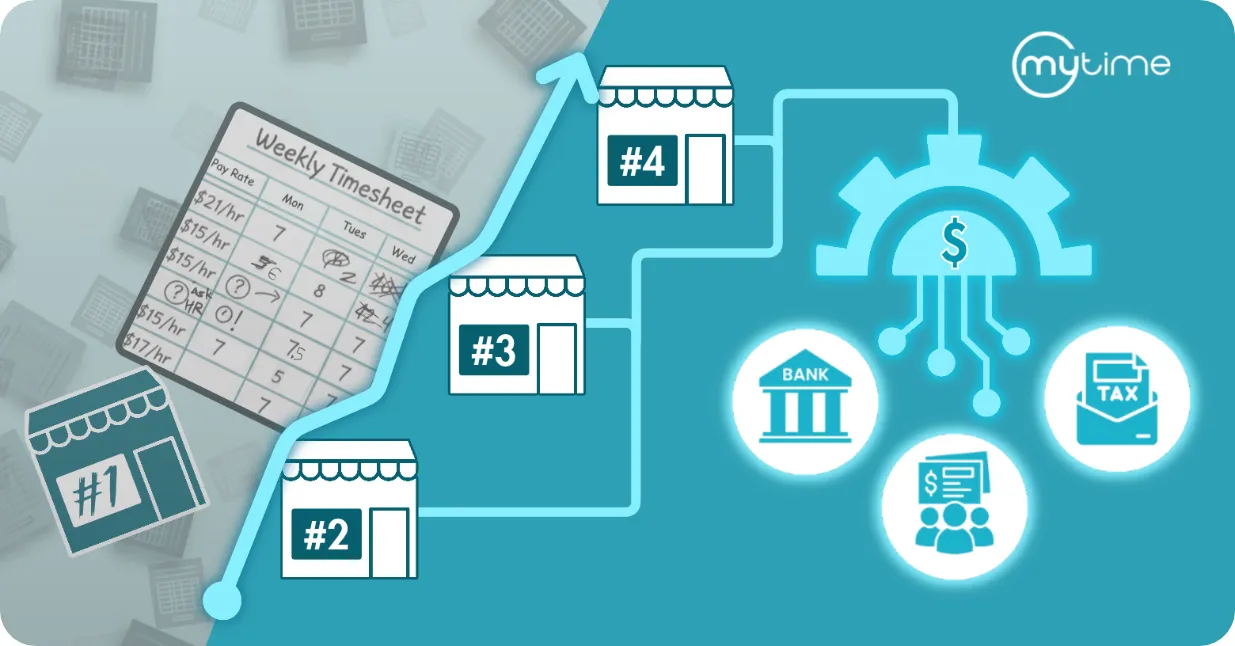




You did not open your first shop to become a systems integrator. You opened it because you love the trade, and because you saw a market that rewards a consistent, well-run guest experience at scale. Somewhere between shop three and shop twenty, the job quietly changed. Now you run software for a living.
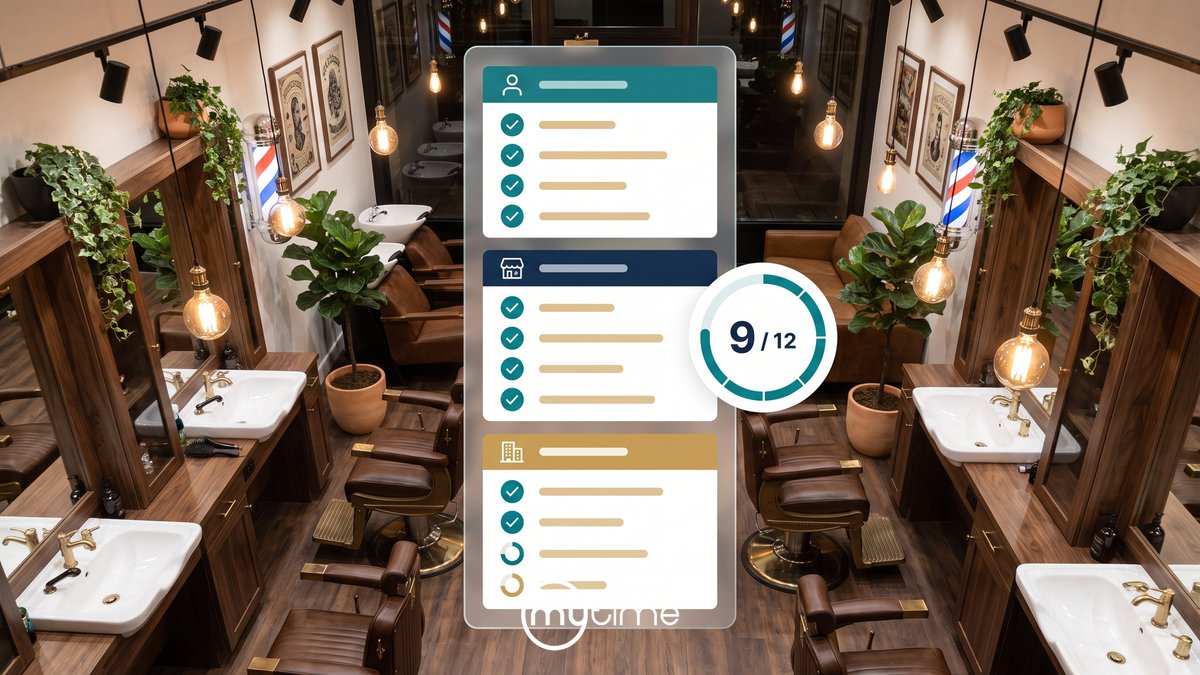
This is a diagnostic, not a sales pitch. If your barbershop chain is at 10, 20, or 50 locations, or if you are staring at your first franchise disclosure document and wondering what the tech section should actually promise, use this checklist to score your own stack. Twelve systems. One point each. Your total tells you where you are on the operating-maturity curve.
Score at the end. Be honest.
The three tiers of a barbershop operating stack
Every multi-unit grooming brand runs on the same twelve systems, whether the owners realize it or not. Some brands run them on twelve tools. Some run them on one. The gap between those two states shows up in payroll accuracy, member churn, franchisee satisfaction, and the number of hours your operations manager spends inside spreadsheets on Sunday night.
We group the twelve into three tiers: what the guest touches, what the shop uses to run the day, and what corporate needs to run the brand.
Tier 1 — Guest experience
The four systems in this tier are the ones your members and walk-in guests interact with directly. Guests do not know how many separate vendors sit behind the experience. They only know whether it feels like one brand or four.
1. Online booking
Your website widget, your Google Reserve integration, your Instagram and TikTok booking links, and your branded app all need to write to the same calendar. When a stylist calls out sick at 9 a.m., every one of those booking surfaces should reflect the new availability within seconds. If a guest can still book a slot on your website that your app just released, you have two booking systems pretending to be one.
Symptom of a break: your shops keep a paper backup schedule, or your staff spends the first fifteen minutes of every shift reconciling channels.
2. Walk-in queue and self check-in
Walk-in shops live and die on wait-time transparency. A modern queue combines an in-shop kiosk, SMS check-in from a QR code, and a real-time wait estimate on your website. Guests self-serve their spot in line. Staff see the queue on a floor display. Corporate sees the wait pattern across every shop.
Symptom of a break: your shops estimate wait times verbally, or your busiest location has a different check-in flow than your newest one.
3. Membership and recurring billing
Members are the single most valuable asset a multi-location grooming brand can build. Sign-up should take under two minutes, work from any surface, and support portability across every shop in the network. Failed payments retry on a schedule you control. Members pause, upgrade, and cancel themselves without calling corporate. Every dollar of stored value is tracked to the shop that earned it and the shop that redeems it.
Symptom of a break: your membership program sits in a separate billing tool, and reconciling redemptions to services requires a monthly export.
4. Loyalty and rewards
Loyalty is the tier the strongest brands are investing in right now. Points, tiered rewards, cross-shop redemption, and expiring stored value all need to move with the guest. When The Gents Place opened national franchising, the brand named portable memberships across every location as a core member benefit. That promise only works if loyalty and stored value share one ledger.
Symptom of a break: a member complains that their points did not transfer when they visited a shop in a new city.
Tier 2 — Shop operations
The next four systems are what your staff and shop managers use to run the day. They rarely get the marketing budget that guest-facing tools receive, and they cost the operator the most when they fail.
5. Point of sale with integrated payments
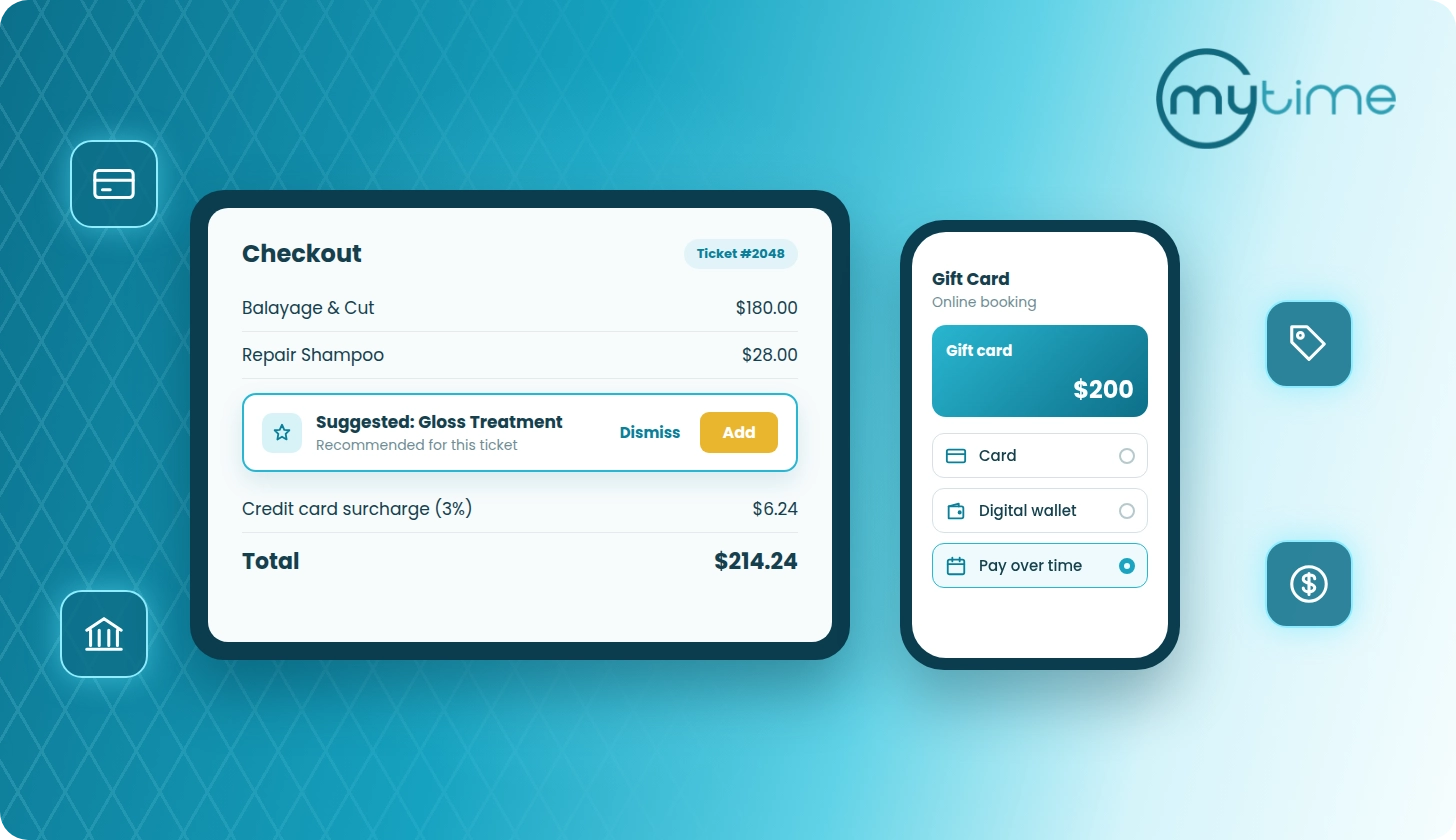
Services, retail, tipping, split tenders, and refunds all live in the same transaction. Card-present rates are competitive without a separate processor conversation. Tipping flows to the stylist, not the shop. Refunds do not require a manager password and a paper form.
Symptom of a break: your card processor is a separate vendor from your point of sale, and reconciliation happens in a monthly spreadsheet.
6. Stylist scheduling and payroll
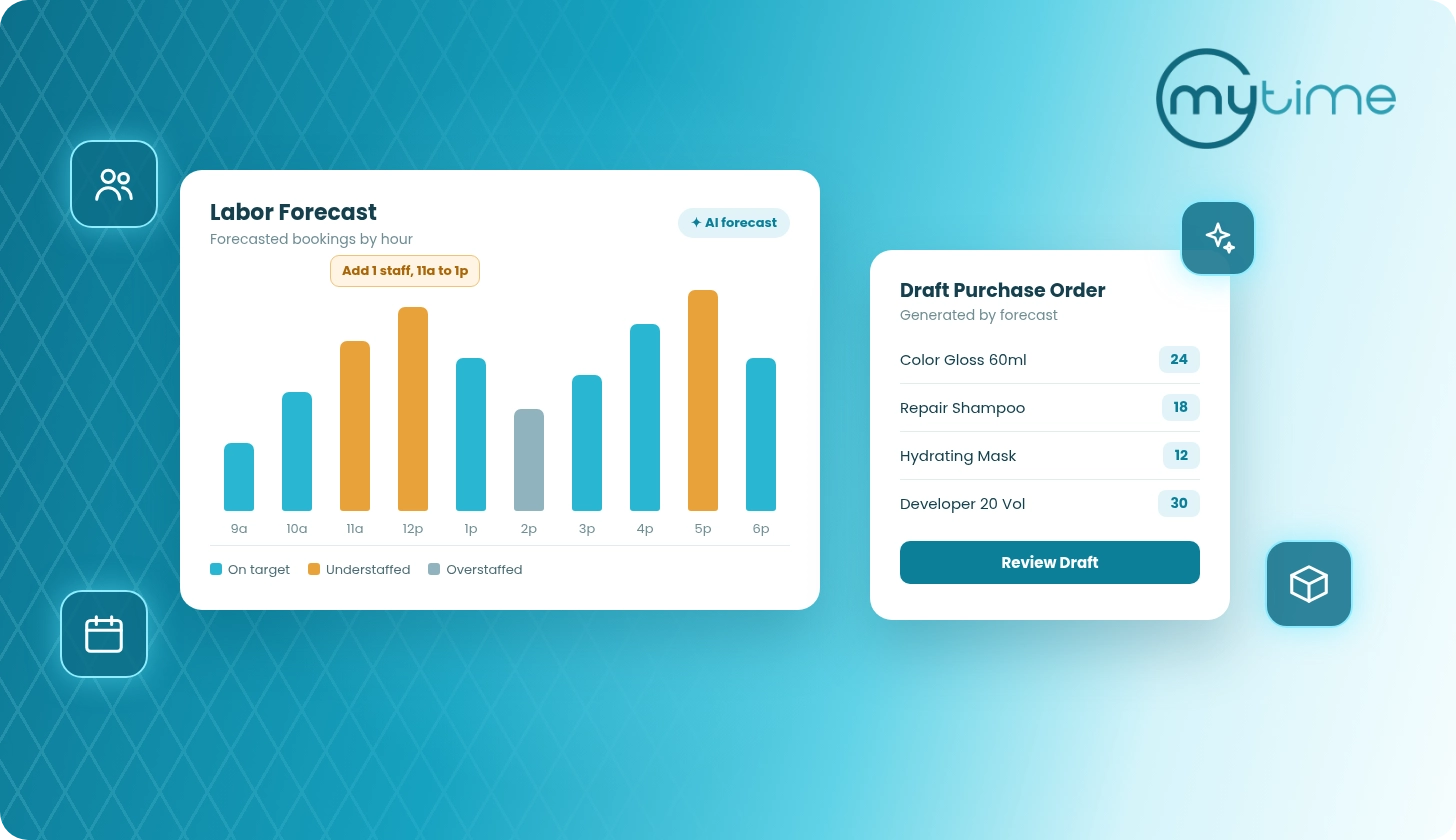
Commissions, tips reconciliation, paid time off, and cross-shop coverage all need to calculate cleanly. When a stylist covers a shift at another location, the hours flow to their home shop or to the shop they worked, whichever your policy says, without a manager rekeying anything.
Symptom of a break: your payroll runs on a CSV export from your point of sale, joined manually to a scheduling tool, then uploaded to your payroll processor.
7. Inventory and retail
Reorder points fire automatically based on shop-level velocity. Retail carries a proper P&L per location. Your private-label or exclusive lines carry the margin you expect, and the shops that push them hardest get the recognition.
Symptom of a break: your best-selling product goes out of stock at your busiest shop while sitting on the shelf at another.
8. Client records and service history
Notes, photos, formulas, allergy flags, and product preferences follow the guest to any shop in the network. When a longtime member visits a new location on vacation, the stylist there sees the same history the home-shop stylist would. Blind Barber’s founders spent fourteen years building toward a single app that unified booking, payments, and loyalty across their venues. The point was not the app. The point was one guest record.
Symptom of a break: your stylist starts every visit by asking a returning member what they usually get.
Tier 3 — Parent-level control
The final four systems separate a chain from a brand. These are what corporate needs to run the business, hold franchisees accountable, and grow without breaking what already works.
9. Multi-location reporting
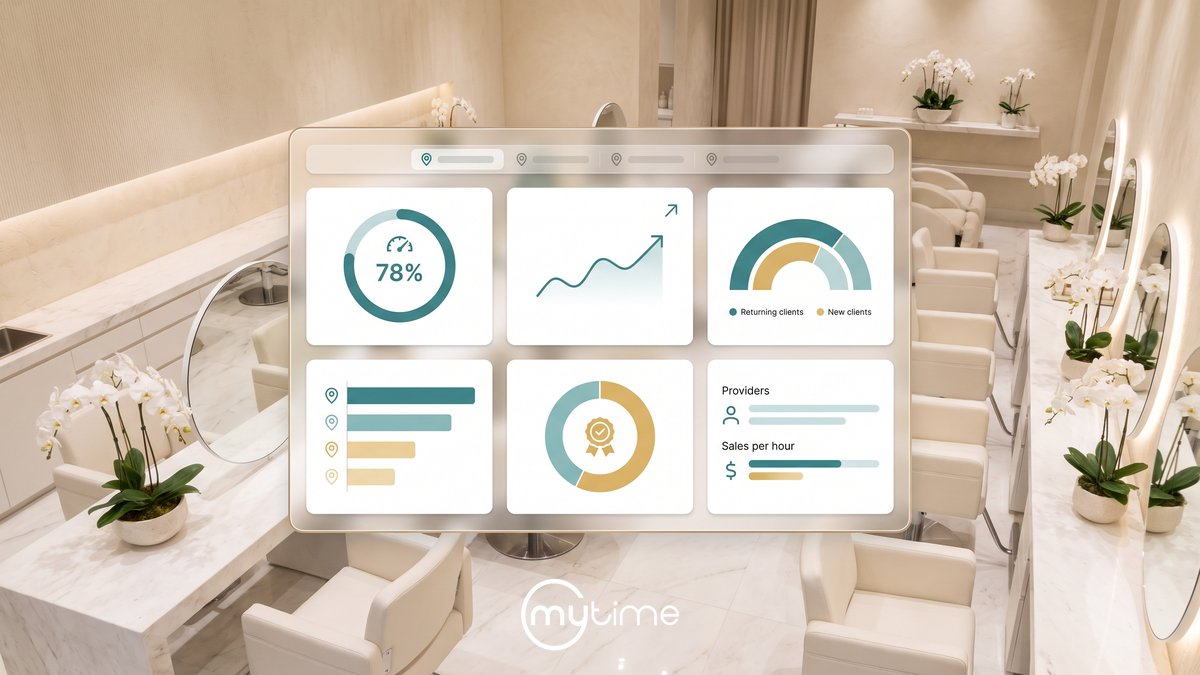
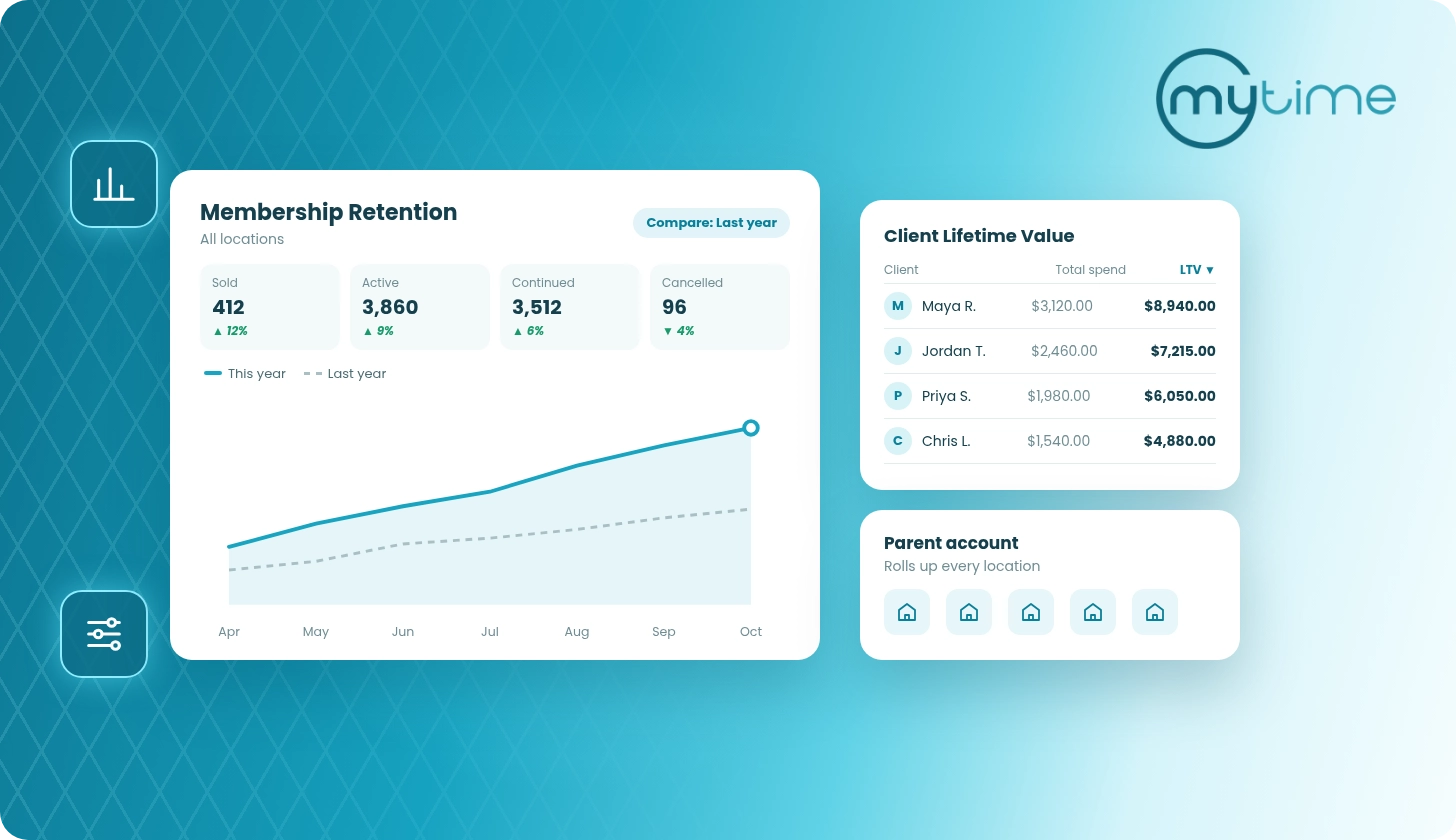
Same-store sales, cohort membership retention, and franchisee scorecards are all one query away. You can answer “how did Dallas perform against Houston last month” without asking anyone. Rudy’s Barbershop lists three separate systems — Shopify, CATS, and Salon Check-In — on its public help page. Every one of those systems is a place where reporting has to be stitched together after the fact. Compare that to Just Cuts, whose leadership publicly credits a unified point of sale for letting owners “see where they sit in the group” and letting corporate “see what’s happening in the business at any time” across three countries.
Symptom of a break: your monthly business review requires an analyst and a slide deck.
10. Marketing automation and CRM
Segmented email, SMS re-engagement, birthday campaigns, win-back flows, and post-visit review requests all live in one system, feeding off the same guest record that your point of sale writes to. When a member has not visited in 45 days, the win-back message goes out automatically. When a first-time guest leaves happy, the review request lands the same evening.
Symptom of a break: your marketing team maintains a separate contact database and re-uploads it every month.
11. Franchisee compliance and brand standards
Pricing bands, service menu control, and promotional calendars are enforced at the corporate level. A franchisee cannot accidentally list a service that is not part of the brand or run a promotion that undermines the brand’s positioning. Hammer & Nails’ 2026 franchise disclosure document names a dedicated Project Manager for Systems and Compliance alongside its VP of Operations and VP of Field Operations. At 70-plus open locations, systems ownership is a full corporate function, not a side project.
Symptom of a break: your last brand audit found three different service menus and two different pricing sheets across shops.
12. Roll-up finance and royalty calculation
Per-shop profit and loss, franchise royalty auto-calculation, and gift-card liability tracking all reconcile without manual work. Royalties are pulled directly from the transactions your point of sale already recorded. Gift-card liability sits on the balance sheet at the correct number, not a rounded estimate. Diesel Barbershop’s franchise disclosure notes franchise-unit gross revenue up 63 percent from 2021 to 2023. Growth that fast turns manual royalty reconciliation into a full-time job. Faster growth turns it into three full-time jobs.
Symptom of a break: your royalty calculation still requires a monthly spreadsheet that your CFO reviews line by line.
Score yourself
Give yourself one point for each system you have fully consolidated. Not “we have a tool for it” — fully consolidated, meaning the system talks to your point of sale, your guest record, and your reporting layer without a manual export.
- 0 to 4 points. You are bleeding margin on manual reconciliation and losing members to friction they cannot articulate. The next franchisee you sign will inherit a stack that already does not work.
- 5 to 8 points. You are patching. Your operations manager is holding the seams together with willpower and workflow glue. This is the tier where most 15-to-30-shop brands live, and it is the tier that stalls out below 50 shops.
- 9 to 12 points. You are ready to franchise, or to double the estate you already have. Systems maturity at this level is what lets a brand grow 60-plus percent year over year without breaking.
Where MyTime fits
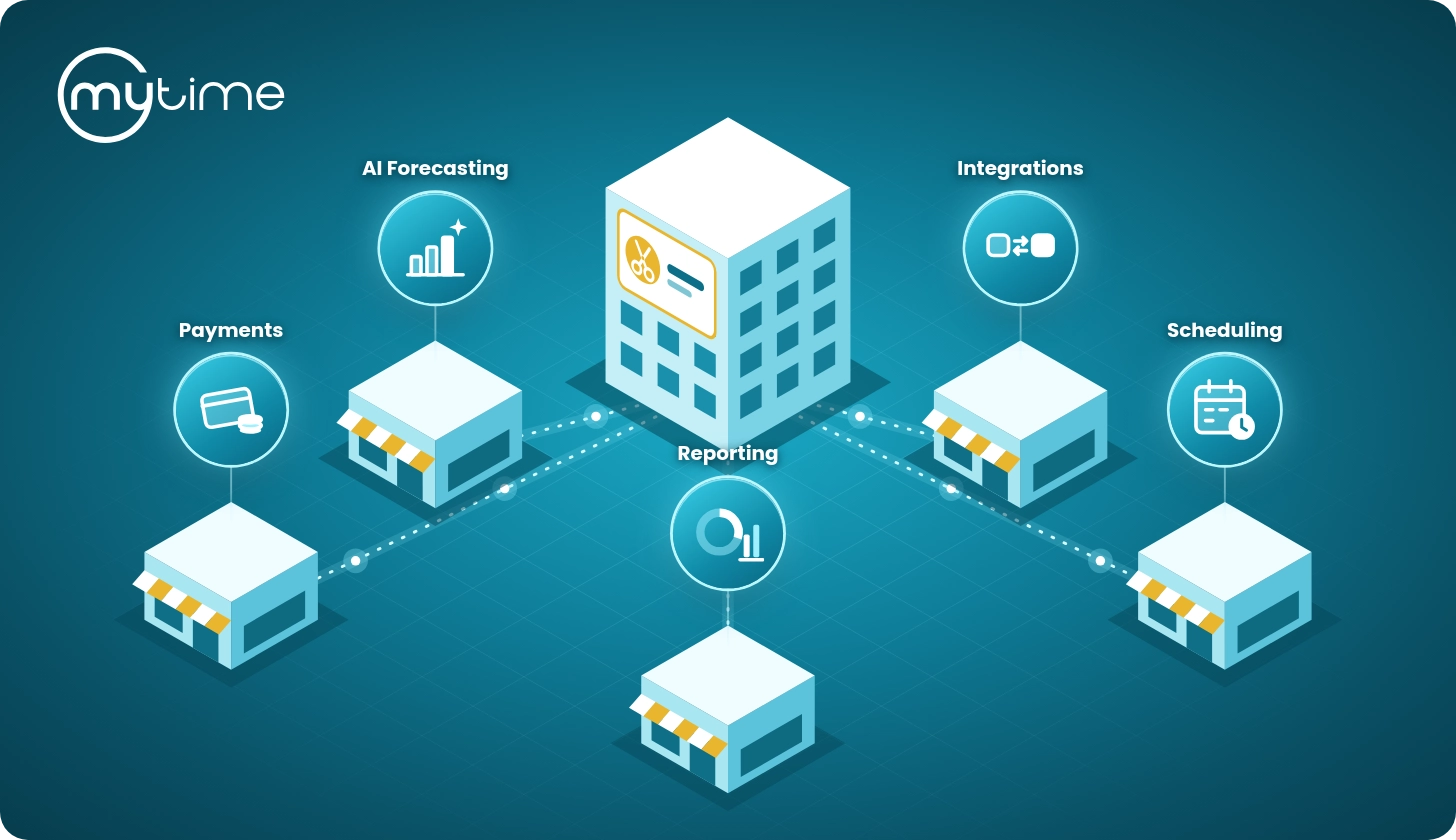
MyTime collapses the twelve into one. Booking, walk-in queue, membership, loyalty, point of sale, stylist scheduling, inventory, guest records, reporting, marketing automation, franchisee compliance, and royalty calculation all run against a single guest database and a single transaction ledger. Scissors & Scotch built a 20,000-member program inside MyTime with the same tools every one of their locations uses to run the day, and the same tools their corporate team uses to run the brand. One login. One record. One truth.
If any tier of this checklist felt uncomfortably familiar, the fastest way to see what a consolidated stack looks like is a 20-minute walk-through. Book a demo and we will score your current stack against these twelve systems together.
The MyTime platform runs the operating stack for multi-location and franchise barbershop brands. Learn more about our barbershop solution.