





Managing a multi-location service brand means that staff, clients, and operational decisions are constantly in motion across every location. The software platforms that power these businesses capture that activity, but capturing it and being able to explain it are two different things. When questions arise about a credit adjustment, a time entry, or a membership change, operators need a clear record of who did what and when. For franchise brands managing that complexity across many locations, each with their own staff and management, that kind of visibility is not a nice-to-have but a core operational requirement.
Without clear audit trails built into their platform, finding those answers means piecing together fragments from memory, tracking down staff who may no longer be around, and hoping the context is still recoverable. That process creates real costs across the business, and it gets harder to manage as organizations grow.
The Hidden Cost of Low Operational Visibility
Poor audit visibility rarely surfaces as a single identifiable problem. Instead it shows up gradually, in the hours managers spend chasing down answers that should already be in the system, in the inconsistent explanations clients receive depending on which location or staff member they reach, and in the slow erosion of confidence that sets in when operators cannot fully trust the data in front of them.
The underlying issue is the same whether it involves a contested time entry or a client questioning their package balance: without a reliable record of what changed and who changed it, every dispute becomes an investigation. Staff get pulled into conversations they cannot resolve with certainty, managers make judgment calls based on incomplete information, and the business absorbs the cost of that uncertainty in lost time, inconsistent client experiences, and revenue that is difficult to account for.
The right audit trail software ensures that when questions arise, the answers are already in the system, documented and accessible to the people responsible for acting on them.
Where Most Service Business Platforms Fall Short
Audit trail functionality sounds straightforward, but most platforms treat it as an afterthought. Operators typically encounter one of three gaps:
- Surface-level logging. The system records when staff log in or access a report, but not what they actually changed. A modified loyalty balance or adjusted package credit goes untracked, which creates the appearance of accountability without the substance.
- Short retention windows. Some platforms cap audit history at 90 days or less. For a business managing recurring memberships and long-term client relationships, that window does not cover the lifecycle of the programs operators are actually trying to protect.
- Fragmented records. Membership logs, staff activity reports, and financial records live in separate modules with no unified view. Reconstructing a single sequence of events means cross-referencing multiple places, and the gaps between them are where answers get lost.
Each of these patterns produces the same outcome: when something goes wrong, the system cannot tell you what happened.

MyTime treats audit visibility as a platform-wide standard rather than a feature applied selectively. Across the platform, changes to client profiles, staff records, business configuration settings, gift card balances, loyalty point activity, and referral credits are all tracked with attribution, timestamps, and a clear record of what changed. Register activity, including cash deposits, withdrawals, and attachments, is logged with the staff member responsible for each action. Even appointment-level details like service status changes and clinical intake form edits carry their own audit history.
That foundation matters because the value of audit trails compounds across a business. Each individual record is useful on its own, but together they give operators a complete and trustworthy picture of how the business is actually running. The sections below focus on three areas where that visibility has the most direct impact on payroll accuracy, revenue protection, and recurring client relationships.
What Effective Audit Trail Software Actually Tracks
Time tracking and payroll accuracy
Clock-in and clock-out records are among the most frequently adjusted data points in a service business, and without a clear change history, even legitimate corrections can become difficult to explain. A clocked hours audit trail preserves the full edit history for every time entry, including original values, any corrections, who made them, and when. Paired with edit-window rules that limit when changes can be made, operators get a payroll process that accommodates real-world corrections while giving managers and payroll teams a reliable record they can stand behind.

Package credit history and revenue protection
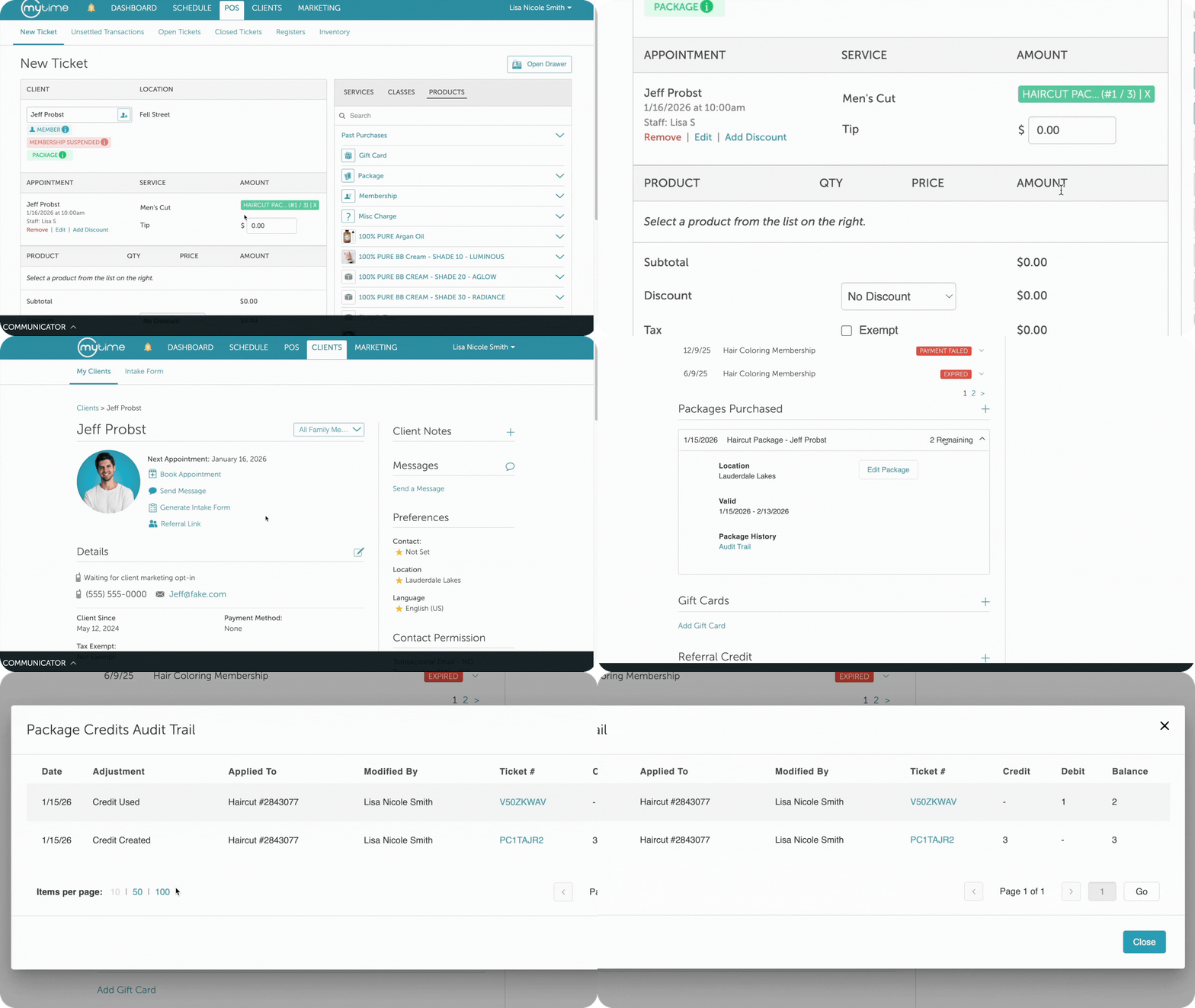
Prepaid packages represent committed revenue, and when the history of how credits were used or adjusted is unclear, it creates confusion for clients and financial exposure for the business. A package audit trail on client profiles shows the full lifecycle of every balance: how credits were purchased, applied, adjusted, or refunded, and which team member performed each action. For multi-location networks where clients may visit different sites and staff are expected to pick up mid-history, that continuous record is what makes consistent service possible.
Membership activity and recurring revenue clarity
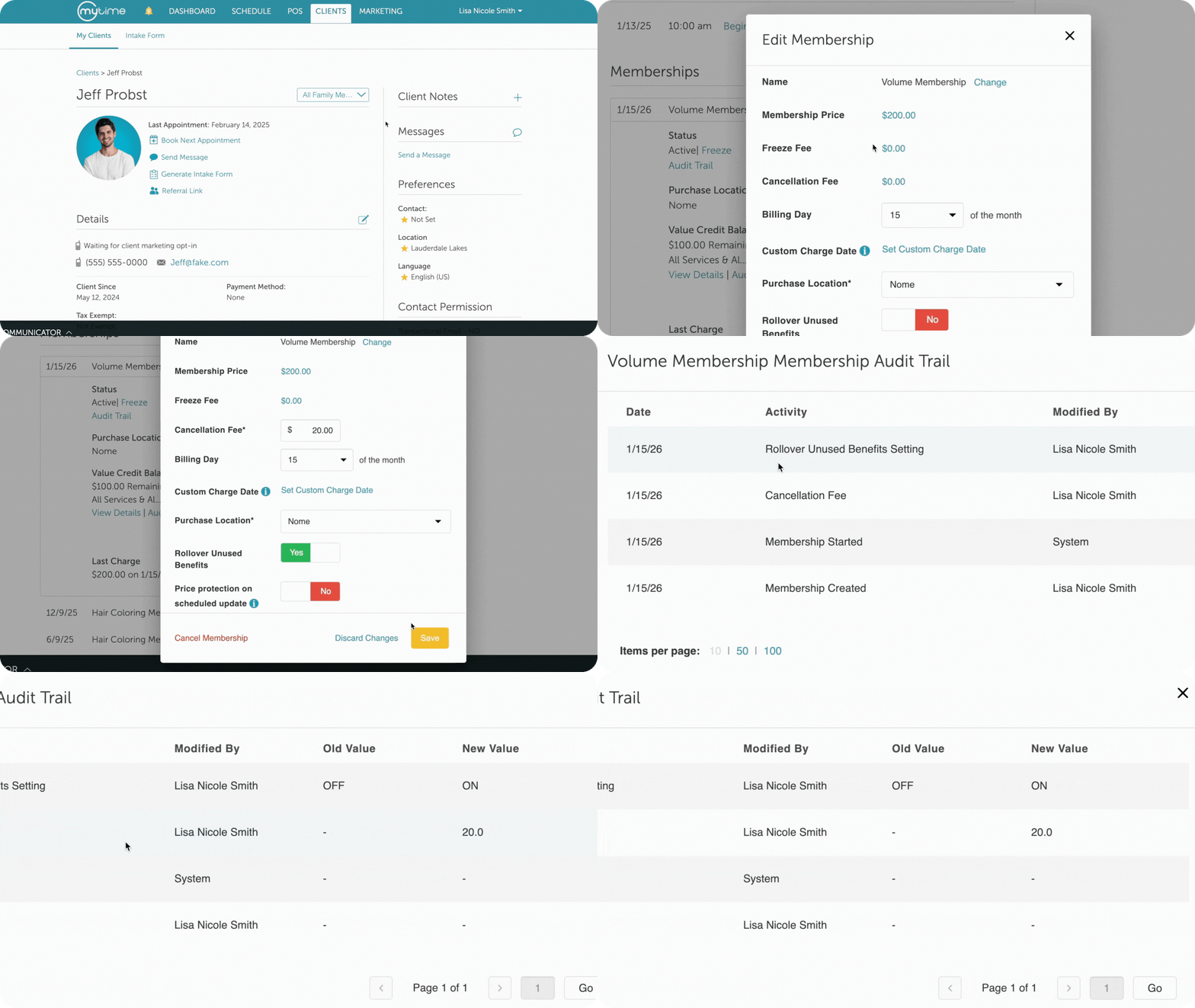
Memberships evolve over time through status changes, billing events, credit usage, and adjustments, and the current state of a membership often only makes sense in the context of how it got there. Strong membership tracking surfaces that full history rather than just displaying the outcome, so operators can explain benefit usage, address billing questions, and handle status changes with confidence. Records remain intact even when staff leave, and system-generated activity is clearly labeled so it is never confused with a manual edit.
Accountability Without Suspicion
Operators sometimes worry that introducing audit trail software sends the wrong message to their staff, but in practice transparent records protect honest employees as much as they discourage inappropriate activity. When a question arises, a staff member who acted correctly has nothing to fear from the history. The record confirms what happened and closes the conversation quickly, which is a far better outcome than a dispute that lingers because the details can no longer be verified.
In franchise environments this dynamic matters at every level of the organization. Corporate leadership gains confidence that policy is being applied consistently across locations, while location managers get the tools to resolve questions on their own, grounded in an objective record rather than competing accounts of what happened.
Clarity Franchises Can Build On
As service brands grow, the volume of activity across staff, clients, and locations increases significantly, and so does the importance of being able to explain what happened rather than just what the current state looks like. The right audit trail functionality gives operators the historical visibility to resolve questions faster, protect revenue-bearing programs, and build a culture where accountability is the standard rather than the exception.
What that looks like in practice is permanent, record-level history across clients, memberships, loyalty, packages, gift cards, and financial records. It means attribution that persists even after staff leave, a clear separation between manual changes and system-generated activity, and history that is accessible to the right people without requiring special permissions or escalation. These are not advanced features but baseline requirements for any platform built to support operations at scale.
MyTime has built audit transparency into the workflows where it matters most so operators can trust that their system reflects what actually happened. That trust becomes more valuable as organizations scale, because the questions do not get simpler. They just get more frequent.
Book a demo to explore how MyTime supports operational clarity at scale.
What is an audit trail in business software?
An audit trail is a record that tracks changes made within a system, including what was changed, who made the change, and when it occurred.
Why do multi-location businesses need audit trails?
Multi-location businesses need audit trails to maintain accountability across staff, protect revenue programs like memberships and packages, and resolve operational disputes quickly.
What should audit trail software track?
Effective audit trail software tracks changes to client records, memberships, packages, payroll entries, financial transactions, and system configuration settings.